
You give us the code
By phone or WhatsApp: model and F code. A photo of the data plate helps us bring the right part.
Home › Heating › Error codes › Bulex
Your Bulex boiler (Thema Condens, ThemaPlus, Isotwin…) displays a code starting with F.? The table below explains it. Bulex is the Belgian brand of the Vaillant group: the codes are close to Vaillant ones, but the technician always reads them on your exact model. We repair Bulex boilers 7 days a week, price given before the work.
★★★★★5,0on Google· 22 years of experience
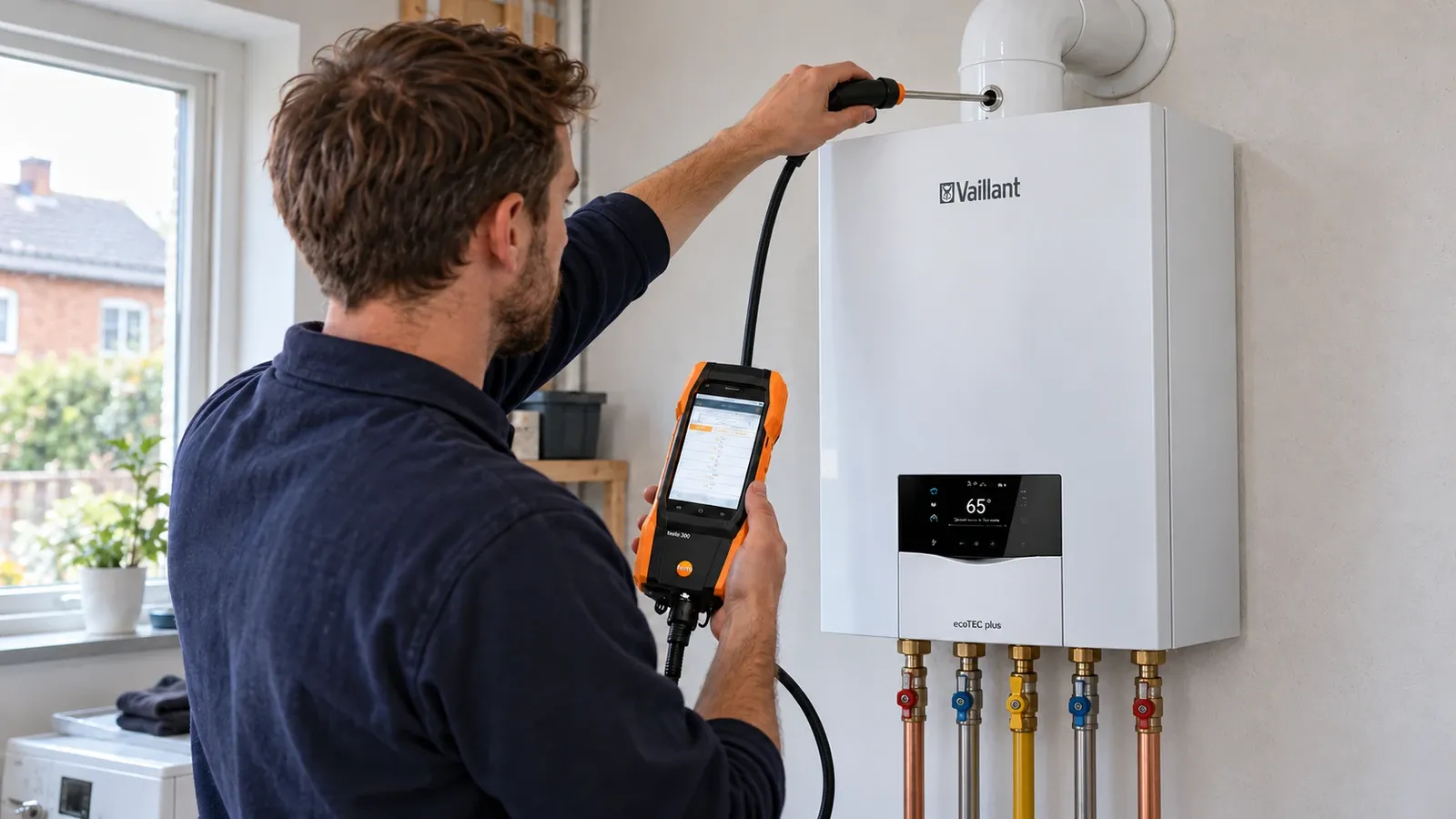
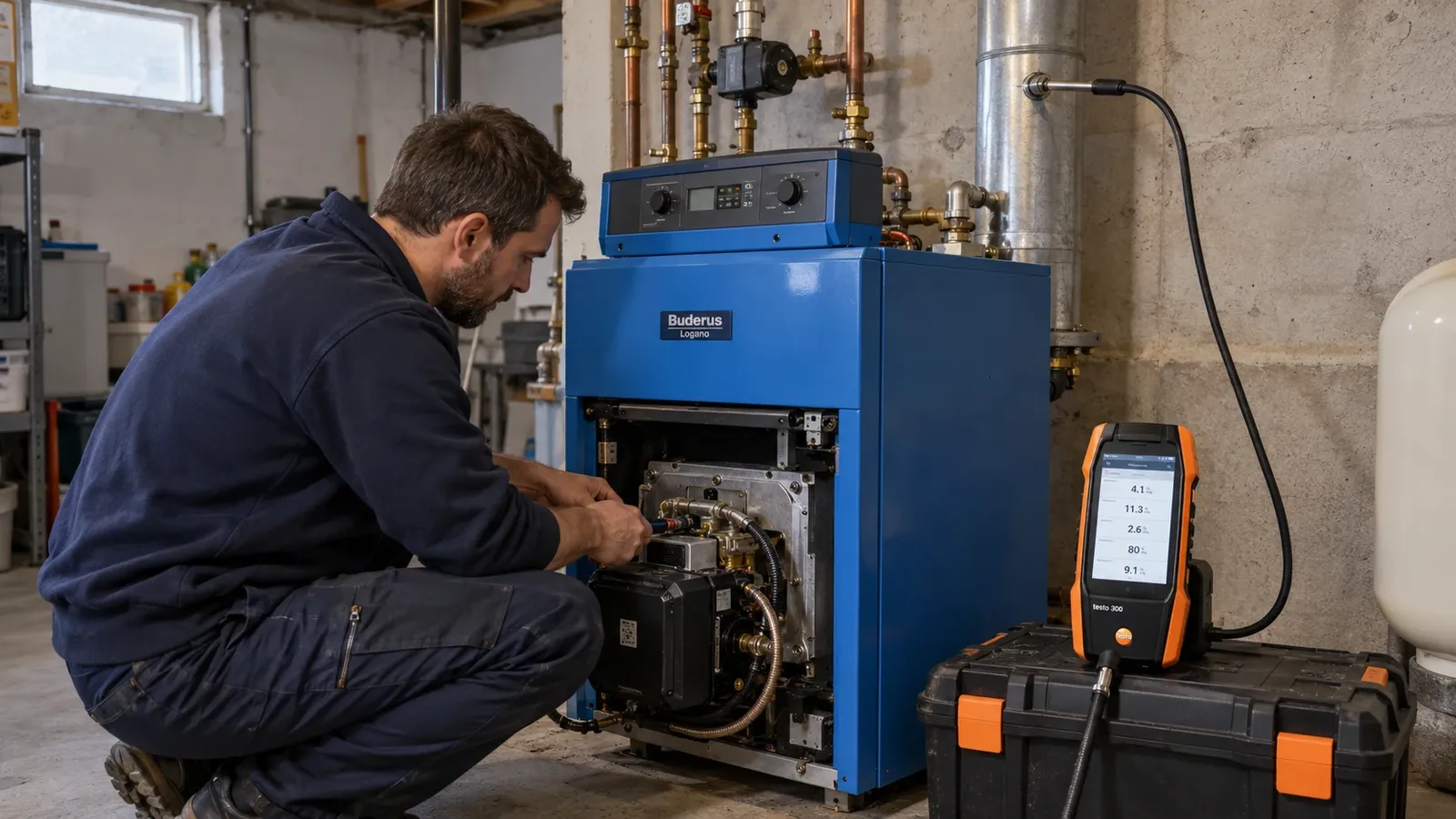
Bulex boilers are among the most installed in Belgium, from older Thema Classic models to the recent Thema Condens and Isotwin Condens. When one of them stops, the screen shows an F. code followed by two digits.
The ones we meet most often are F.28 (no ignition at start-up), F.29 (flame lost during operation), F.22 (too little water in the circuit) and F.75 (no pressure change when the pump starts). Each has several possible causes listed in the table.
The engineer narrows them down with measurements: gas pressure, ionisation current, pump operation, sensor values. You are told what is wrong and how much the repair costs before he goes ahead.
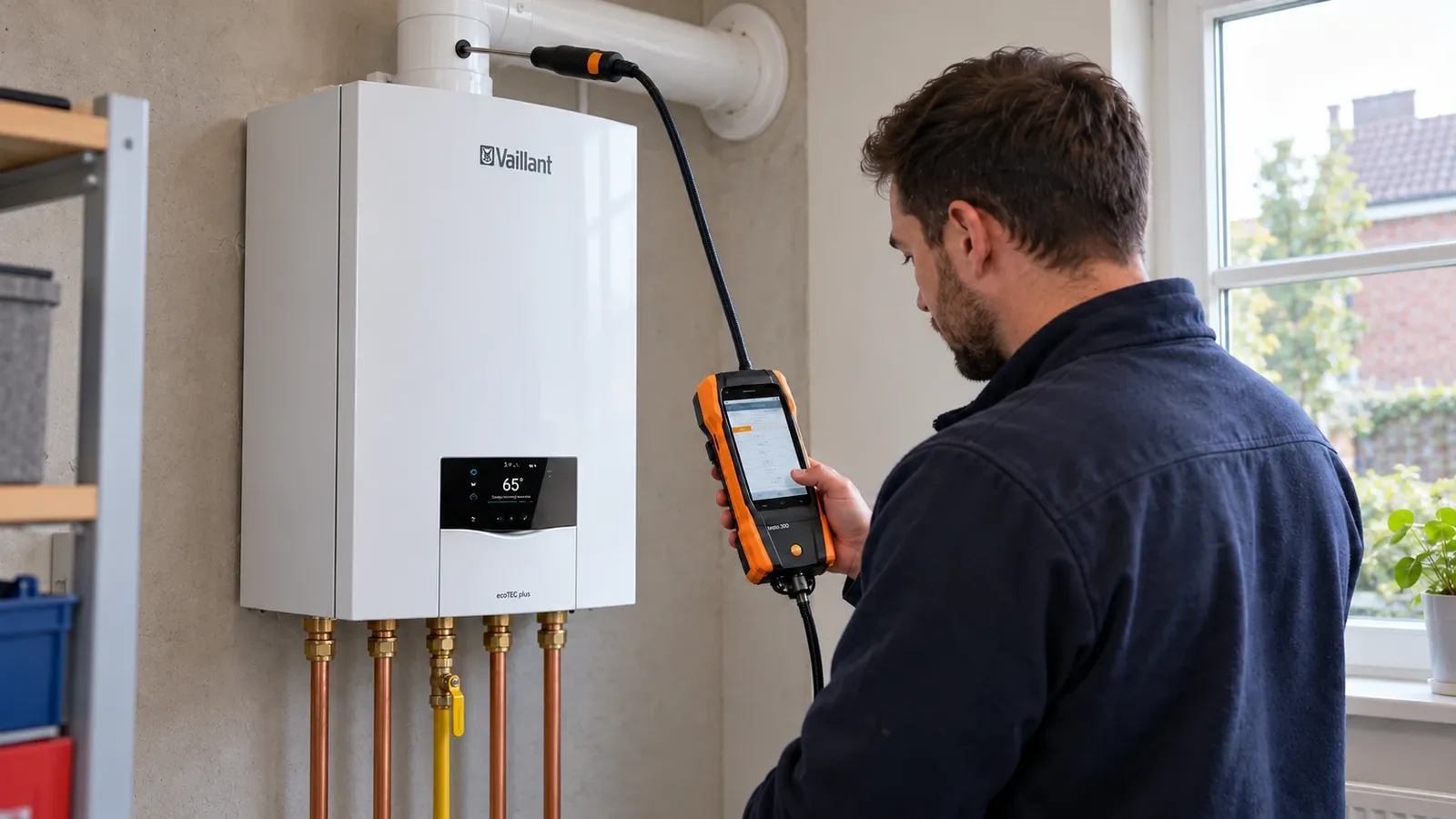
A clogged condensate drain, a worn ignition electrode or a dirty heat exchanger are behind many F.28, F.29 and F.68 codes. These parts are cleaned or inspected during the yearly service.
The technician also analyses the combustion, tests the safety devices and leaves you the service attestation, which your insurer or landlord may ask for.
Type the code exactly as shown, with the dot (F.28, F.75…). The middle column gives the meaning, the last one the parts the engineer looks at.
| Code | Meaning | What the technician checks |
|---|---|---|
| F.00 | Flow sensor interruption | NTC connector loose or poorly connected, broken cable, defective NTC sensor. |
| F.01 | Return sensor interruption | NTC connector loose or poorly connected, broken cable, defective NTC sensor. |
| F.10 | Flow sensor short circuit | NTC sensor short-circuited, short circuit in cables/housing. |
| F.11 | Return sensor short circuit | NTC sensor short-circuited, short circuit in cables/housing. |
| F.20 | Safety cutout: temperature limiter | Grounding problem, NTC fault, discharge via cable/ignition electrode, defective PCB. |
| F.22 | Safety cutout: low water level | Insufficient water, pressure sensor/pump loose or defective, defective pressure sensor. |
| F.23 | Safety cutout: ΔT too high | Pump blocked/low power, air in appliance, flow and return sensors swapped. |
| F.24 | Temperature rise too fast | Pump blocked/low power, air, pressure too low, gravity brake blocked/incorrectly installed. |
| F.25 | Flue gas temperature too high | Flue gas safety switch (STB) interrupted, broken cable. |
| F.27 | Flame simulation | Moisture, defective flame detector, gas valve leaking. |
| F.28 | Ignition fault (start) | Air in gas, insufficient dynamic pressure, DCT activated, siphon/condensate drain clogged, injector/gas mechanism defective or incorrect, wiring/ignition/ionization/grounding issue, defective PCB. |
| F.29 | Re-ignition failed (during operation) | Gas supply interrupted, flue gas recirculation, siphon/condensate drain clogged, grounding problem, ignition faults. |
| F.32 | Fan fault | Connectors poorly attached, broken cable, fan blocked, Hall sensor/PCB defective. |
| F.34 | Safety cutout: pressure monitoring | Flue gas pressure sensor and its circuit, water leak, air in the heating circuit. |
| F.35 | Air intake / flue gas exhaust fault | Duct blocked, insufficient draft/exhaust. |
| F.49 | eBUS fault | Short circuit/overload on eBUS, reverse power supply on bus. |
| F.61 | Gas valve control fault | Gas supply wiring defective, coils defective, PCB defective. |
| F.62 | Gas valve fault, delayed shut-off | Gas valve tightness (internal leak in the valve) and electronics; the boiler stays off until repaired. |
| F.63 | EEPROM error | Memory/electronics defective (main board). |
| F.64 | Electronics / NTC sensor error | Short circuit in flow/return sensor or defective PCB. |
| F.65 | Electronics overheating | Ventilation around the boiler, main circuit board. |
| F.67 | Flame/electronics error | Unrealistic flame signal; defective electronics. |
| F.68 | Unstable flame signal | Air in gas, low pressure, incorrect air ratio, condensate drain clogged, wrong injector, ionization interruption, flue gas recirculation. |
| F.70 | Invalid device identification (DSN) | Device identification after a board or display replacement, coding resistor. |
| F.73 | Water pressure sensor signal — too low | Interruption/short circuit of sensor, defective wiring. |
| F.74 | Water pressure sensor signal — too high | Short circuit to 5V/24V or internal pressure sensor fault. |
| F.75 | No pressure change when pump starts | Pressure sensor, pump, air in the circuit, water content, bypass, expansion vessel. |
| F.76 | Primary heat exchanger STB activated | Cable/fuse connection or defective primary heat exchanger. |
| F.77 | Flue damper / condensate pump fault | No feedback from damper or defective condensate pump. |
| F.83 | Flow/return temperature difference error | No/insufficient temperature rise at burner start: insufficient water, sensor misplaced. |
| F.84 | Illogical temperature difference | Flow and return sensors swapped/installed incorrectly. |
| (Communication fault) | No communication with PCB | Fault between display and electronic board (electrical box). |
Code not in this table: call us, our technician knows it.
Smell of gas? Do not touch any switch, open the windows, leave the house and call 112 from outside. For any other code, write it down and call us: the technician knows what to look at and brings the right parts.
By phone or WhatsApp: model and F code. A photo of the data plate helps us bring the right part.
He reads the fault memory and measures the suspected parts instead of guessing.
Repair at the price agreed beforehand, test run, then job report and invoice.
Trustindex vérifie que la source originale de l'avis est Google. Super quick intervention on a late Tuesday evening!Publié surTrustindex vérifie que la source originale de l'avis est Google. Top service. Very professional. Clear communication and no sneaky sales pitches. Problem identified, problem solved. Correct!Publié surTrustindex vérifie que la source originale de l'avis est Google. Très content du service : communication via emails, entretien de la chaudière avec photos avant/après. Je recommande !Publié surTrustindex vérifie que la source originale de l'avis est Google. Very professional and fast service!! TopPublié surTrustindex vérifie que la source originale de l'avis est Google. Very nice of plumbing thanks a lot!
Bulex boilers are repaired and serviced by our engineers all over Belgium: Brussels, Wallonia and Flanders. Call us and we will give you the earliest arrival time at your address.
Our technicians work on all brands: they install, service and repair appliances from the major manufacturers. For a new installation, we recommend the model that suits your home and budget.










We buy our equipment from all the major Belgian wholesalers and suppliers, including Facq, Van Marcke and Desco: genuine parts, quickly available.



The boiler did not manage to light at start-up. Gas supply, gas pressure, ignition and ionisation, condensate drain or gas valve can be involved: the engineer finds which one.
Safety cut-out because there is too little water in the heating circuit, or because the pressure sensor or pump reports a problem. A pressure loss that keeps returning often means a leak.
When the pump started, the pressure sensor saw no change. The pump, the sensor, air in the circuit and the expansion vessel are examined.
Very close, because both brands belong to the same group. Some models still have their own codes, which is why the technician looks at the exact model.
Note the code and call us. Repeated lockouts mean a real fault that needs a diagnosis.
Yes. We service and repair all Bulex gas boilers and hand over the service attestation after each service.
Call us or choose a time online: an engineer comes with the common Bulex parts.