
Condensate
A condensing boiler produces water that must go to the drain. A blocked trap or a loose pipe leaves a clear, slightly acidic puddle under the boiler.
Home › Boiler leaking
A puddle under the boiler, drips from the relief valve pipe or pressure that keeps falling? A leak never fixes itself. A heating engineer comes to locate and repair it 7 days a week, with the price given before any work.
★★★★★5,0on Google· 22 years of experience
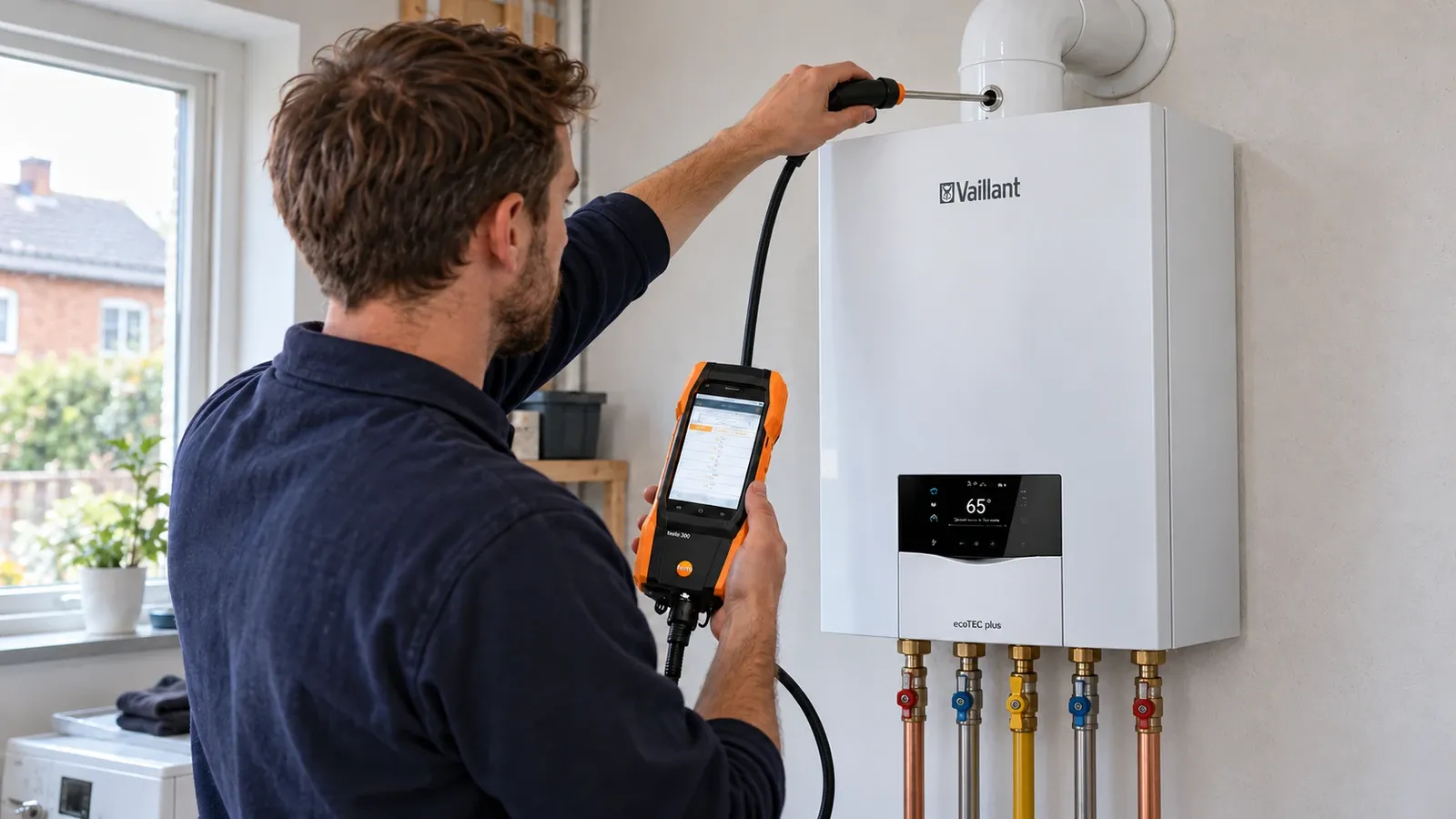
The most common leak does not come from the boiler itself but from its pressure relief valve. This small valve opens when pressure goes above 3 bar and lets water out through a pipe to the drain or outside. If it drips constantly, either the valve is worn or the pressure is rising too high.
Pressure rises too high when the expansion vessel has lost its air charge. This tank absorbs the expansion of the water as it heats. Flat, it no longer does its job: pressure climbs with each heating cycle, the valve opens, then pressure drops when cold and the boiler stops.
The engineer checks the vessel's charge with a gauge, recharges or replaces it, then changes the valve if it no longer seals. He resets the correct pressure and checks it stays stable over several heating cycles.
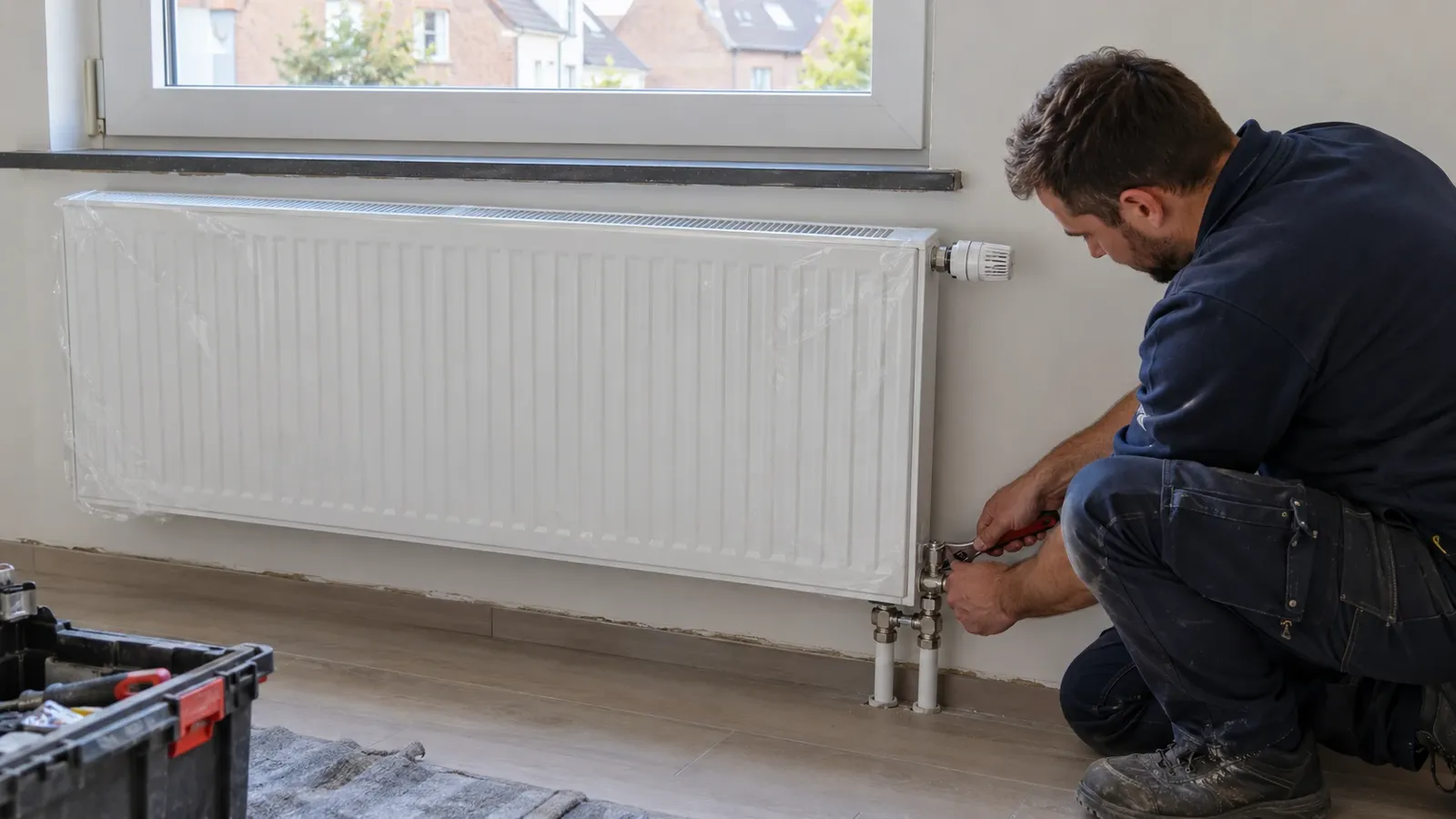
A boiler that loses pressure with nothing dripping underneath is often losing water elsewhere: a radiator fitting, a thermostatic valve gland that weeps, a bleed valve not fully closed or a pipe buried in the floor.
The signs can be subtle: a ring mark on the floorboards, a rust stain under a valve, laminate swelling near a radiator. Walk around the house before the engineer arrives and note what you see: it saves time.
The engineer tightens or remakes joints, replaces faulty valves and bleed screws and drains the system if needed. For a hidden leak, he narrows down the area before opening anything, to limit damage to floors or walls.
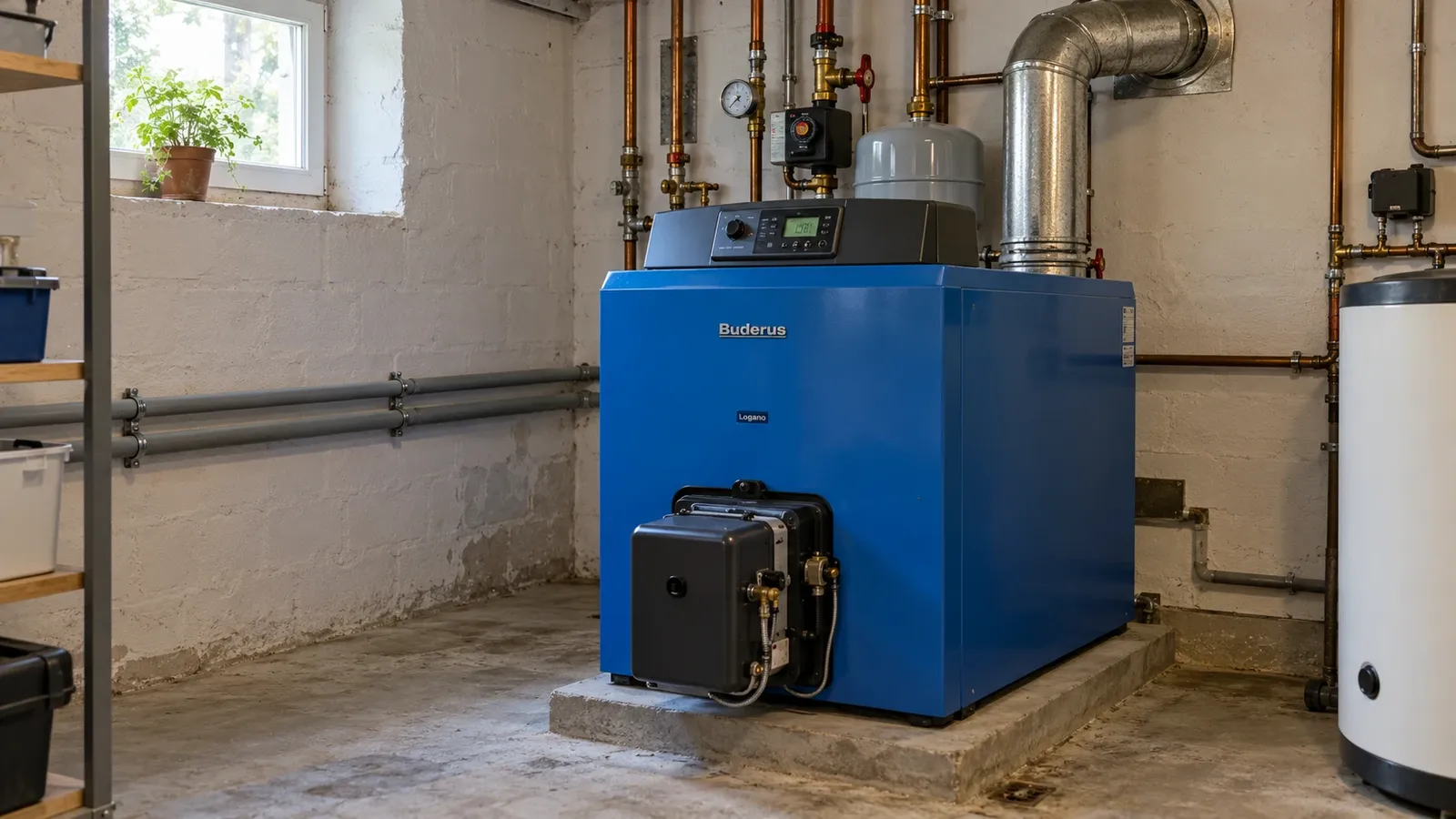
When water comes from inside the boiler, from the combustion chamber or the bottom of the casing, the leak may come from the heat exchanger or the boiler body. On an old cast-iron or steel boiler, corrosion eventually eats through the metal.
The engineer removes the casing to see where the water is coming from. A pump seal, an internal fitting or a pressure sensor are easy to replace. A leaking heat exchanger can also be changed on many recent wall-hung boilers, but the part can cost close to a new appliance.
On an old boiler, a leaking body usually means the end. The engineer says so plainly and you can ask for a quote for a condensing boiler or a heat pump. Meanwhile, he makes the system safe to prevent water damage.
Not all leaks are equal. Here are the ones our engineers see most, from the simplest to the most serious.
A condensing boiler produces water that must go to the drain. A blocked trap or a loose pipe leaves a clear, slightly acidic puddle under the boiler.
The relief valve pipe runs on every heating cycle: flat expansion vessel or worn valve.
Left open or worn, it lets water in continuously: pressure rises and the relief valve opens.
Weeping around the circulation pump, often with white or red scale and rust marks.
Under the boiler or on radiators: a dried-out seal or a fitting that has moved.
Water from inside the appliance: the heaviest repair, to discuss with the engineer.
A few simple steps limit the damage safely.
Put a bowl and towels under the leak and move anything that could be damaged.
Turn the boiler off, close the filling loop and, if possible, the isolation valves under the boiler.
If water reaches a socket or the boiler itself, switch off the boiler's breaker before touching anything.
Write down the pressure shown and take a photo of the leak: it helps the engineer prepare.
Trustindex vérifie que la source originale de l'avis est Google. Super quick intervention on a late Tuesday evening!Publié surTrustindex vérifie que la source originale de l'avis est Google. Top service. Very professional. Clear communication and no sneaky sales pitches. Problem identified, problem solved. Correct!Publié surTrustindex vérifie que la source originale de l'avis est Google. Très content du service : communication via emails, entretien de la chaudière avec photos avant/après. Je recommande !Publié surTrustindex vérifie que la source originale de l'avis est Google. Very professional and fast service!! TopPublié surTrustindex vérifie que la source originale de l'avis est Google. Very nice of plumbing thanks a lot!
Our heating engineers repair boiler leaks all over Belgium, in Brussels, Flanders and Wallonia. Call us and we will tell you when an engineer can come.
Our technicians work on all brands: they install, service and repair appliances from the major manufacturers. For a new installation, we recommend the model that suits your home and budget.












We buy our equipment from all the major Belgian wholesalers and suppliers, including Facq, Van Marcke and Desco: genuine parts, quickly available.



A small water leak is not dangerous in itself, but the boiler may cut out from low pressure and water can reach electrical parts. Have it checked without delay.
There is a leak somewhere on the system, or the relief valve opens on every cycle because the expansion vessel is flat. Topping up daily wears the boiler: the cause must be found.
If it is the condensate pipe, a little water going to the drain is normal. If it is the relief valve pipe that runs, it is not.
Water damage is often covered, but not usually the boiler repair itself. Take photos; our job sheet describes the cause of the leak.
Replacing a valve or a seal does not cost the same as a heat exchanger. The engineer gives you the price once he has found the leak, before repairing.
We work 7 days a week, including evenings and weekends. Call 0477 03 88 98 to find out when we can visit.
Yes: Vaillant, Bulex, Viessmann, Buderus, Remeha, Junkers, Saunier Duval, ACV, Atag and the other common brands.
Call us for a quick repair, book a slot online or request a replacement quote.