Only paper
No wipes, cotton buds, sanitary products, nappies or kitchen roll.

Home › Blocked toiletService 7 days a week
A toilet that fills up and drains slowly, or overflows when you flush, is blocked either in the pan outlet or further down the soil pipe. Our technicians clear blocked toilets 7 days a week, without damaging the pan, and give you the price before they start.
★★★★★5,0on Google22 years of experiencePrice agreed before the work
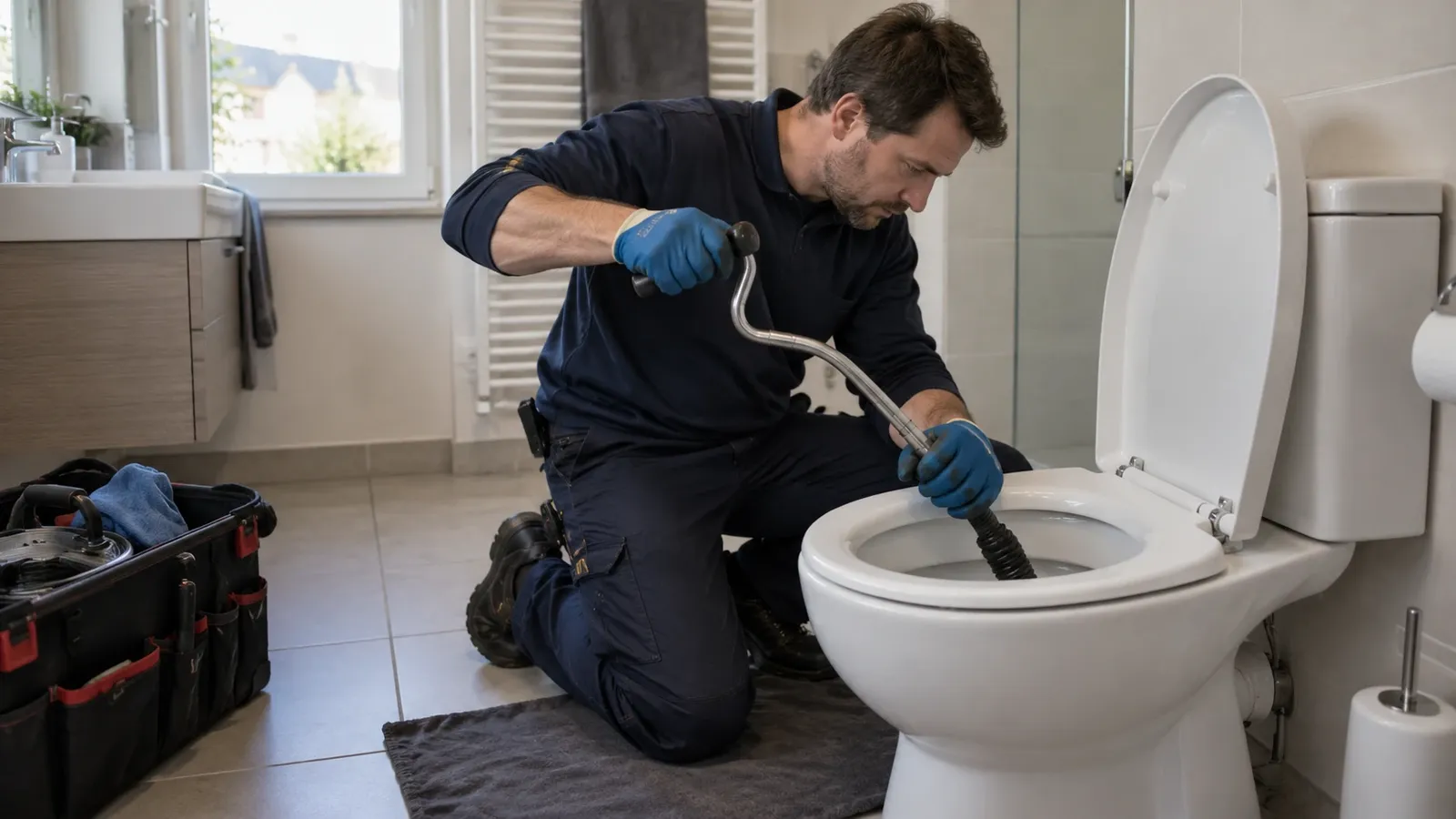
Most blocked toilets are caused by wet wipes, sanitary products, too much paper or an object dropped into the pan. Wipes sold as flushable do not break down fast enough and build up in the bends.
Stop flushing as soon as the water rises: each flush adds water that can overflow. Try a proper toilet plunger with steady pushes; never pour caustic products into a blocked toilet, they splash and harm whoever has to clear it.
The technician uses a toilet auger with a protective sleeve that does not scratch the porcelain. It reaches past the trap in the pan, breaks up or pulls back the blockage, and the water drains away again.
If an object such as a toy, a phone or a toothbrush has fallen into the toilet, do not flush: water would push it deeper into the soil pipe, where it is much harder to retrieve.
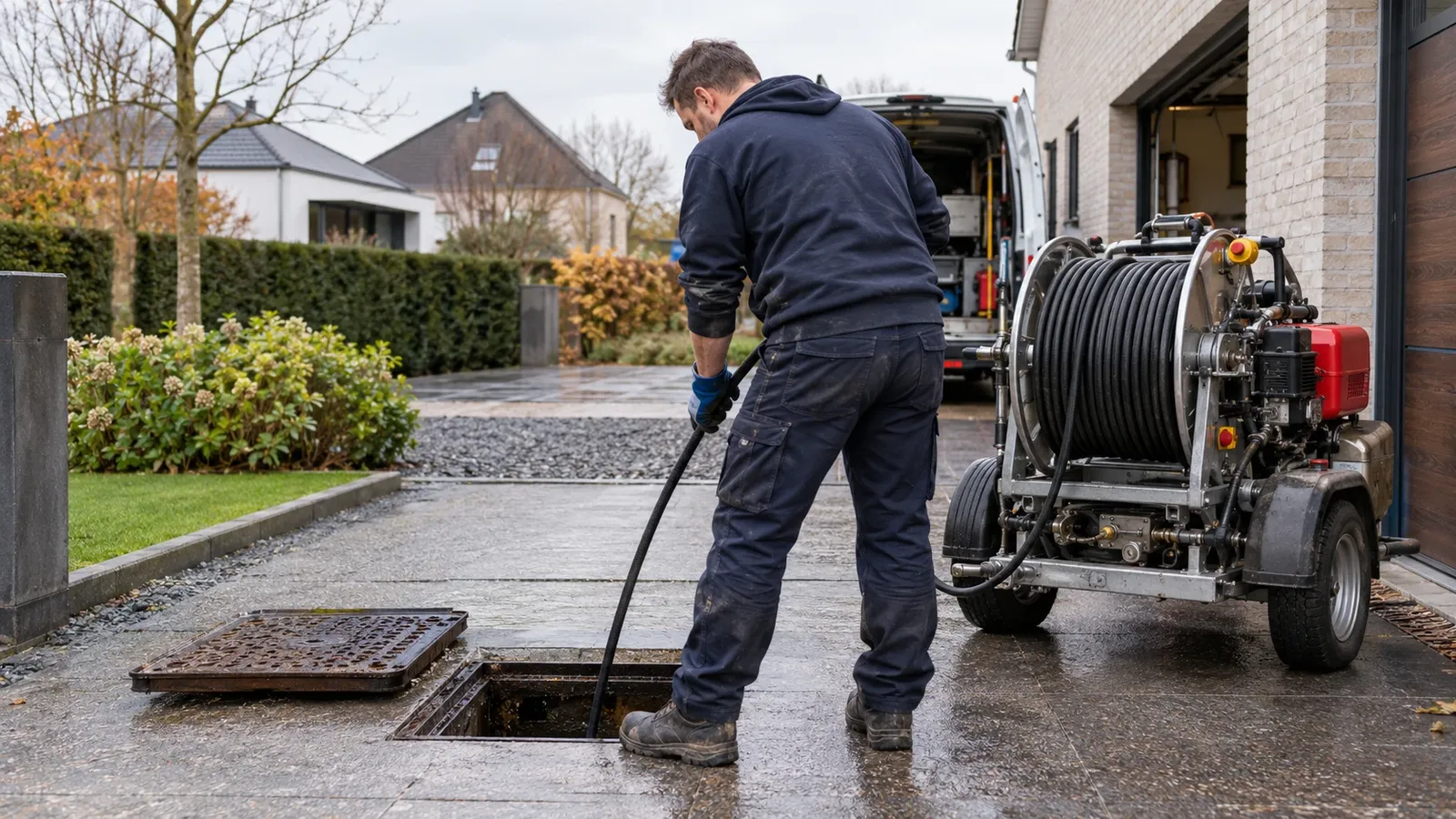
If the toilet clears but the water still drains slowly, or if the shower and the sink are slow at the same time, the blockage is further down: in the soil stack or the main drain to the sewer.
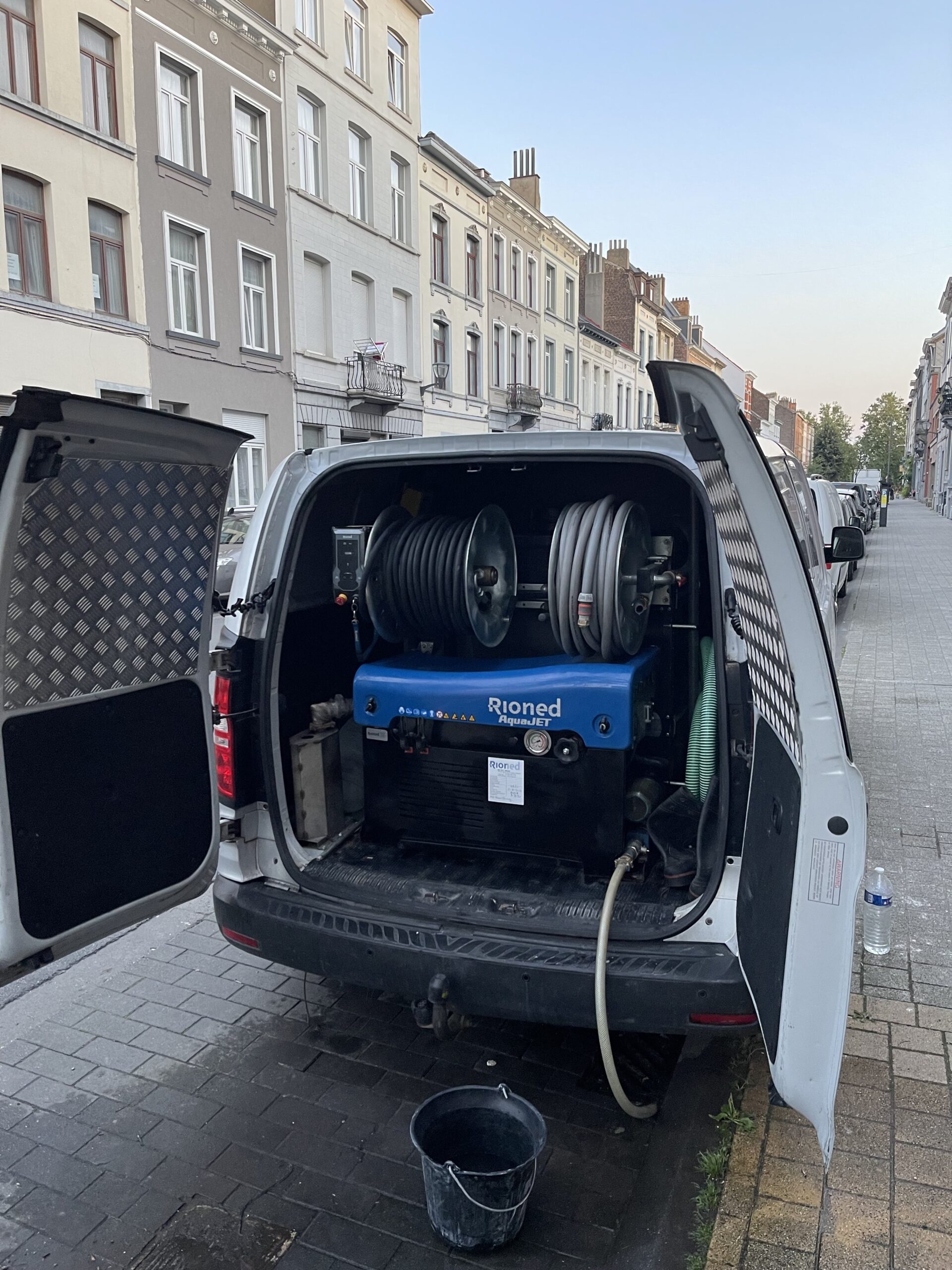
The technician reaches it from below, through an access cap, the inspection chamber or a rodding eye. He uses a high-pressure jetter: a hose with a nozzle that sprays water backwards, pulls itself along the pipe and scours the walls.
High-pressure jetting removes the blockage and the deposits along the whole length, not just a hole in the middle. It is the right tool for paper, wipes and scale packed in a pipe.
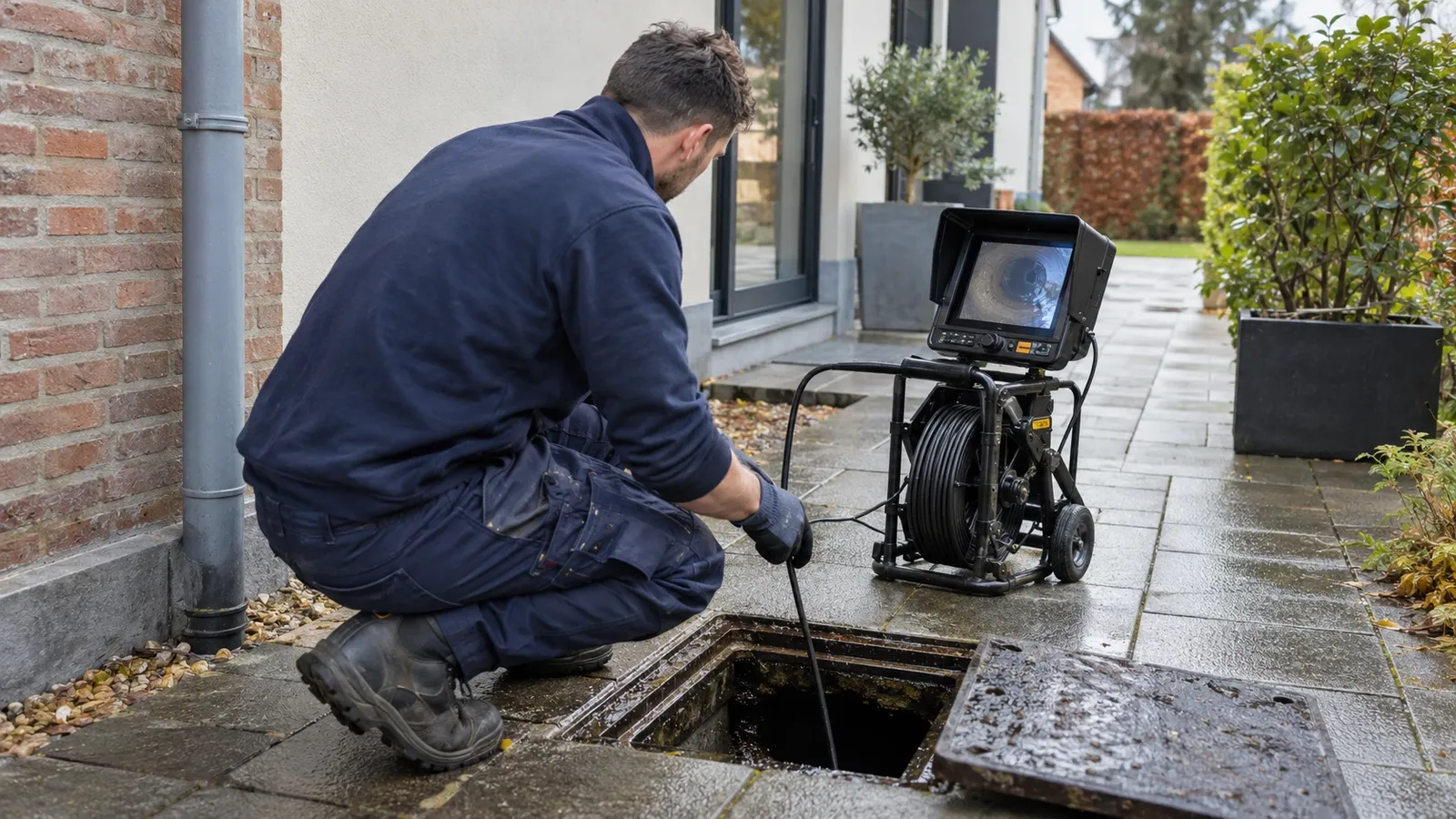
A toilet that blocks every few weeks has an underlying problem: a pipe with too little fall, a displaced joint, a crushed section, roots entering through a crack or a badly designed connection after a renovation.
After clearing, the technician can run a camera through the drain. He sees the condition of the pipe live on his screen, measures the distance to the defect and locates it from above.
You then know whether regular maintenance is enough or a local repair is needed, without digging up the garden at random.
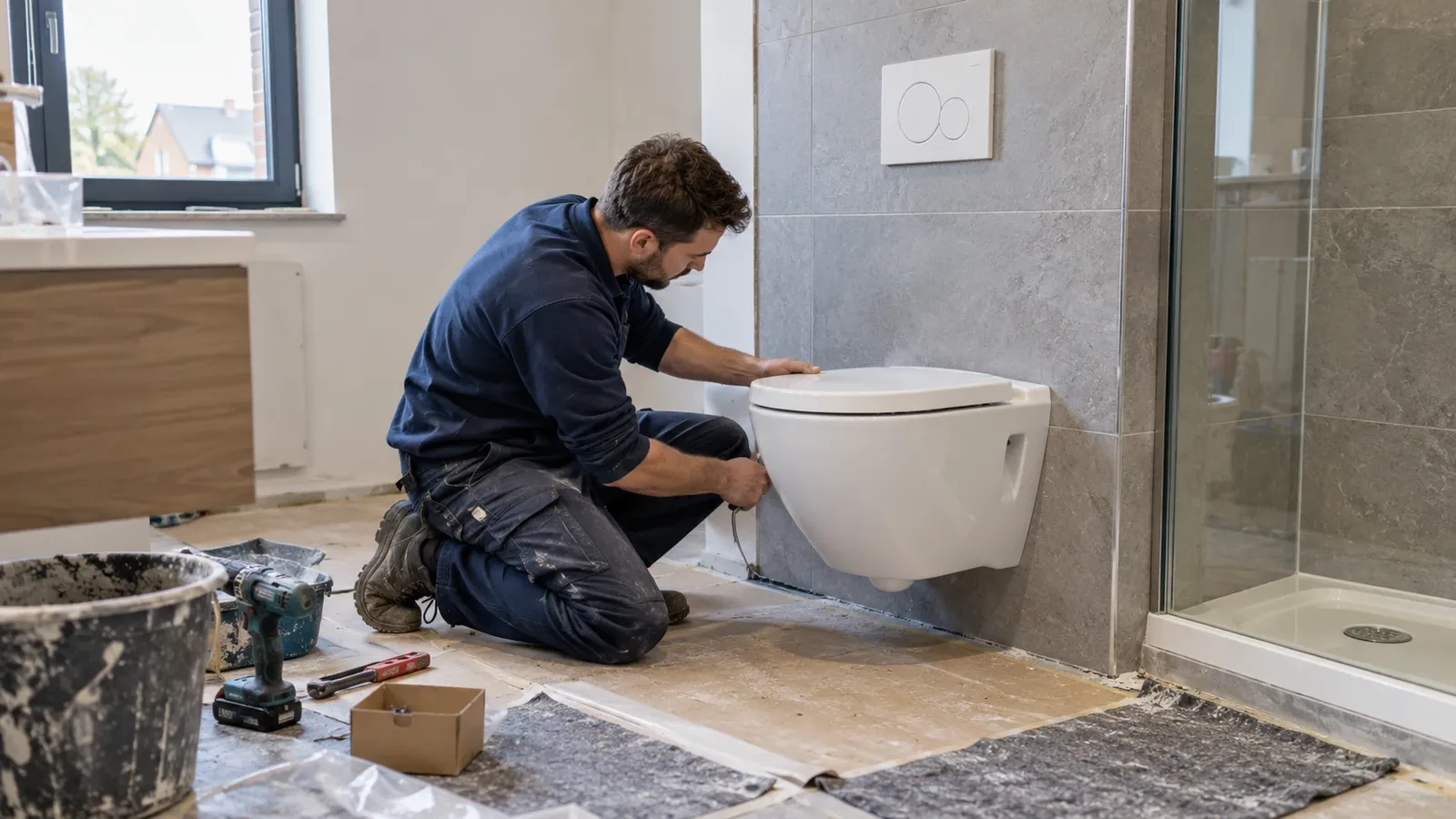
Sometimes the toilet is the cause: an old pan with a narrow outlet, a weak flush that does not carry the waste away, or a cracked pan after a blockage was forced.
Our plumbers can replace the pan, adjust or replace the flush mechanism, or fit a new floor-standing or wall-hung toilet with a modern flush. The price is given before the work.
Where the waste is too high, in a cellar for example, a macerator toilet can be a solution: the plumber tells you what is possible.
A cup plunger, the flat rubber kind used for sinks, does little in a toilet. What works is a flange plunger, with a soft sleeve that fits into the outlet at the bottom of the pan. Leave enough water in the bowl to cover the rubber, push down slowly to let the air out, then pump firmly ten or fifteen times before pulling it away.
Boiling water from the kettle is not a good idea: a sudden change of temperature can crack the porcelain. Chemical drain cleaners rarely reach a blockage of wipes or paper, and they make the job unpleasant for whoever comes next. If the water rises towards the rim when you flush, stop flushing and close the small valve behind or under the cistern.
When the plunger does not help, the blockage is usually further down, in the soil pipe or under the floor. That is the moment to call us on 0477 03 88 98.
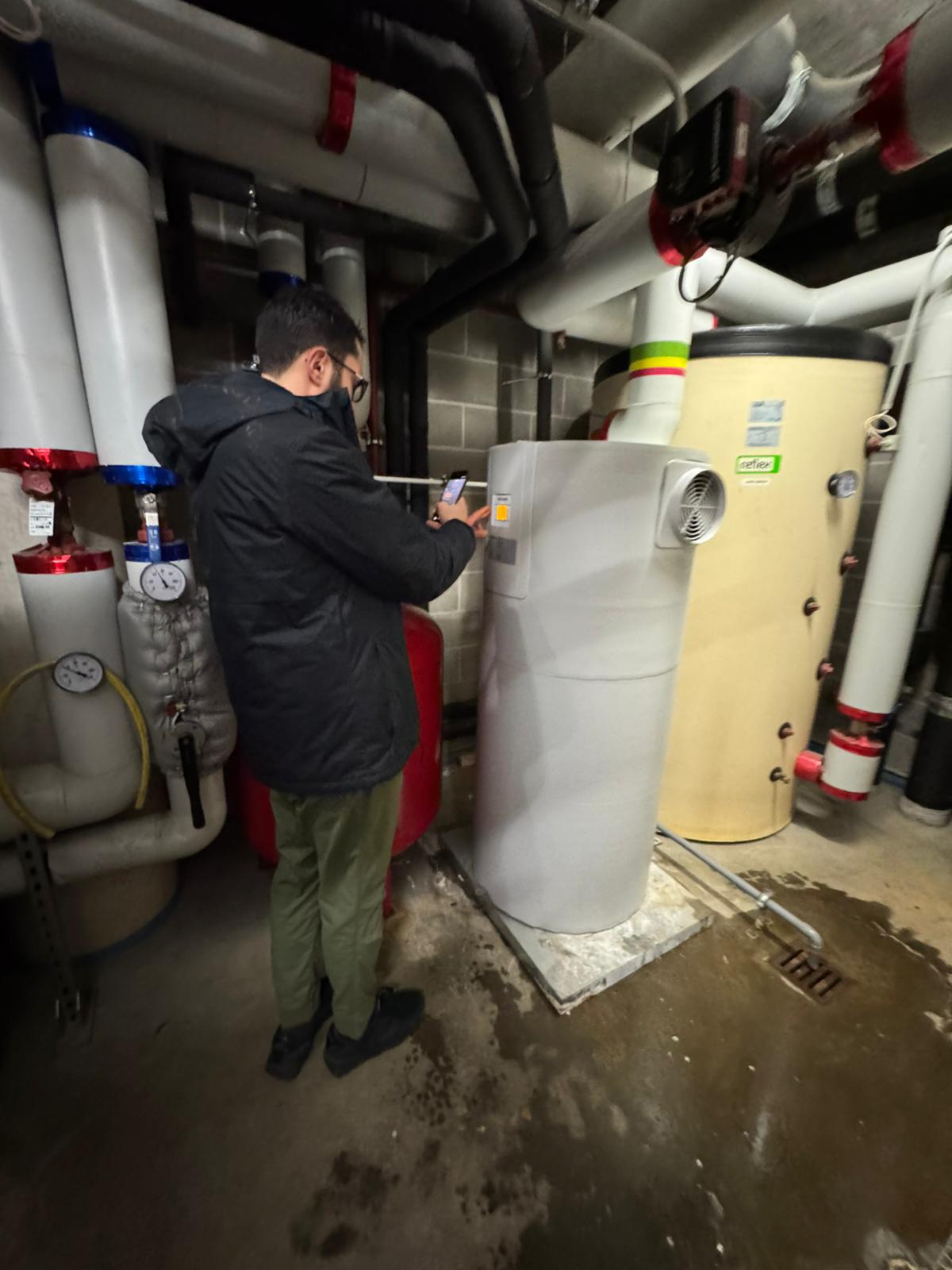
In a block of flats, several toilets share one vertical soil stack. A blockage low in the stack shows up on the ground floor first: water comes up in the ground-floor toilet or shower when the neighbours upstairs flush. Clearing your own pan will not help; the stack and the horizontal pipe in the basement have to be opened at the inspection access and cleared.
In offices, shops and restaurants, toilets block more often because of paper towels, sanitary products and, near kitchens, grease that sets in the pipes. We clear the line, check it with a camera if needed and tell the manager or the building administrator what we found, with photos, so the cause can be dealt with.
For homes and businesses in the capital, see blocked toilet in Brussels; if other drains are slow as well, read blocked drain.
No wipes, cotton buds, sanitary products, nappies or kitchen roll.
With a low-flush toilet, flush twice rather than overload it.
So there is somewhere else for everything that should not go in the pan.
A toilet that empties more slowly than usual is a warning: deal with it before it blocks completely.
A toy or a toothbrush dropped in the pan can lodge in the trap: do not flush, call us, we retrieve it.
Tell us if other drains are slow too. We book the first available visit.
The technician locates the blockage and gives you the price.
Auger or jetting, rinsing, flush test and job sheet.
Trustindex vérifie que la source originale de l'avis est Google. Super quick intervention on a late Tuesday evening!Publié surTrustindex vérifie que la source originale de l'avis est Google. Top service. Very professional. Clear communication and no sneaky sales pitches. Problem identified, problem solved. Correct!Publié surTrustindex vérifie que la source originale de l'avis est Google. Très content du service : communication via emails, entretien de la chaudière avec photos avant/après. Je recommande !Publié surTrustindex vérifie que la source originale de l'avis est Google. Very professional and fast service!! TopPublié surTrustindex vérifie que la source originale de l'avis est Google. Very nice of plumbing thanks a lot!
Our technicians clear blocked toilets throughout Belgium: Brussels, Flanders and Wallonia, in houses, flats and businesses.
Stop flushing, try a proper toilet plunger with steady pushes and avoid chemicals. If the water still does not go down, call us on 0477 03 88 98.
Yes, they are the main cause. Even wipes labelled flushable do not break down quickly enough.
The blockage is in the shared waste or the main drain, below both. It must be cleared from further down.
No. A toilet auger has a protective sleeve designed not to scratch the porcelain.
It depends on where the blockage is and the equipment needed. The price is given before the work.
Yes, 7 days a week. Any extra charge is quoted on the phone.
Yes. Roots or a collapsed section in the drain between the house and the street sewer can stop the flow. A camera shows exactly where it is.
No. Each flush adds water that has nowhere to go and can overflow. Stop, close the valve of the cistern and try a flange plunger.
Yes: restaurants, offices, shops and apartment buildings, with a report for the manager if needed.
Call us now, book a slot online or request a quote.