White marks
On taps and glass.

Home › Plumbing › Water softener
In short: Our plumbers measure the hardness of your water, fit the softener, set it for your household and service it every year. Free quote, price fixed before the work. Call 0477 03 88 98.
White marks on the shower, clogged shower heads, a water heater that crackles: in many Belgian municipalities the water is hard. A well-set softener protects your appliances and pipes.
★★★★★5,0on Google· 22 years of experience
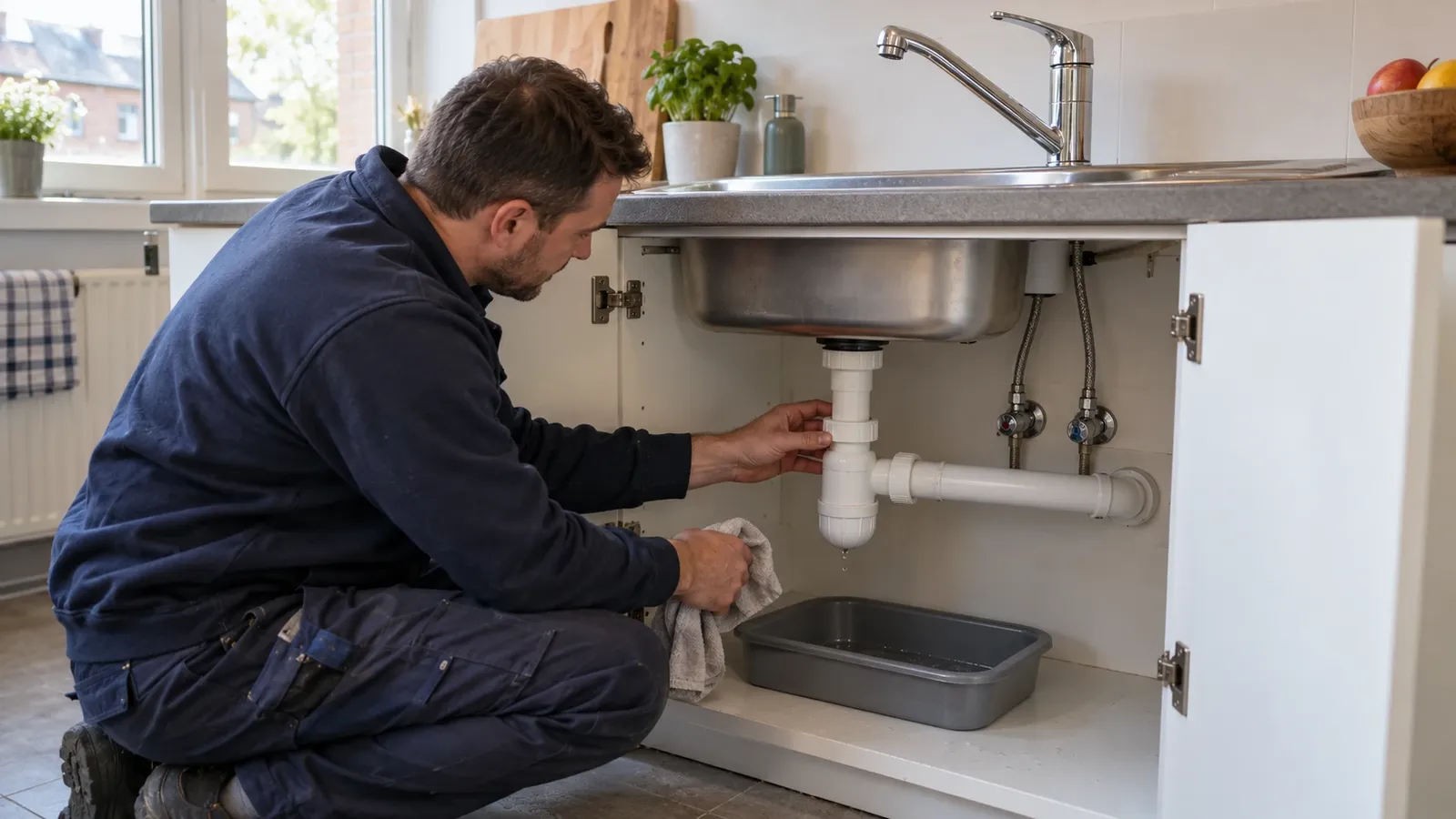
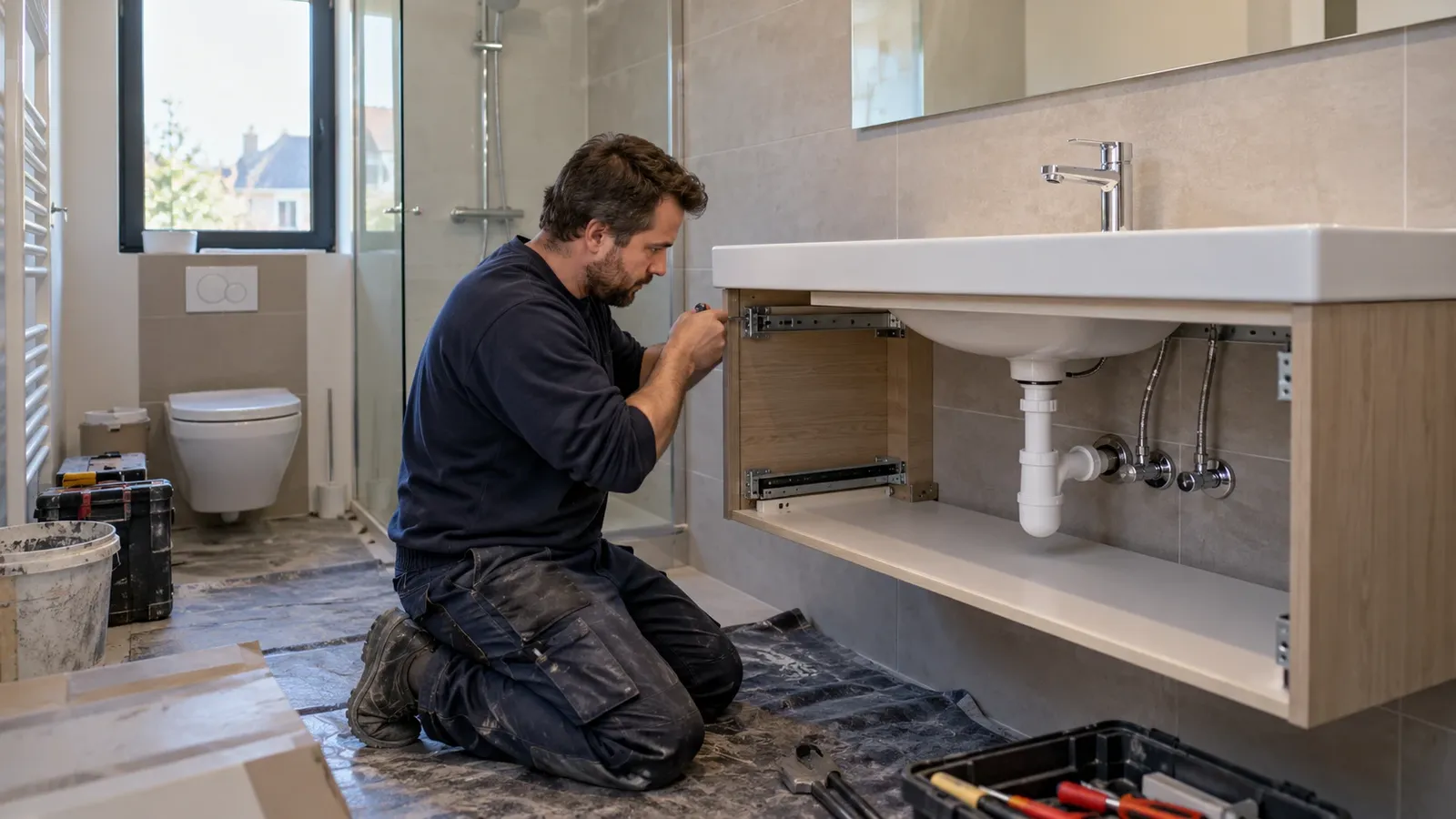
Tap water contains dissolved calcium and magnesium. When heated, they settle as limescale on elements, in pipes, taps and household appliances. In many Belgian municipalities the water is hard and the deposits form quickly.
The softener passes the water through a resin that holds back the calcium and magnesium and replaces them with sodium. When the resin is saturated, the unit regenerates by itself, rinsing it with brine made from the salt in the tank.
The result shows quickly: fewer marks on shower walls, water heater and washing machine elements protected, less descaler and detergent. Correct settings still leave a little hardness in the water, which is better for the pipes and the taste.
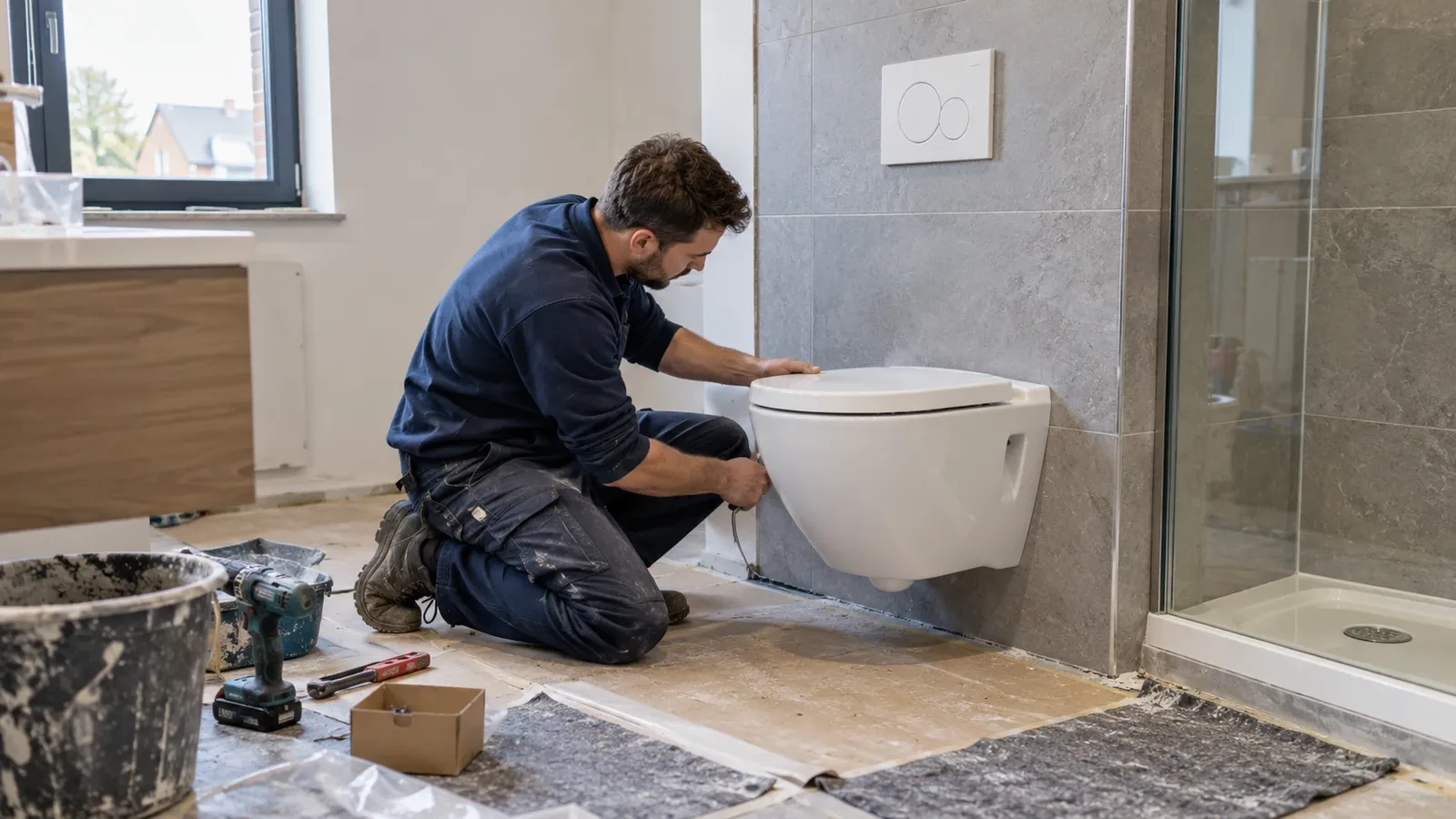
The softener goes just after the meter and the inlet filter, before the water heater and the distribution to the rooms. The plumber chooses a frost-free spot with a drain for the regeneration water and a socket nearby: cellar, utility room or garage.
He fits a bypass so the softener can be switched off without cutting the water, a tap of unsoftened water for the kitchen if you wish, and a non-return valve. The garden and the toilets can stay on hard water to save salt.
Once the unit is filled, the plumber runs a first regeneration, checks every connection for leaks and shows you how to fill the salt tank, read the display and switch the softener off for a long absence.
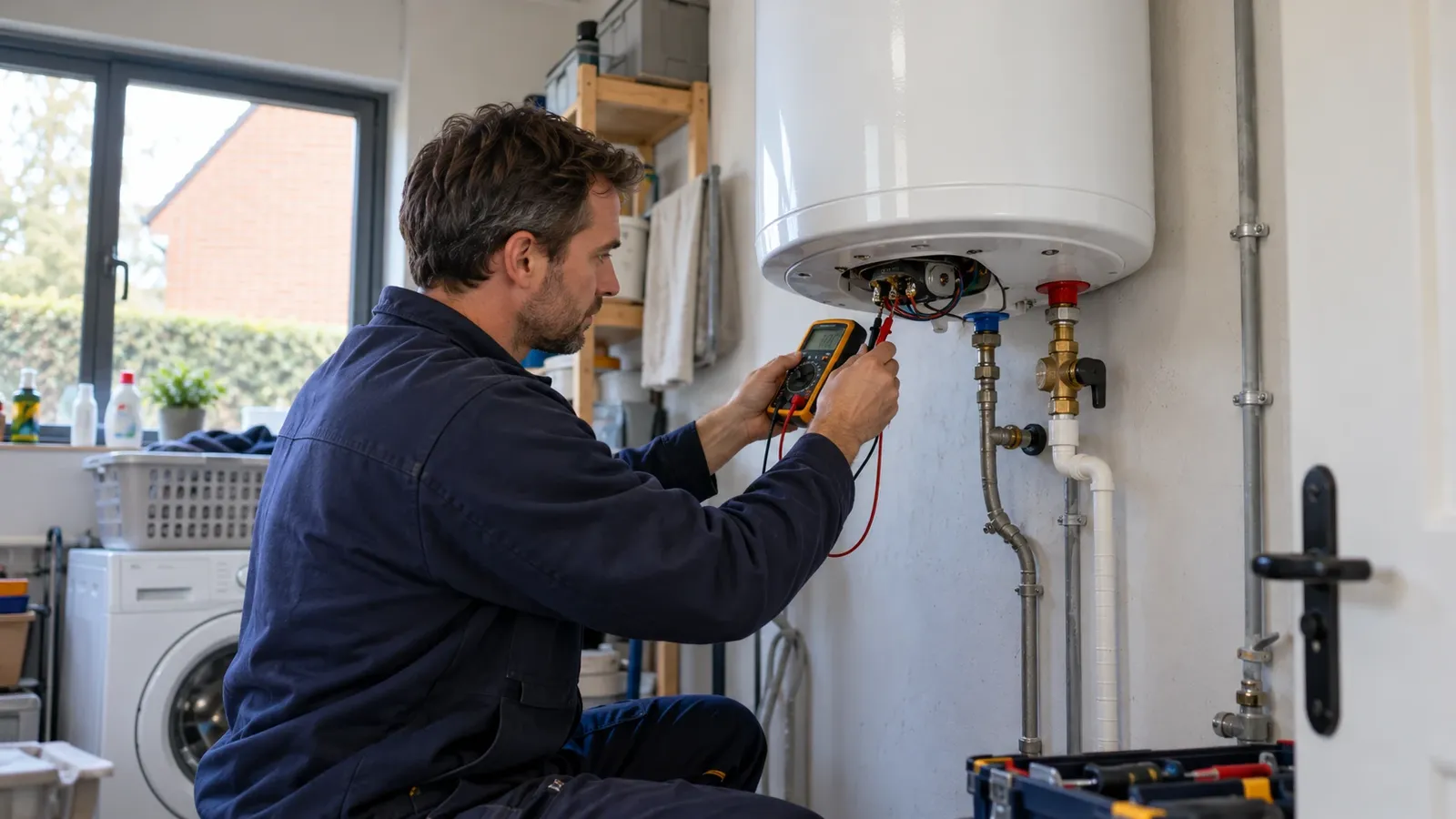
Before setting the unit, the plumber measures the hardness of your water on site. He then programmes the incoming hardness, the residual hardness wanted and the resin capacity for the number of people in the home.
The electric water heater, the heat pump water heater and the boiler benefit first from softened water. An element covered in scale heats less well and ends up failing; a scaled exchanger loses efficiency.
If your water heater is already heavily scaled, we can descale it or replace the anode and the element when fitting the softener, with the cost given beforehand.
Between visits, your only job is to keep salt in the tank. Over time, though, the resin gets dirty, the brine injector clogs and the valve can drift.
The plumber checks the hardness before and after the unit, cleans the salt tank and the injector, checks the seals, the valve and the timer, then disinfects the resin to limit the growth of bacteria. He corrects the settings if the household's use has changed.
We service and repair softeners of all makes. A unit that no longer regenerates, uses too much salt or lets water run to the drain all the time can often be fixed on site.
White marks on taps, glass and shower walls that come back quickly after cleaning. Shower heads and tap aerators that clog.
A water heater or a kettle that crackles, linen that feels rough after washing.
Washing machines, dishwashers and coffee machines that break down early because of limescale. If you recognise several of these, a softener is worth it.
Visit and measurement: the plumber measures the hardness and looks at where the softener can go. Free quote: unit, connections and labour, with a fixed price.
Installation: fitting, connections, first regeneration and settings, then explanation of how to use it.
You receive the job sheet and the invoice, and we can come back every year for the service.
On taps and glass.
Shower and aerators.
Scale on the element.
After washing.
Of the water inlet and meter.
Number of people.
Type and age.
Cellar, garage or utility room.
Address, appliance, what is wrong: the office writes it down and books a time.
You know the call-out cost before anyone leaves; a replacement or a new installation gets a written quote.
Diagnosis and explanation first, then your agreement, then the work. The documents come from Service Technic Belgium.
Trustindex vérifie que la source originale de l'avis est Google. Super quick intervention on a late Tuesday evening!Publié surTrustindex vérifie que la source originale de l'avis est Google. Top service. Very professional. Clear communication and no sneaky sales pitches. Problem identified, problem solved. Correct!Publié surTrustindex vérifie que la source originale de l'avis est Google. Très content du service : communication via emails, entretien de la chaudière avec photos avant/après. Je recommande !Publié surTrustindex vérifie que la source originale de l'avis est Google. Very professional and fast service!! TopPublié surTrustindex vérifie que la source originale de l'avis est Google. Very nice of plumbing thanks a lot!
We fit and service water softeners across Belgium, in Brussels, Wallonia and Flanders.
It depends on the hardness of your water. If it is high and you see limescale everywhere, a softener really helps.
Softened water is drinkable; many people keep a tap of unsoftened water in the kitchen for drinking and cooking.
After the visit you receive a free quote with a price fixed before the work.
Salt tablets made for water softeners, as indicated by the manufacturer.
Once a year: hardness check, cleaning, disinfection of the resin and settings.
Not always: a setting may be wrong or the valve may let water through. The technician checks and corrects it.
Call 0477 03 88 98, send us a WhatsApp message or book online with the « Book an appointment » button. Tell us the municipality and, in a few words, what is going on.
Call 0477 03 88 98, send a photo of your water inlet on WhatsApp or book a visit online.