No hot water
Cut-out, element or night relay.

Home › Plumbing › Brussels › Water heater
In short: no hot water, a safety valve that never stops dripping or a tank that crackles while heating: our plumbers repair, descale and replace water heaters of every make in the 19 municipalities of Brussels. Call 0477 03 88 98.
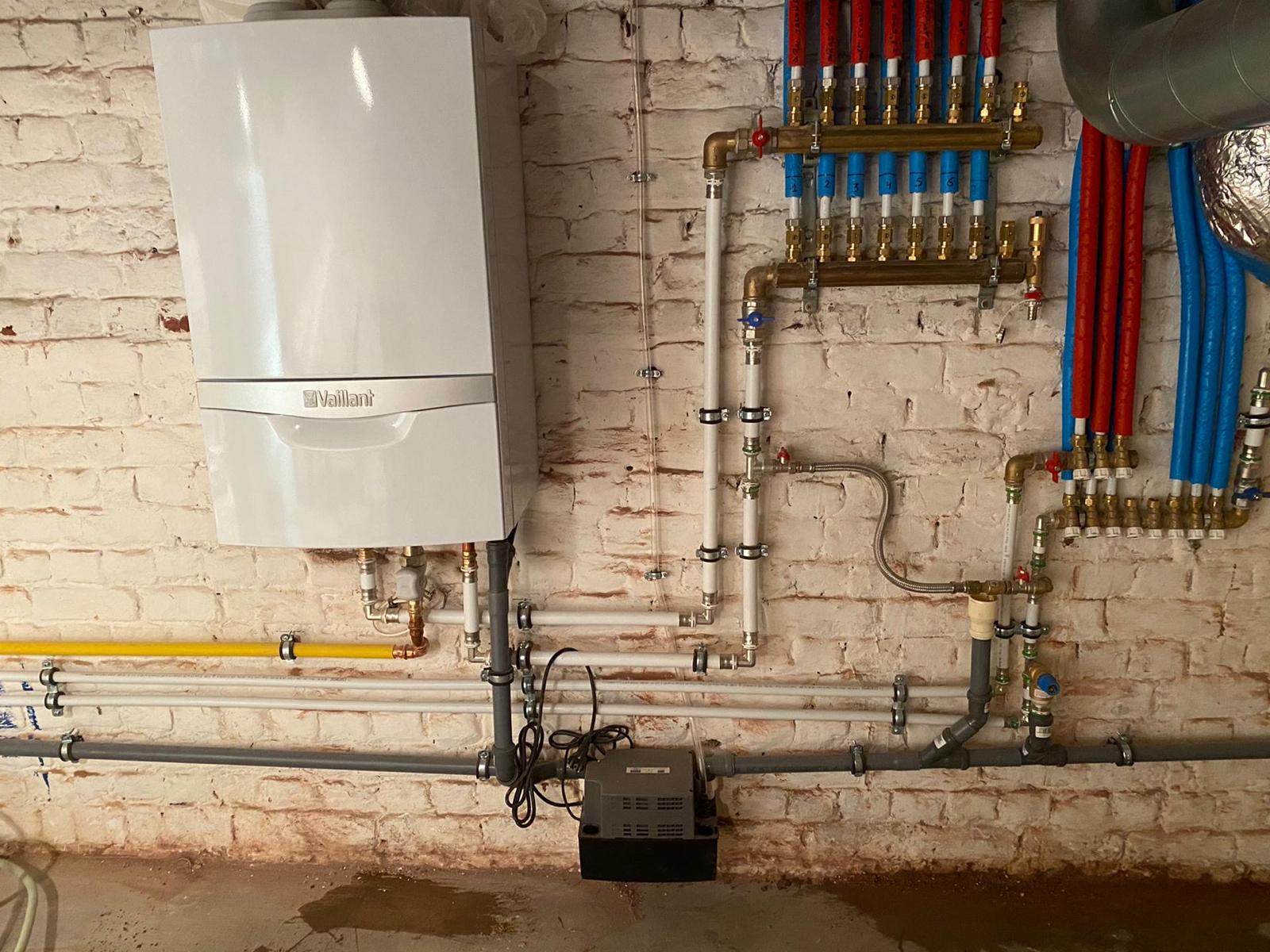
Brussels homes run on all sorts of hot water: an electric tank in the cellar, a heat pump water heater in the utility room, an old gas water heater above the bath, or a combi boiler that does it all. We look at the whole set-up before we touch a part, and you know the cost before the work starts.
★★★★★5,0on Google· 22 years of experience
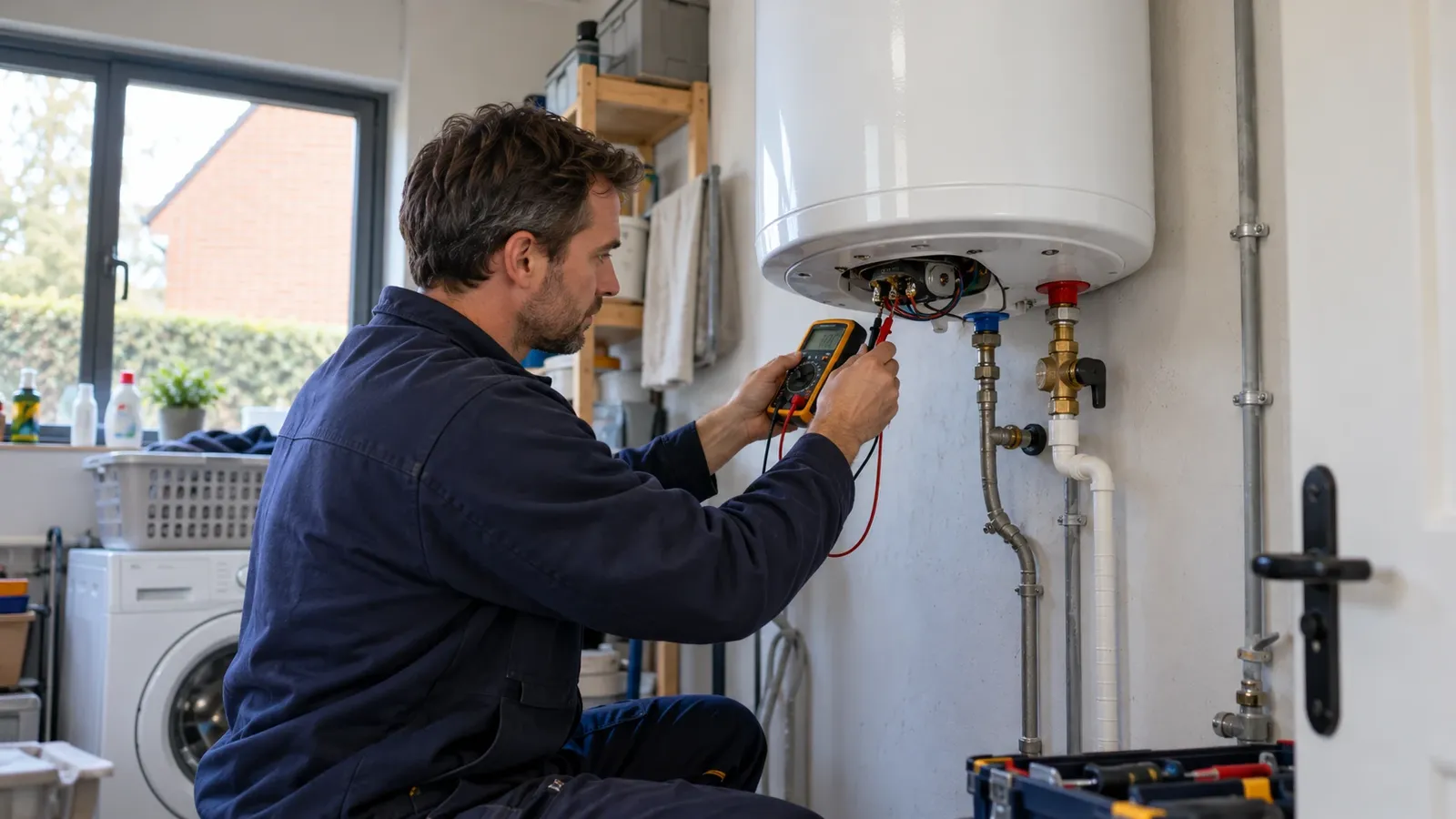
No hot water at all, lukewarm water or a breaker that trips: the plumber measures the heating element, the thermostat and the thermal cut-out, then checks the peak and off-peak switching on your meter. Most of these faults are repaired in one visit, with the part changed on the spot.
A little water escaping from the safety group while the tank heats is normal, because water expands. A constant flow is not. In many Brussels blocks the mains pressure is high on the lower floors, and without a pressure reducer the valve opens all the time.
We measure the incoming pressure and fit a reducer when it is needed. If the tank itself is rusted through, a repair no longer makes sense: the plumber tells you so plainly and proposes a new unit of the right size, with the cost given first.
The water supplied in Brussels is hard. Inside a tank, limescale settles at the bottom and around the element, which then heats through a crust, uses more power and eventually burns out. A tank that rumbles or crackles usually carries a thick layer.
Most enamelled tanks are protected by a magnesium anode that corrodes instead of the steel. Once it is used up, the tank starts to rust. During a service we drain the unit, remove the scale, check the anode and replace it when worn, every two or three years.
To protect your taps, washing machine and boiler as well, a water softener can be fitted on the incoming supply. The plumber measures the hardness, explains the options and looks after the softener every year if you wish.
Some older Brussels flats still have a gas water heater in the bathroom or kitchen. Badly ventilated or never serviced, it can give off carbon monoxide, a gas you can neither see nor smell. A yellow flame, black marks on the casing or a very old unit: stop using it and have it checked.
We replace it with a room-sealed appliance or another solution that suits the flat, taking the flue and the space available into account. In a block, the outlet for the fumes sometimes needs the agreement of the building manager.
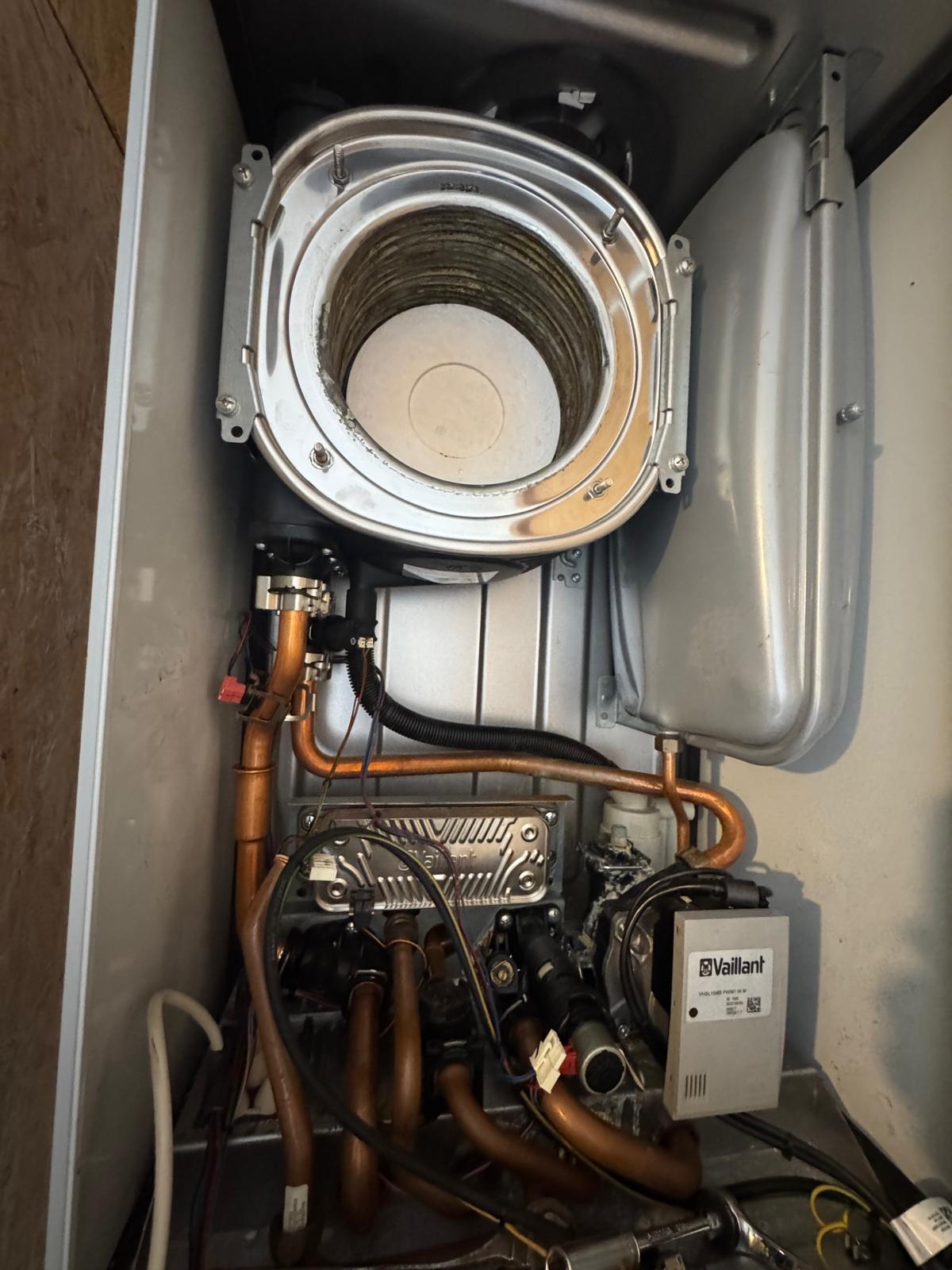
When a combi boiler makes your hot water, the fault can come from the boiler itself: a stuck diverter valve or a scaled plate heat exchanger. We look at the whole system first, so that nothing that still works is replaced.
For a new unit, the space available and the strength of the wall count as much as the volume. A studio is often fine with a small tank, while a family with a bath needs more. We choose the capacity with you and set it to heat on the cheaper night rate if your meter allows it.
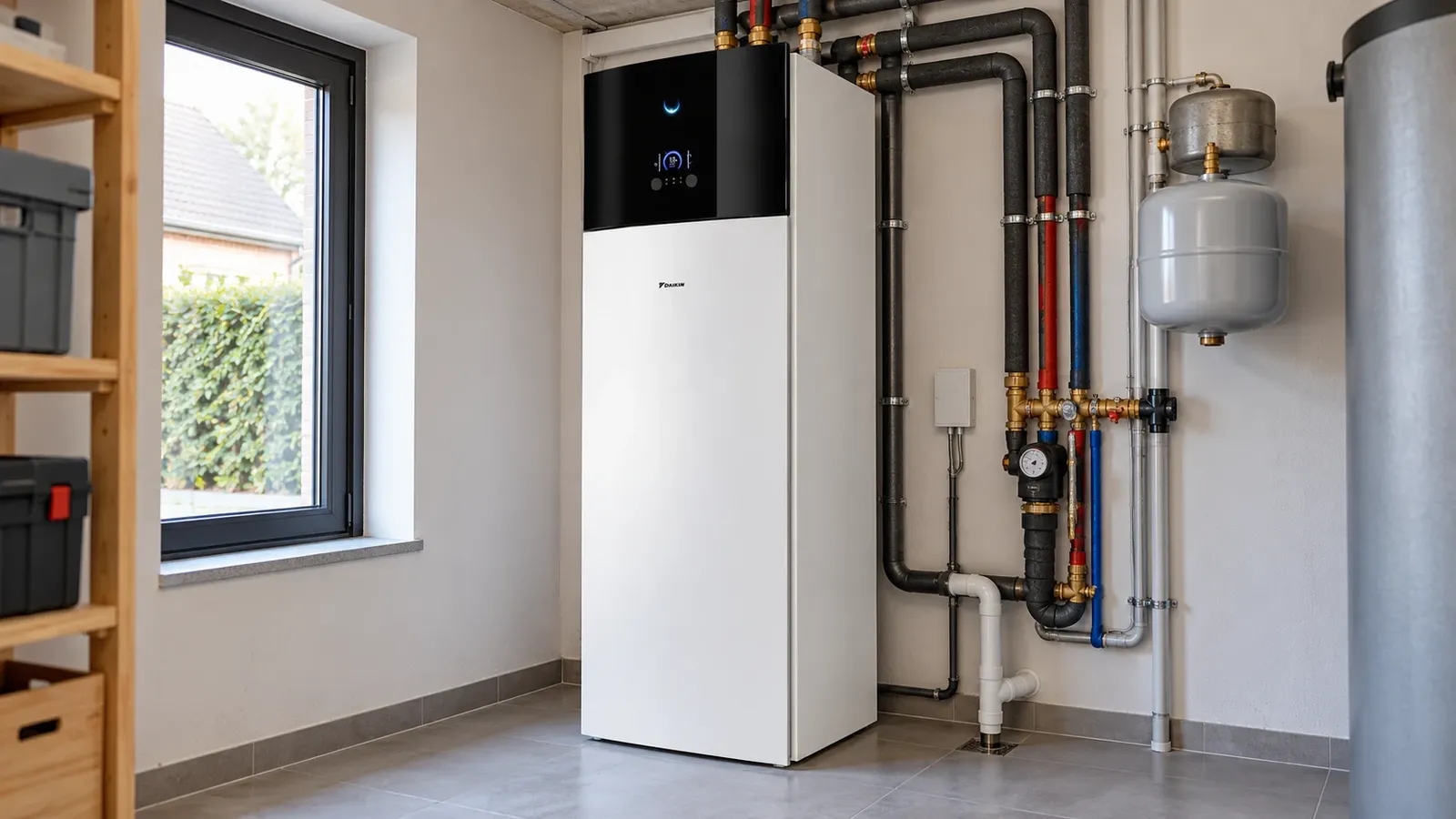
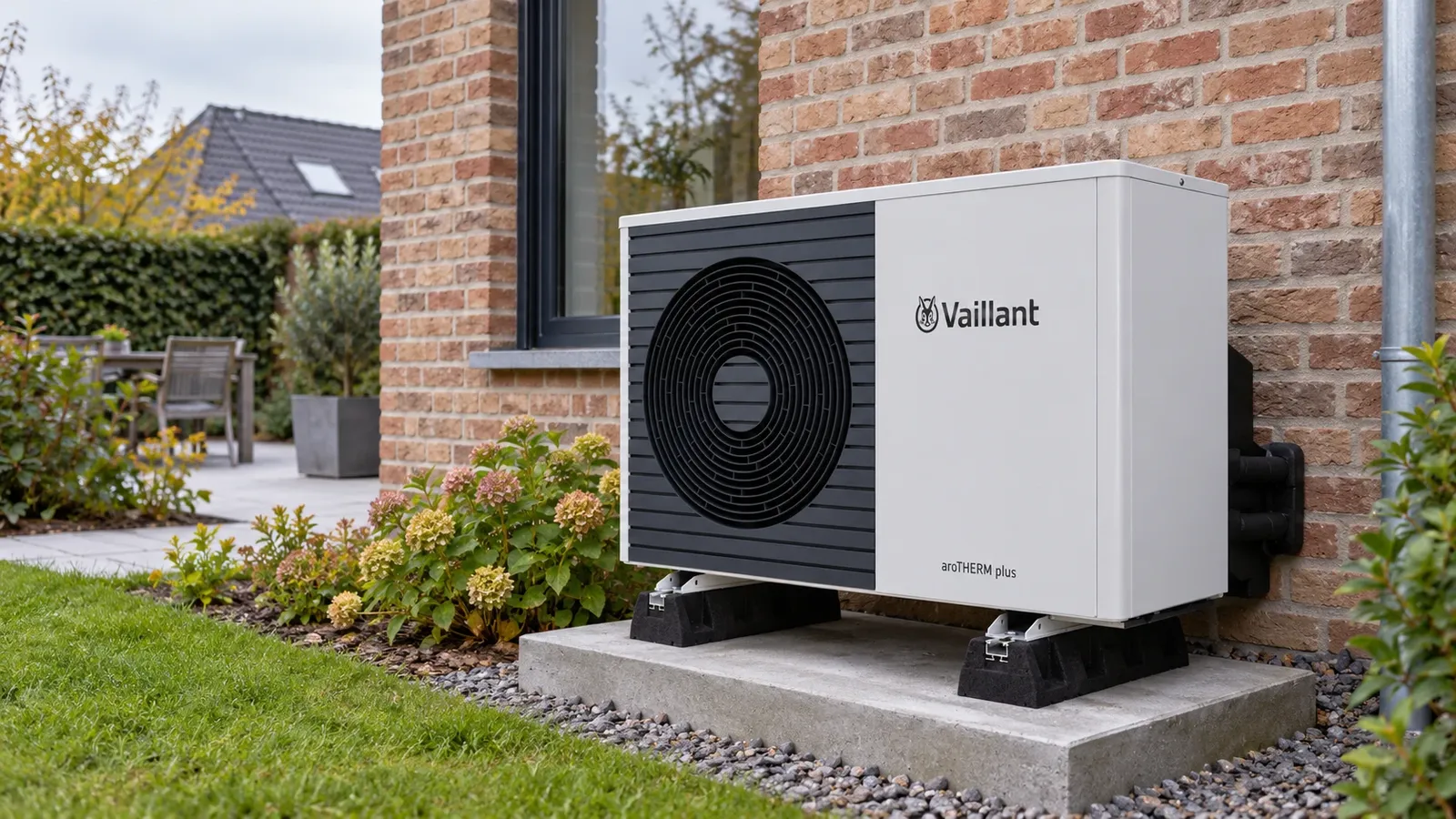
In a house with a cellar or a utility room, a heat pump water heater is worth considering. It takes heat from the surrounding air and uses far less electricity than a classic electric tank. It needs a room of a decent size and a drain for the condensate.
Every installation includes a new safety group, the fittings, the electrical connection and commissioning. Before leaving, the plumber shows you the stop valve and the safety valve, and takes the old tank away.
No hot water at all usually points to the thermal cut-out, the element or the off-peak relay. Water that never gets properly hot points to scale, a tired element or a thermostat that has drifted.
Rusty water from the hot tap means the anode has been gone for a while and the tank is starting to corrode. Rumbling while heating means scale. A drip from the valve that never stops means the pressure is too high or the safety group is worn.
Water on the floor under the tank deserves a quick call: turn off the cold supply to the unit and switch off its breaker, then send us a photo of the label. That alone tells the plumber which parts to bring.
In a flat, the water heater often hangs in a cupboard or above the washing machine, with little room around it. The plumber comes with the right fixings and checks that the wall can carry a full tank, which weighs far more than the empty one.
In a terraced house the tank is usually in the cellar, sometimes next to an old boiler that has been out of use for years. It is a good moment to tidy up the pipework and remove what is no longer connected.
Hairdressers, snack bars and small offices also rely on hot water all day. We come before opening time when we can, and tell you straight away whether the unit can run safely until the part arrives.
Cut-out, element or night relay.
Scale or a tired thermostat.
Pressure too high or worn group.
Anode used up long ago.
Make, volume and year of the tank.
No hot water, drip, noise.
Cellar, cupboard, attic, floor.
On WhatsApp, it helps a lot.
Describe the problem; a photo of the unit or of the code on the display, sent on WhatsApp, helps the technician prepare.
The office tells you what the visit costs and when the technician will come, before anyone sets off.
On site, the technician explains what he found and what the repair costs, then waits for your yes. Job sheet and invoice at the end.
Trustindex vérifie que la source originale de l'avis est Google. Super quick intervention on a late Tuesday evening!Publié surTrustindex vérifie que la source originale de l'avis est Google. Top service. Very professional. Clear communication and no sneaky sales pitches. Problem identified, problem solved. Correct!Publié surTrustindex vérifie que la source originale de l'avis est Google. Très content du service : communication via emails, entretien de la chaudière avec photos avant/après. Je recommande !Publié surTrustindex vérifie que la source originale de l'avis est Google. Very professional and fast service!! TopPublié surTrustindex vérifie que la source originale de l'avis est Google. Very nice of plumbing thanks a lot!
We work in the 19 municipalities of the Brussels-Capital Region, in houses and flats, and in the nearby towns around the city.
Usually because the incoming pressure is too high or the valve is scaled up. A pressure reducer or a new safety group solves it.
With hard water, every two to three years, with a check of the anode at the same time.
It can be if it is badly ventilated or not serviced. A yellow flame or black marks: stop using it and have it checked.
Rarely, because it needs a fairly large room. In a house with a cellar or utility room it is often a good choice.
Yes: electric tanks, heat pump water heaters and gas water heaters of all the usual makes.
Usually half a day for a standard replacement in the same place.
Call 0477 03 88 98, send us a WhatsApp message or book online with the « Book an appointment » button. Tell us the municipality and, in a few words, what is going on.
Call 0477 03 88 98 for a breakdown, or ask for a free quote for a new water heater.