
Thermostat, programmes and the first cold week
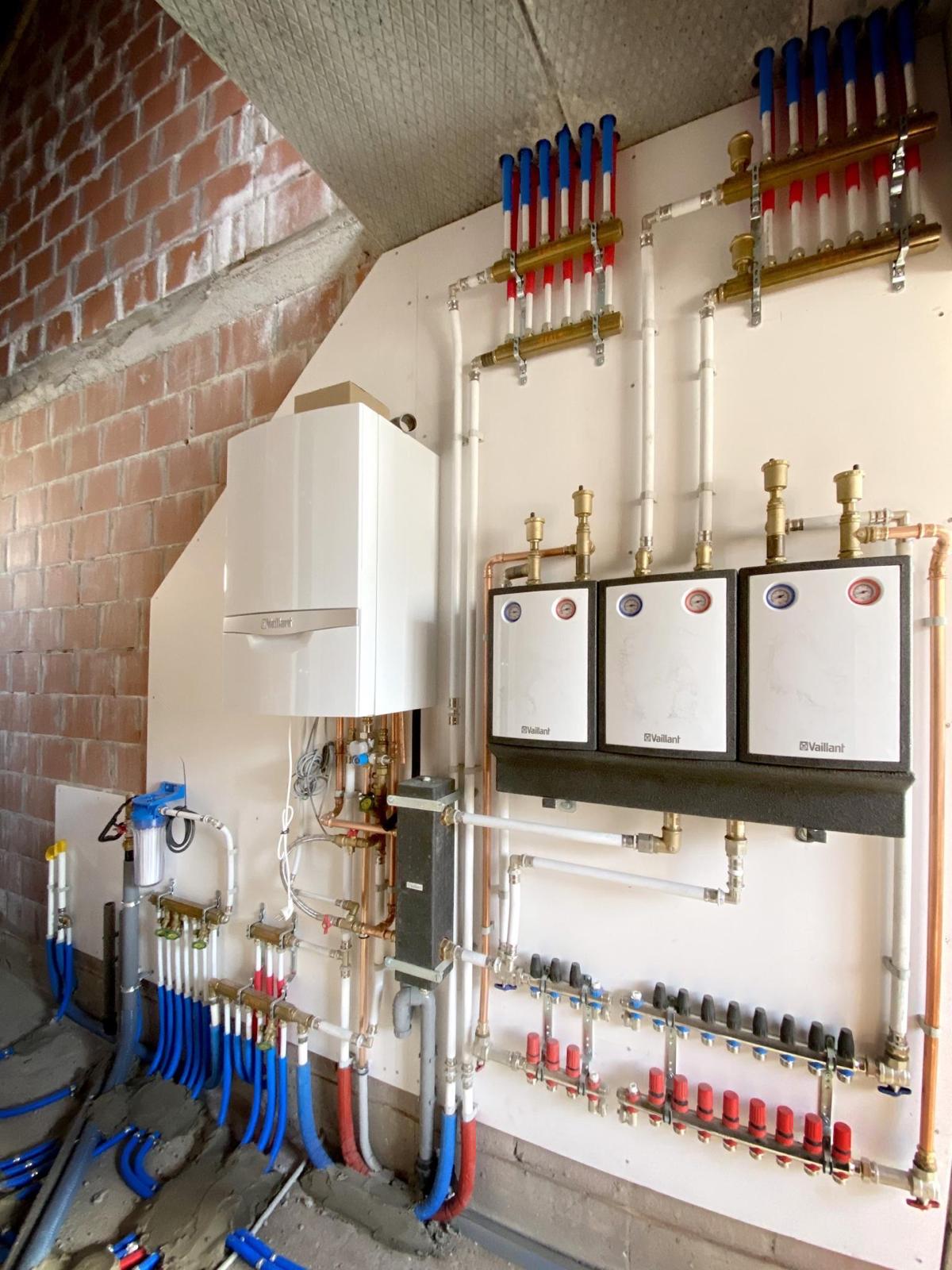
In many Brussels flats the thermostat is still the one fitted with the boiler years ago, sometimes with batteries that nobody has changed. Before the first cold week, check that the screen works, that the clock is right and that the programme matches your days. A thermostat left in holiday or frost mode is a common reason for a cold flat in November.
Keep the bedrooms a little cooler than the living room, but do not close their radiators completely: a room that stays cold all winter gets damp walls and makes the whole flat harder to heat. Thermostatic valves that have not moved all summer can stick; turn them fully open and closed once or twice before the heating season.
If a radiator stays cold even with its valve open, our page on a cold radiator explains the usual causes. For the pressure on the boiler, see low boiler pressure.
Moving in or moving out in autumn
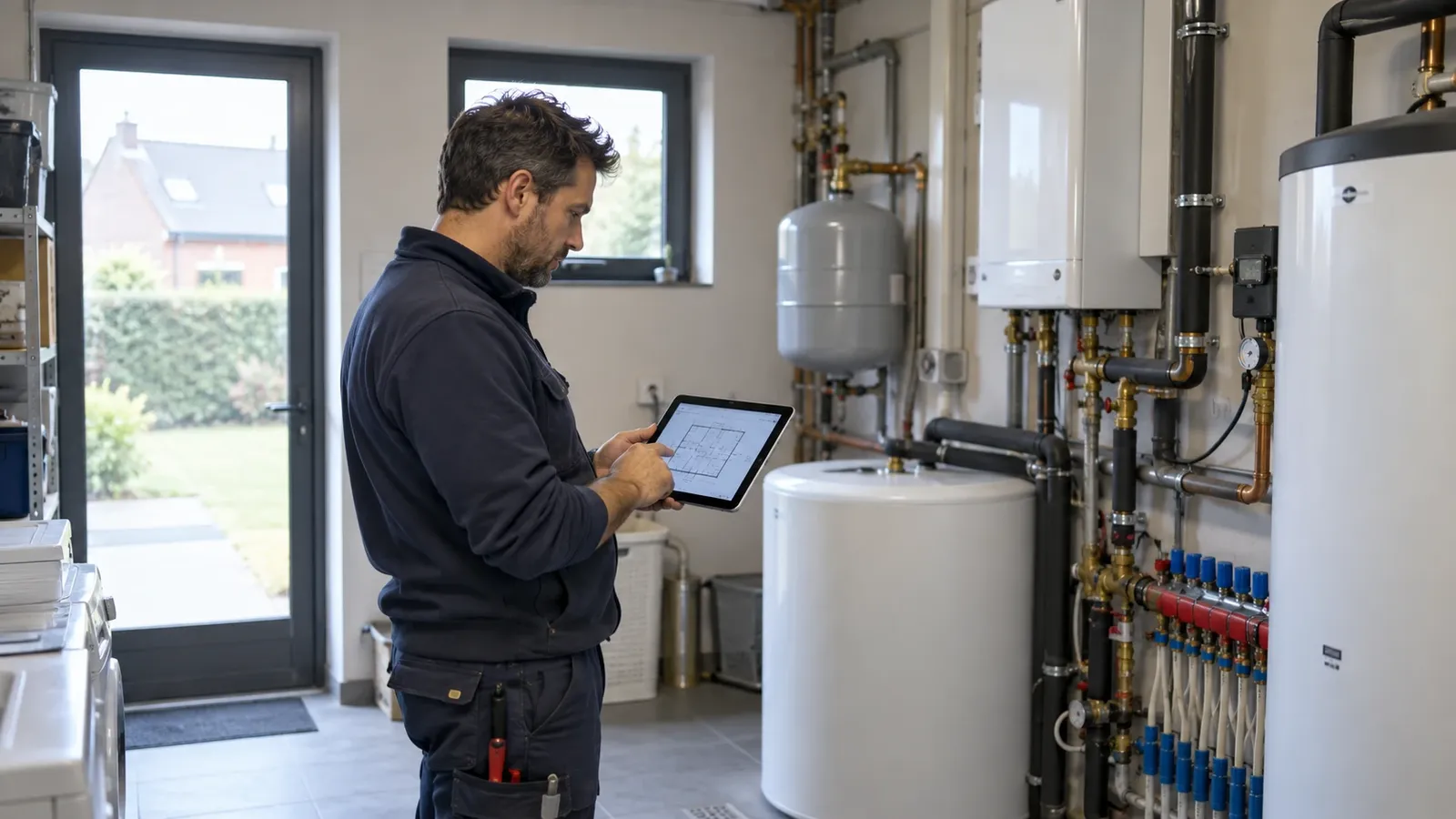
Brussels has many short leases, and moving day often falls just before winter. When you move in, ask for the last boiler service certificate and look at its date. It tells you who serviced the boiler, when, and what was found.
Note the meter readings, test the hot water in the kitchen and the bathroom, and switch the heating on for an hour to see that every radiator gets warm. If something does not work, tell the owner or the agency in writing in the first days, so it does not become your problem later.
When you leave, set the thermostat to a low temperature instead of switching it off, especially if the flat stays empty for a few weeks. For a service before you hand over the keys, see boiler service in Brussels, or call 0477 03 88 98.
Own boiler or shared heating?
Brussels has every kind of building: Art Nouveau town houses split into three or four flats, post-war blocks with a boiler room in the basement, new builds with a small gas boiler in every unit. What you can do yourself depends entirely on which one you live in.
If there is a white wall-mounted boiler in your kitchen, bathroom or a cupboard, with a pressure gauge and a control panel, you have your own boiler. You (or your landlord) are responsible for it, and most of the checks below are for you.
If there is no boiler in the flat and the heat comes on and off for the whole building at the same time, you are on shared heating. The boiler is in the basement or on the roof, and the building manager (the syndic) looks after it. You still have your own radiators and valves, but the pressure and the boiler itself are not yours to touch.
With your own boiler: what to check in October
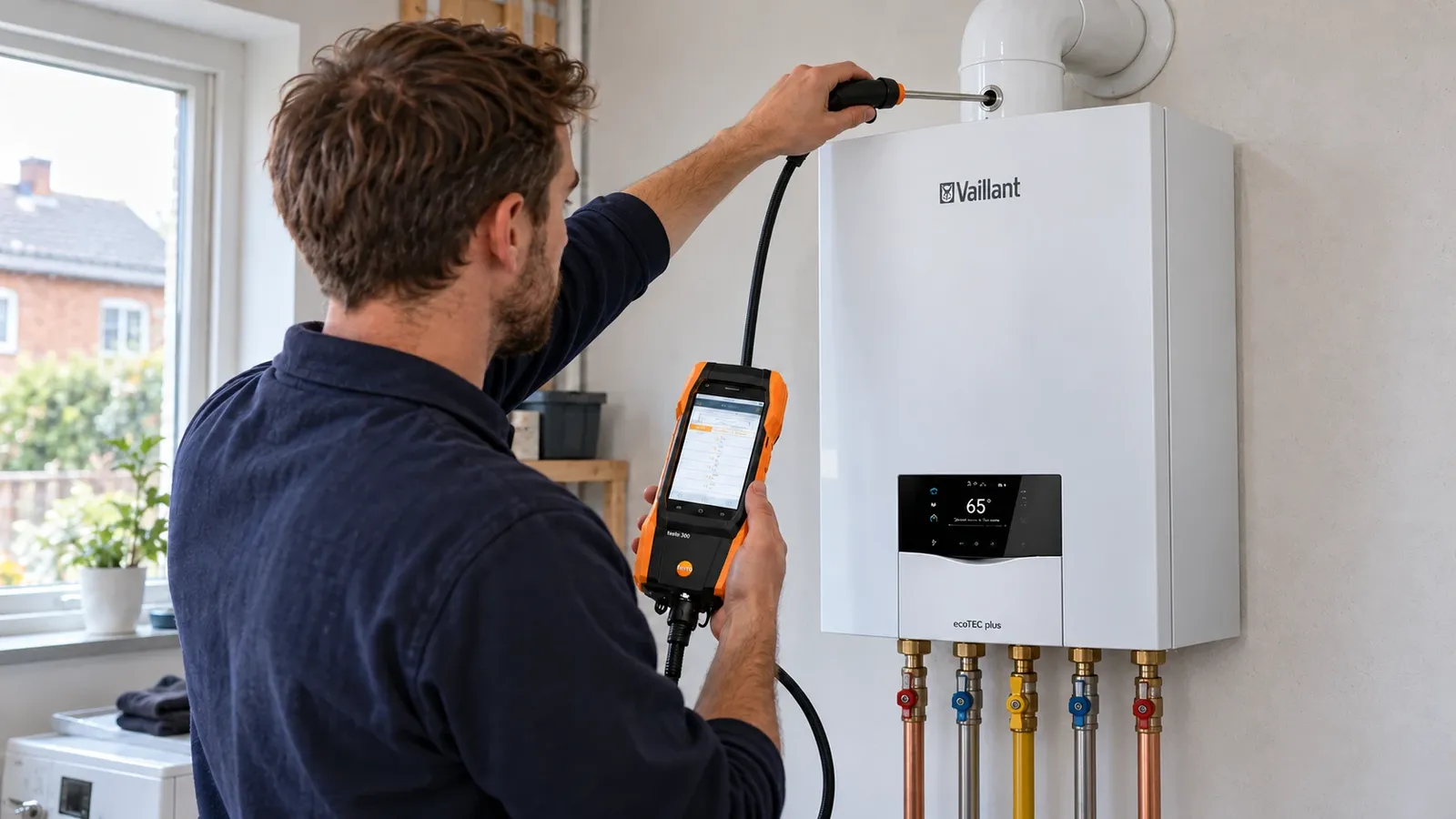
- The pressure. When the boiler is cold, the gauge should usually read between 1 and 1.5 bar. Below 1 bar many boilers go into lockout. Topping up is done with the filling loop or the small tap under the boiler, slowly, and closing it again afterwards. If you have to top up every week, there is a leak or a problem with the expansion vessel; see our page on low boiler pressure.
- Summer mode. Many boilers were left on hot water only since May. Switch them back to heating, and check the thermostat batteries while you are at it.
- The radiators. Turn the thermostatic valves fully open for a day; a valve that stayed closed all summer often sticks. A radiator that is cold at the top needs bleeding: with the heating on, open the bleed screw with a radiator key until water comes out without air, then look at the pressure again.
- The air vents. In many Brussels flats the boiler takes its air from a grille in the window or the wall. In winter people tape it shut against draughts. Don’t: the boiler needs that air, and a blocked vent is one of the causes of carbon monoxide we see in flats.
The condensate pipe and the first frost
Modern gas boilers are condensing boilers. They produce water, a few litres a day in winter, which runs away through a thin plastic pipe. In flats that pipe often goes through the outside wall onto a balcony or into a gutter. When it freezes, the water backs up and the boiler stops with a fault code, usually on the coldest morning of the year.
Have a look where yours ends. If it runs outside over a long distance, it should be insulated or rerouted inside. If the boiler stops on a freezing morning and the pipe is outside, pouring lukewarm (not boiling) water over the pipe often gets it going again. If it keeps happening, it needs to be changed.
On shared heating: what is yours and what isn’t
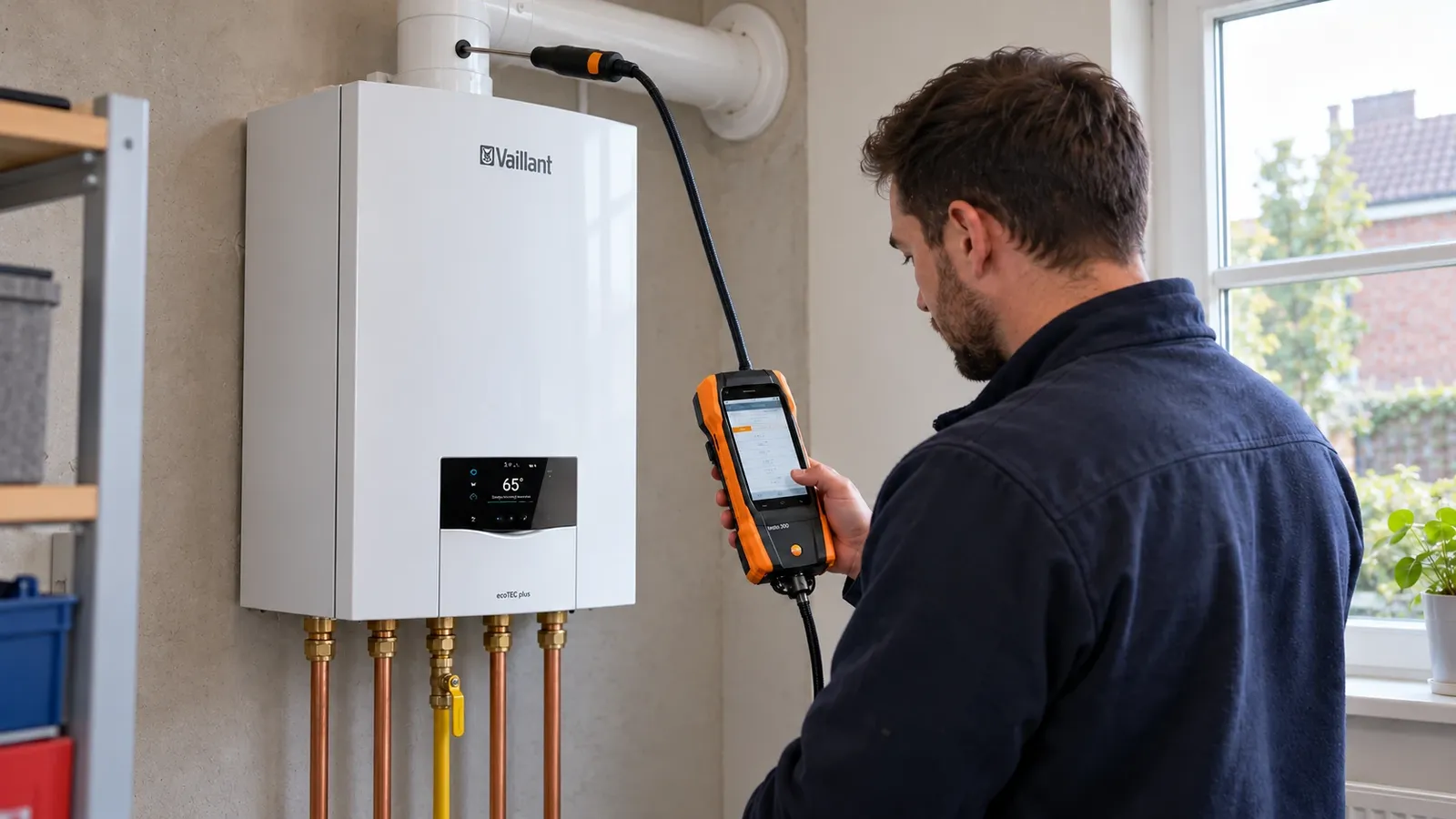
On a shared system you don’t top up the pressure, you don’t reset the boiler and you don’t bleed half the building’s air out through your radiators without telling anyone. On the upper floors, though, bleeding your own radiators at the start of the season is usually fine and often needed, because air rises to the top of the building. Do it with the heating on and tell the syndic if you get a lot of air out: that means the system needs topping up.
If your radiators stay cold while the neighbours are warm, start with your own valves: fully open, and check that the pin under the thermostatic head moves. If the whole building is cold, it is the syndic who has to call the heating company for the boiler room. Put it in writing, with the date, so it is on record.
The service before winter
A gas or oil boiler in Brussels must be checked periodically by a qualified technician, who leaves a written report for the regional rules. How often depends on the type of boiler and fuel; we tell you on the day. Beyond the paperwork, a service in October is the best way to avoid a breakdown in January.
On a service we clean the burner and the heat exchanger, measure the combustion with an analyser, check the flue and the air supply, the pressure and the expansion vessel, the safety devices and the condensate trap. It takes about an hour on a standard wall boiler. If something is worn, we tell you before changing anything.
If you have just moved into a flat and no one can tell you when the boiler was last serviced, assume it is overdue. More on our work in the capital on our page heating engineer in Brussels.
When it breaks down anyway
Before calling, take a photo of the display or the fault code with your phone and note the pressure. That alone often lets us bring the right part on the first visit. Our pages boiler lockout, boiler won’t start, cold radiator and no heating explain what you can check safely first.
If it still doesn’t work, call us on 0477 03 88 98 or book online. We speak English, French and Dutch, and we come out in all 19 municipalities of Brussels.