Less condensation
Dry windows and mirrors.

Home › Ventilation › Installation
In short: Service Technic Belgium designs and installs mechanical ventilation for houses and flats: extract ventilation (system C) or heat recovery (system D), in new builds and renovations, and then looks after it. Call 0477 03 88 98.
A well-fitted system goes unnoticed: the air stays fresh, the windows are no longer covered in condensation and the mould stops coming back behind the wardrobe. A badly fitted one whistles, pulls too hard in one room and not enough in the next. The difference is made before the works, in the calculation.
★★★★★5,0on Google· 22 years of experience
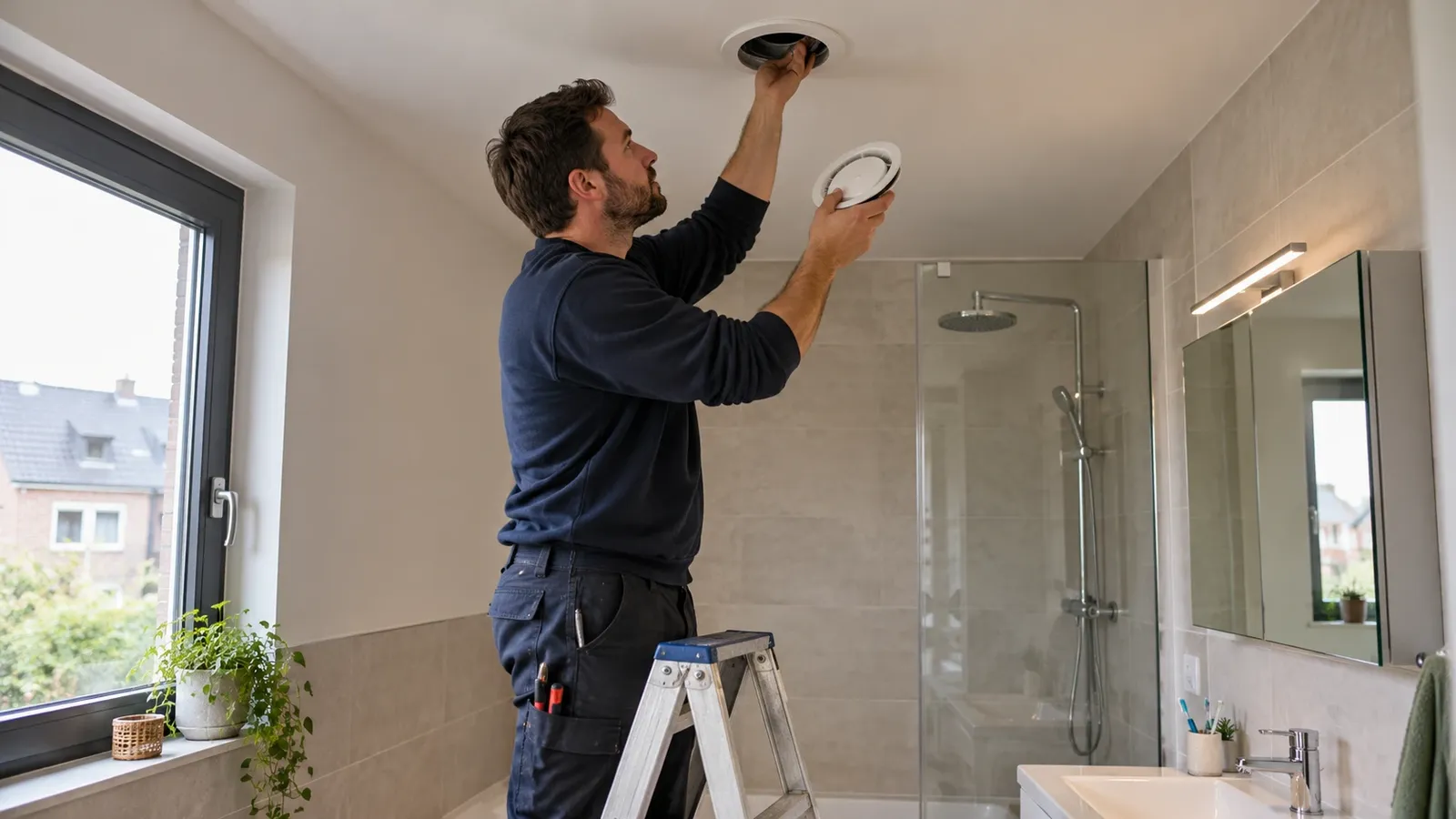
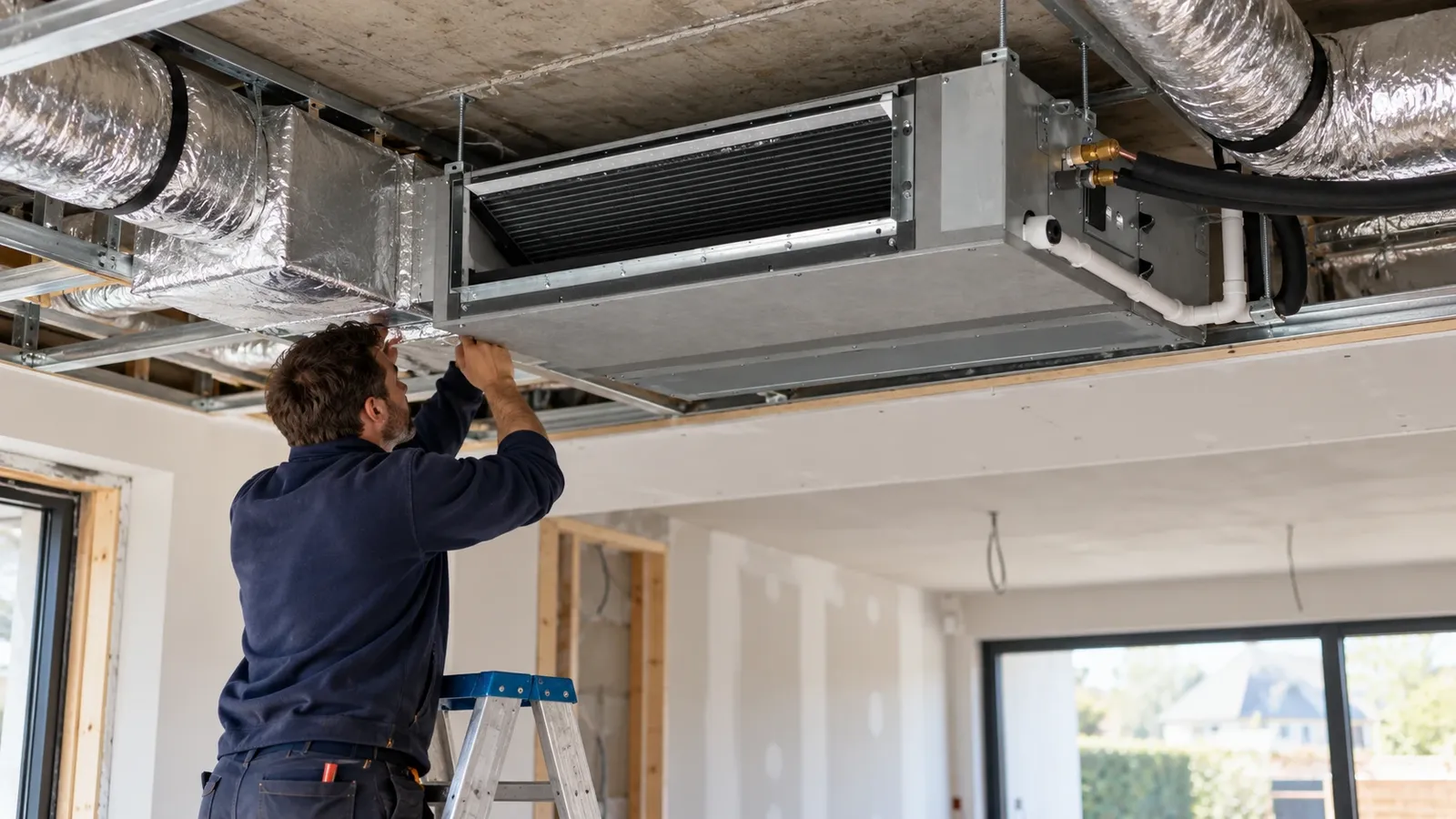
A well-insulated house with airtight windows no longer breathes through the gaps. Moisture from the shower, the cooking and our own breath stays inside: condensation, smells and mould in the corners and on the silicone joints.
Opening the windows helps for a while, but in winter it cools the house and nobody thinks of it every day. Mechanical ventilation renews the air all the time, at a calculated rate, without anyone having to remember.
In new builds and major renovations the energy performance rules require a ventilation system anyway. The chosen system and the airflows go into the energy performance file: we work with the energy assessor or the architect.
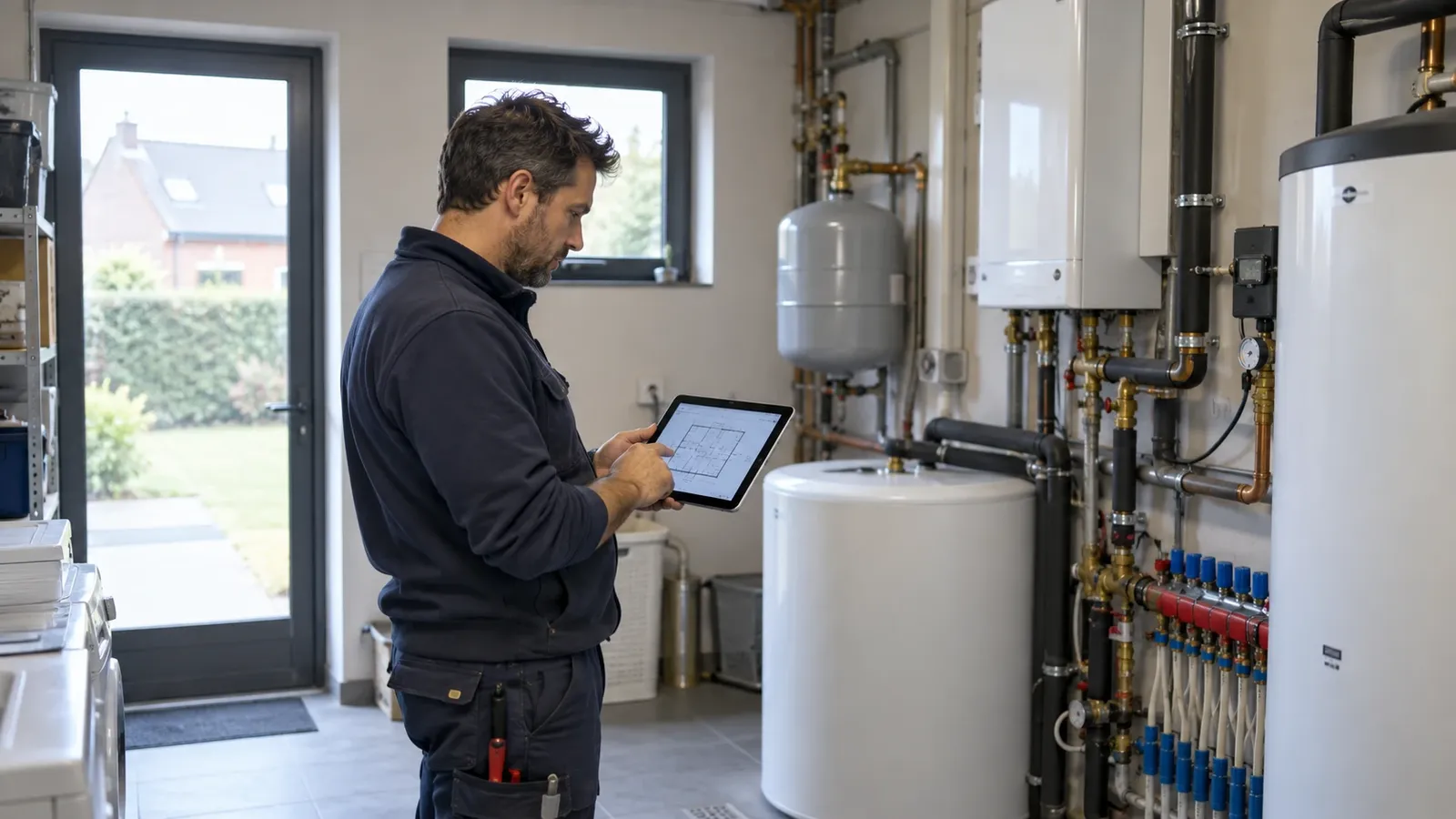
Extract ventilation (system C) takes moist air out of the kitchen, bathroom, toilet and utility room. Fresh air comes in through vents in the window frames or walls of the dry rooms. It is simple, compact and easy to fit in a renovation.
Heat recovery ventilation (system D) also blows fresh air into the bedrooms and living room, after passing it through an exchanger that takes the heat from the outgoing air. It needs two duct networks and a larger unit, but the air comes in filtered and tempered.
The right choice depends on the house: space for ducts, level of insulation, street noise, allergies in the family. The technician explains both options for your home, with a quote for each if you wish.
Everything starts with a survey: area and use of each room, ceiling height, possible routes for the ducts and the position of the unit. Extract and supply airflows are calculated room by room.
The unit goes in a tempered, accessible room for servicing: utility room, insulated attic, service cupboard. A heat recovery unit also needs a condensate drain and two openings to the outside, well apart from each other.
Ducts should be short, without needless bends and firmly fixed. Ducts that are too narrow or crushed make the valves whistle and force the motor to run faster.
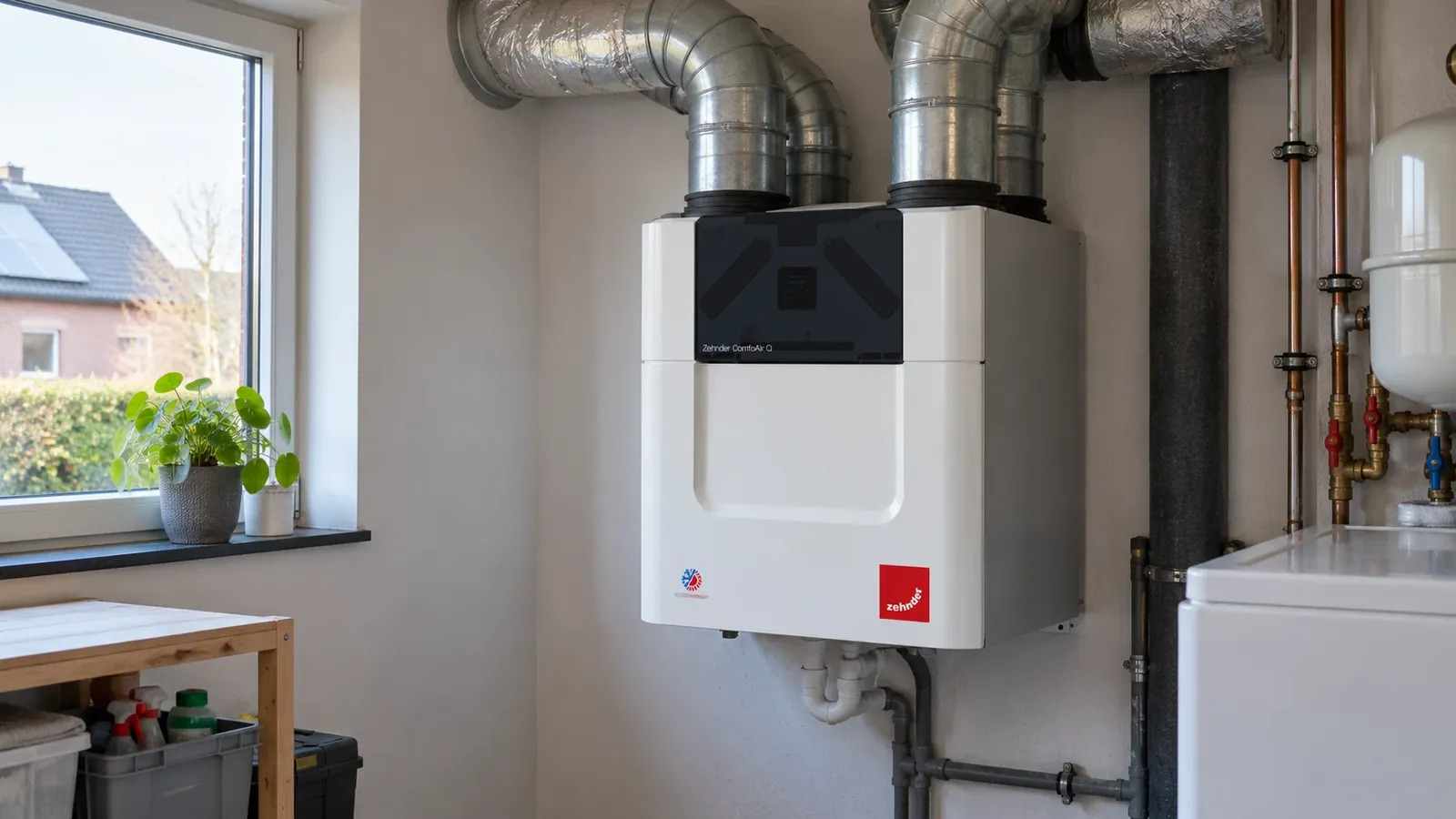
In a renovation we look for the most discreet routes: attic, hall ceiling, a boxing along a wall, a cupboard, the stairwell. In a terraced house, heat recovery ducts often run through the attic and come down in a boxed-in shaft.
For an extract system, a unit in the attic or a cupboard and a few ducts to the wet rooms are often enough, with air vents fitted in the window frames. The work takes one or two days.
Finishing such as boxing and painting can be done by us or by your contractor. We state it in the quote so there is no misunderstanding.
In a flat, space is short and the outside walls are sometimes shared. A compact heat recovery unit fits in a cupboard or the bathroom ceiling, with flat ducts in the hall ceiling.
Openings through the façade and roof outlets need the agreement of the co-owners. We prepare the description of the works and the data sheet of the unit for the general meeting or the syndic.
When heat recovery is impossible, a humidity-controlled extract system, which adapts its airflow to the moisture in the air, is a good answer for the wet rooms of a flat.
At the end of the works the airflows are measured valve by valve and set to match the design. The technician shows you how to change the filters and use the controls, and leaves you the measured values.
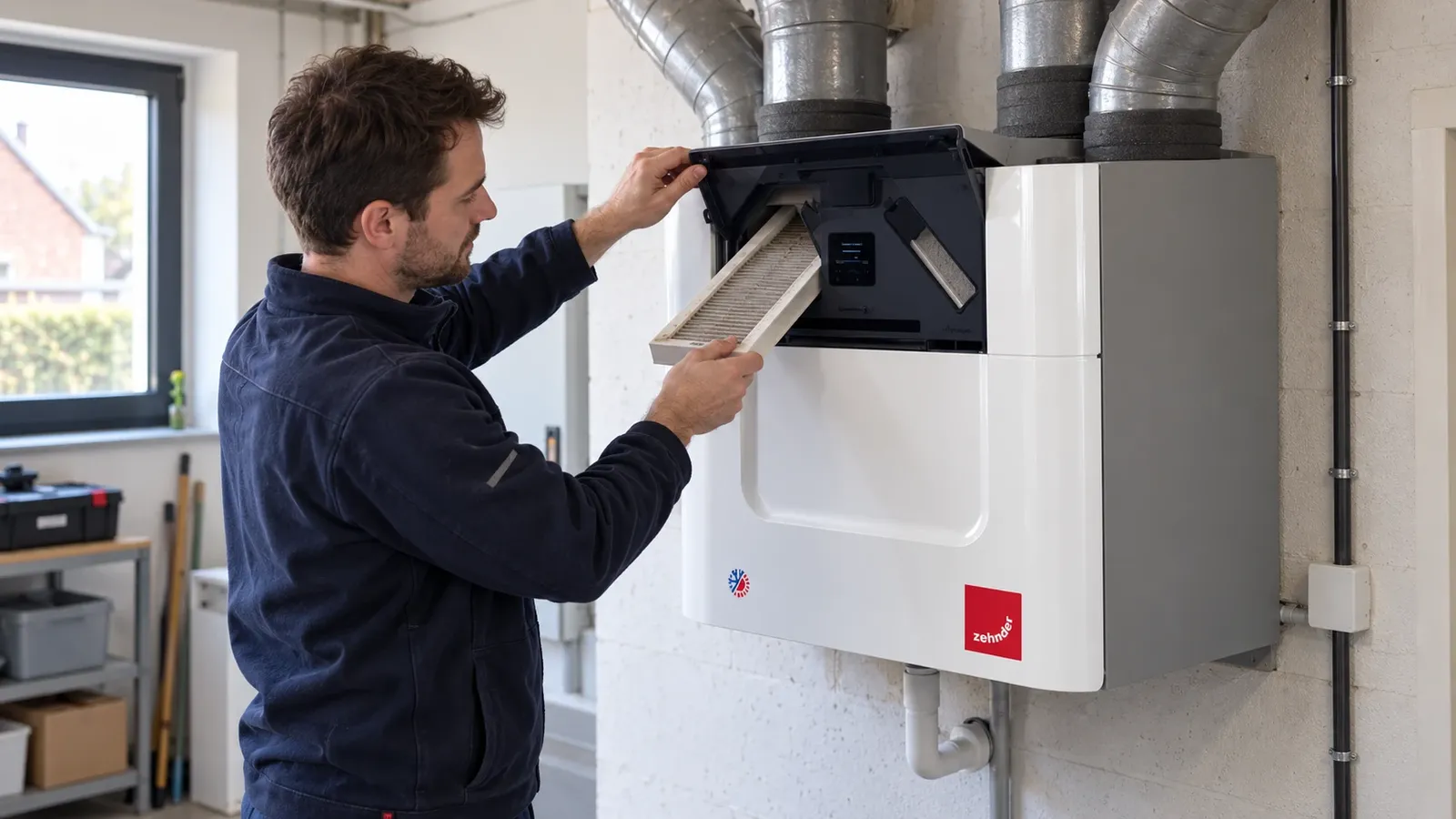
The filters of a heat recovery unit are usually changed twice a year; the valves are cleaned with soapy water. The unit, the exchanger and the ducts need a full check every two to three years.
A system that is louder than before, lets the condensation come back or shows a fault on its screen needs a service: we also work on installations fitted by others.
Dry windows and mirrors.
Clean corners and joints.
Without opening windows.
With heat recovery.
Even a sketch of the rooms.
The ventilation requirements, if you have one.
Attic, false ceiling, cupboard available.
Noise, allergies, damp, budget.
Describe the problem; a photo of the unit or of the code on the display, sent on WhatsApp, helps the technician prepare.
The office tells you what the visit costs and when the technician will come, before anyone sets off.
On site, the technician explains what he found and what the repair costs, then waits for your yes. Job sheet and invoice at the end.
Trustindex vérifie que la source originale de l'avis est Google. Super quick intervention on a late Tuesday evening!Publié surTrustindex vérifie que la source originale de l'avis est Google. Top service. Very professional. Clear communication and no sneaky sales pitches. Problem identified, problem solved. Correct!Publié surTrustindex vérifie que la source originale de l'avis est Google. Très content du service : communication via emails, entretien de la chaudière avec photos avant/après. Je recommande !Publié surTrustindex vérifie que la source originale de l'avis est Google. Very professional and fast service!! TopPublié surTrustindex vérifie que la source originale de l'avis est Google. Very nice of plumbing thanks a lot!
We fit and service mechanical ventilation in houses, flats and small buildings in Wallonia, Brussels and Flanders.
Extract ventilation takes air out of the wet rooms and lets fresh air in through vents; heat recovery also blows in fresh, filtered air while recovering the heat of the outgoing air.
Yes. Ducts run through the attic, false ceilings or boxing; an extract system is often fitted in one or two days.
Correctly sized and set, no. Noise nearly always comes from ducts that are too small or crushed, or a unit that is badly fixed.
Yes: airflows are calculated room by room, and in new builds or major renovations they must match the energy performance file.
Usually twice a year for heat recovery, more often near a busy road or during building works.
Yes, all the usual makes: Zehnder, Renson, Brink, Vaillant, Itho Daalderop, Orcon and others.
Call 0477 03 88 98, send us a WhatsApp message or book online with the « Book an appointment » button. Tell us the municipality and, in a few words, what is going on.
Call 0477 03 88 98: a technician visits the house, calculates the airflows and gives you a free quote for extract or heat recovery.