Noise
Airflow too high or dirty filters.

Home › Ventilation › Heat recovery ventilation
In short: Fresh air in every room without cold draughts or open windows: heat recovery ventilation renews the air and recovers the heat of the stale air. Free quote, price fixed in advance. Call 0477 03 88 98.
We survey your home, fit the ventilation unit and the ducts, balance every valve and then take care of the servicing. We also service units fitted by another installer.
★★★★★5,0on Google· 22 years of experience
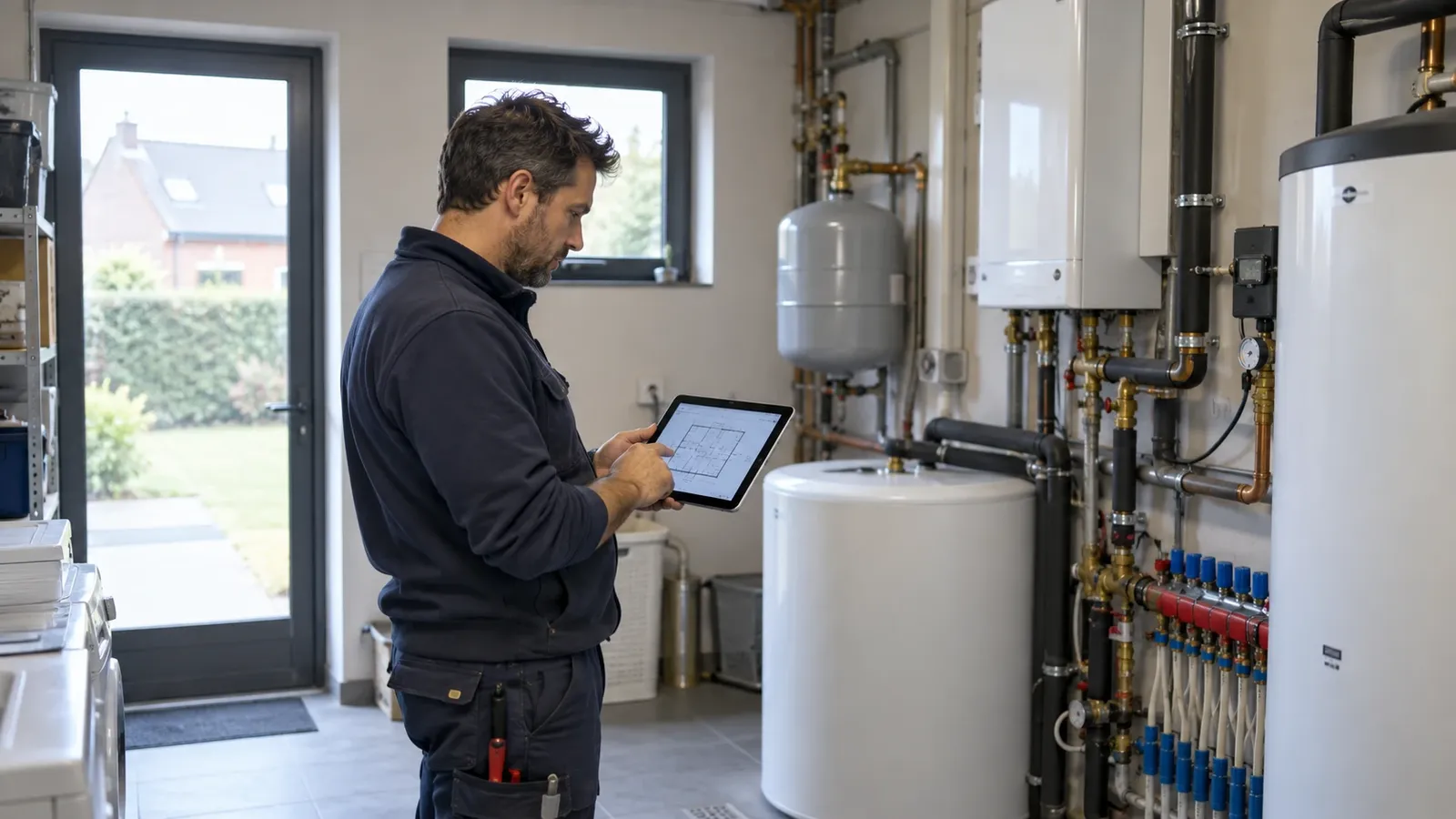
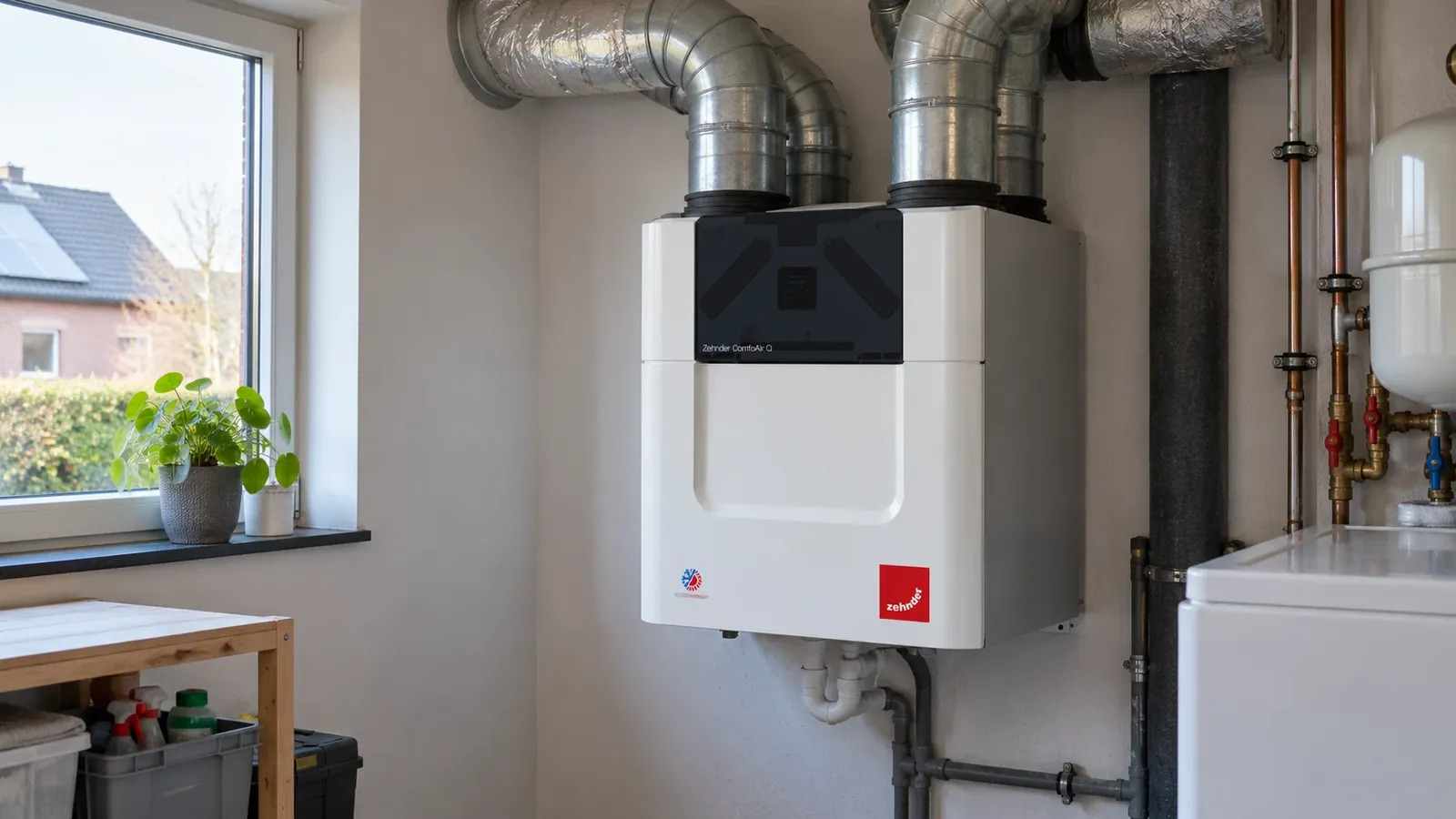
A heat recovery ventilation unit, known in Belgium as system D, uses two fans. The first extracts the damp, stale air from the kitchen, bathroom, toilet and utility room. The second blows filtered fresh air into the living room, bedrooms and study.
The two airflows cross in a heat exchanger without mixing. In winter the outgoing air gives most of its heat to the incoming air. You have fresh air all the time without cooling the house, which limits heat loss.
In summer a bypass lets in cool night air without warming it. The filters on the fresh air stop much of the pollen and fine dust: a plus for people with allergies and for houses on a busy road.
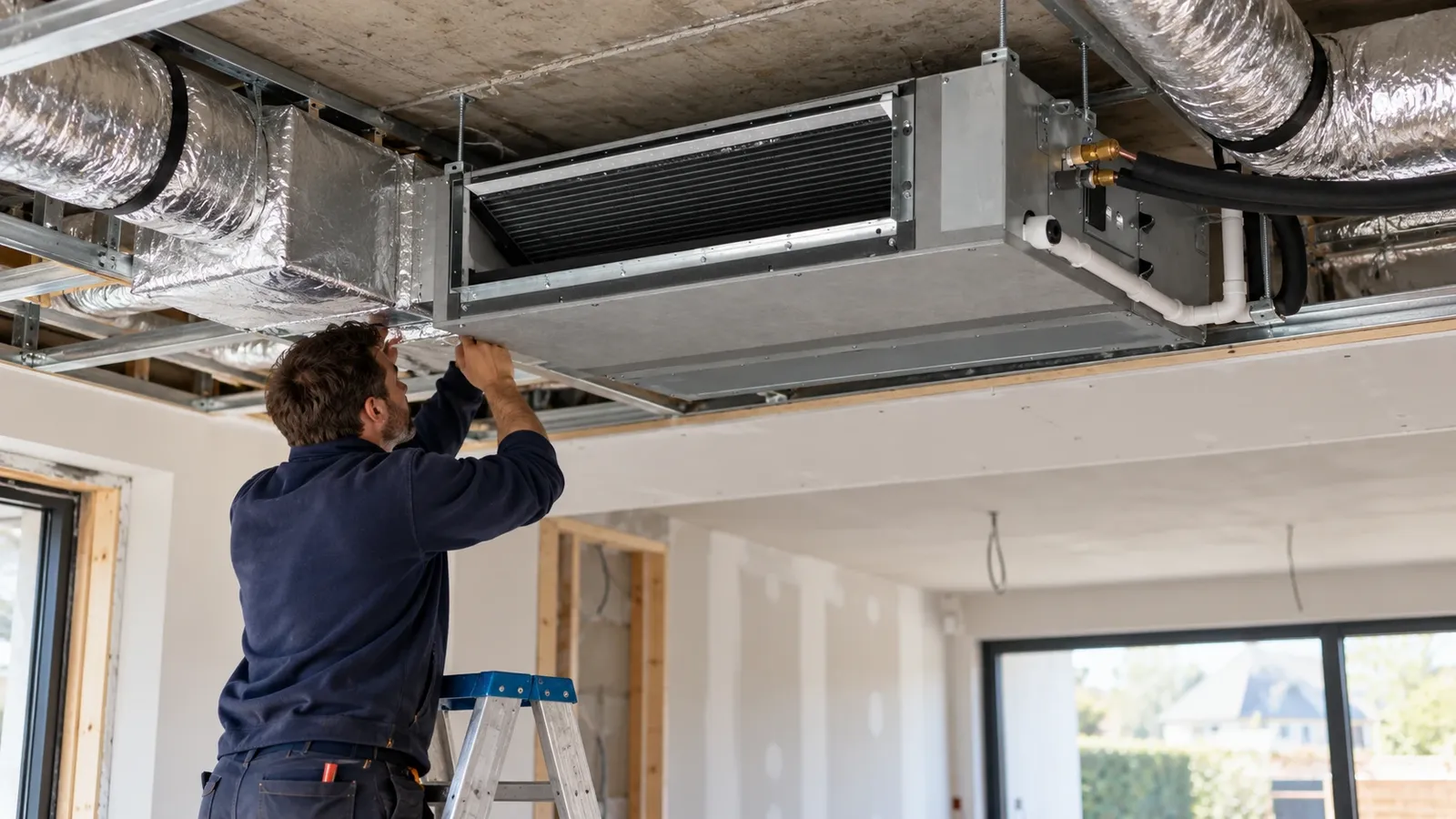
A good installation starts on paper. The technician calculates the airflow needed in each room according to its size and use, chooses the size of the unit and draws the route of the ducts from the unit to the valves. The aim: correct airflows, quiet running and ducts that are easy to clean.
In a new build or major renovation, the ducts run in the screed, false ceilings or service shafts before finishing. In an existing house we look for the most discreet routes: attic, boxing, cupboards or stairwell.
The unit goes into a heated space, often the utility room, an insulated attic or a technical cupboard, with a condensate drain. Air intake and exhaust outside are kept apart so stale air is never drawn back in.
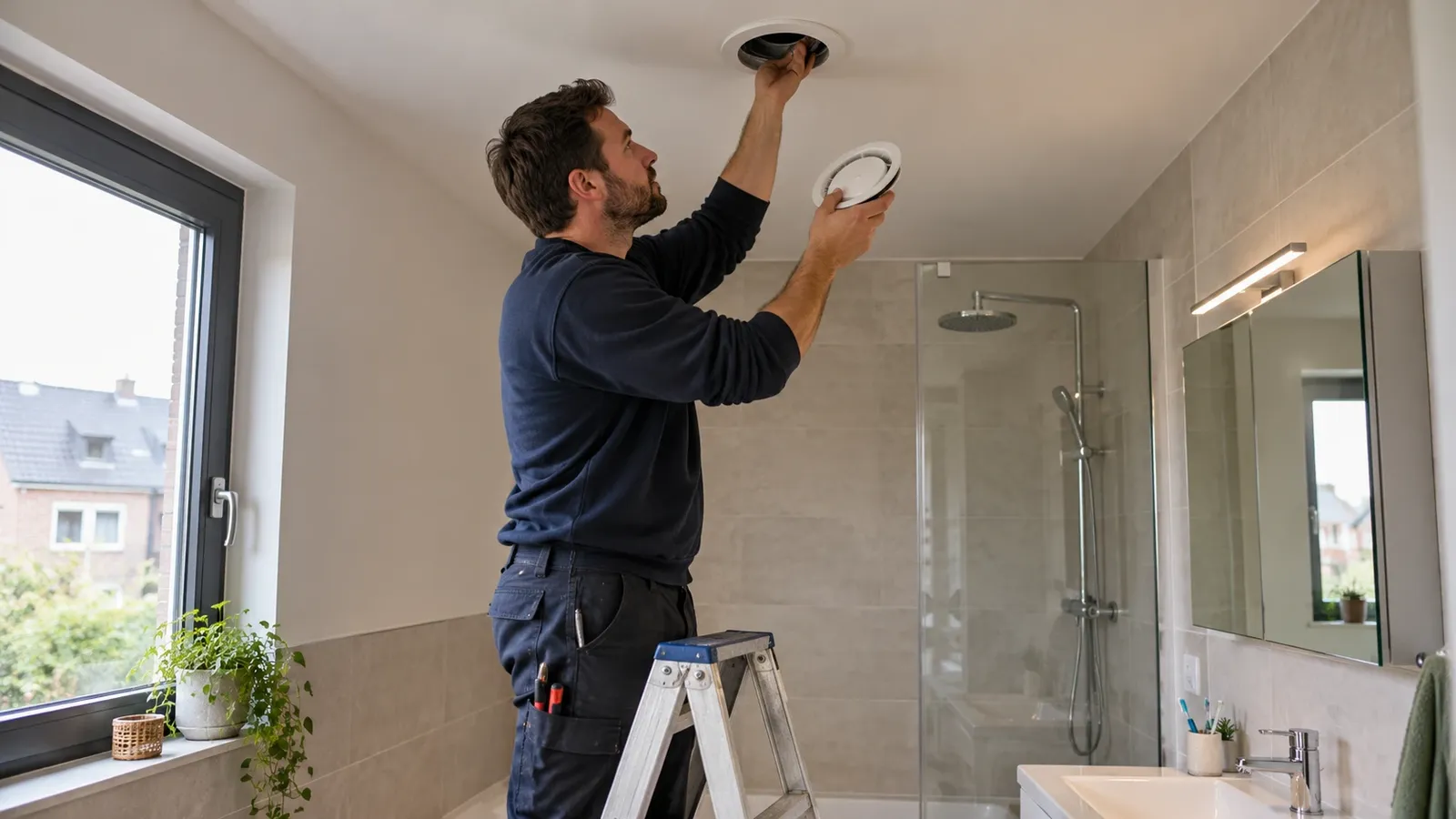
Extract valves go in the wet rooms, in the ceiling or high on the wall. Supply valves go in the living spaces, away from doors, so the air sweeps the whole room. A gap under interior doors lets the air move from room to room.
At commissioning, the technician measures the airflow at each valve with a suitable instrument and adjusts it until the planned values are reached. A badly balanced system is noisy, dries the air or leaves damp in the bathroom.
He then shows you the controls: normal speed, low speed at night or when you are out, and boost during a shower or cooking. Some units are controlled from an app or react by themselves to humidity or CO2.
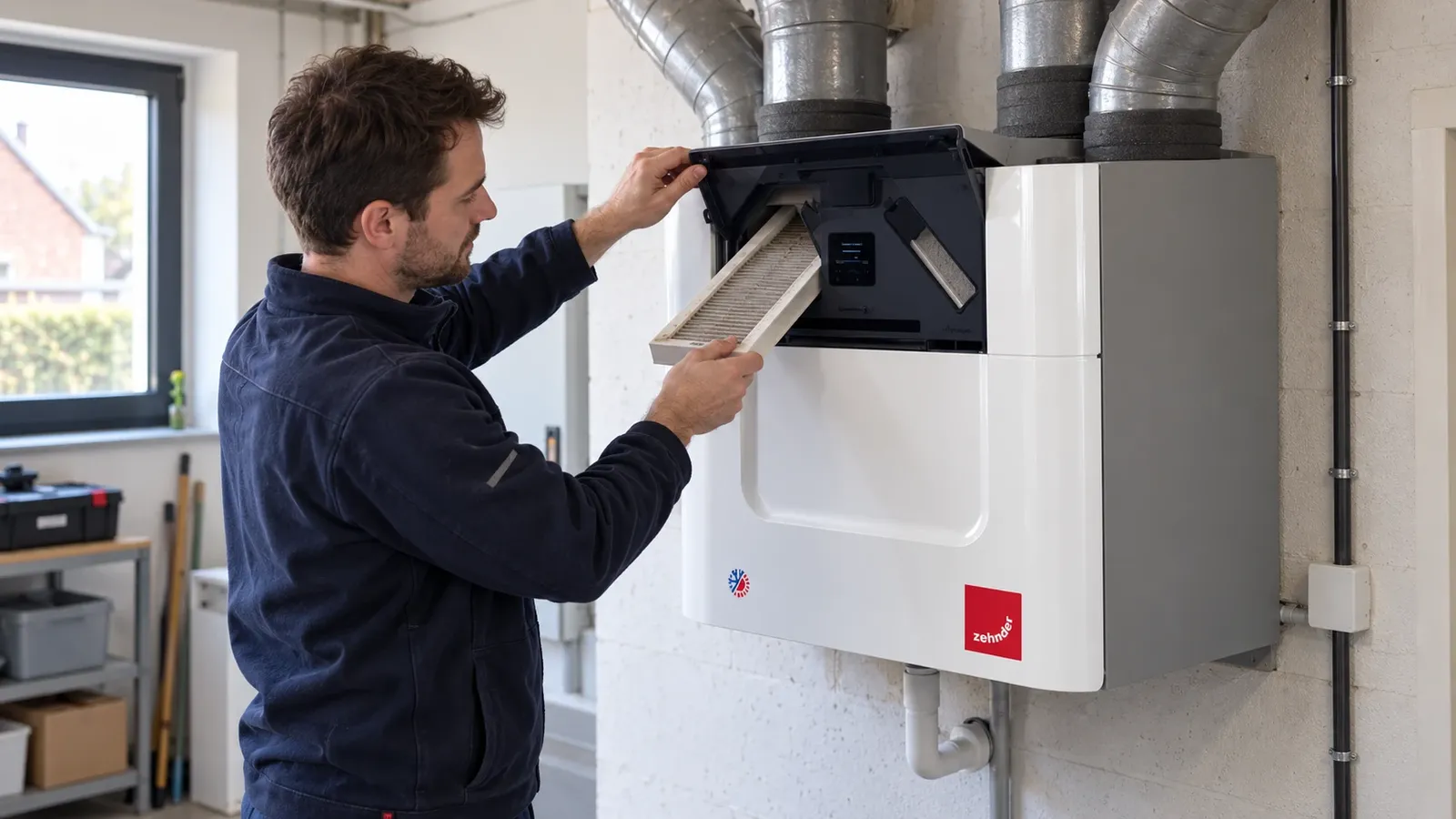
The filters of a heat recovery unit fill with dust over the months. A clogged filter makes the fans work harder, raises consumption and reduces the fresh air supply. They are usually replaced twice a year, more often near a busy road or a building site.
During the service the technician replaces the filters, cleans the heat exchanger, checks the fans, the bypass and the condensate drain, and removes the valves to clean them. He also checks that the airflows have not drifted since commissioning.
We service units of all makes, even those fitted by another installer. The cost of the service is given before the visit, and the job sheet records which filters were changed.
The size of the house: the number of rooms and the volume to ventilate determine the unit and the number of valves. New build or renovation: a network laid before finishing is simpler than one hidden in an occupied home.
The type of ducts: rigid, semi-rigid or flat, depending on the space in floors and ceilings. The unit chosen: airflow, noise level, sensor control, summer bypass and app control.
The location: access to the attic, length of the ducts to the outside and condensate drain. After the survey you receive a free quote with a price fixed before the work.
We fit Zehnder, Renson, Brink and Itho Daalderop among others, and service units of all makes. For a new installation we advise the model that suits your home and budget.
Already have extract-only ventilation with trickle vents in the windows? We look at whether moving to heat recovery is feasible in your home, or whether better settings on what you have are enough.
A plan of the house helps the technician prepare the survey. Send it on WhatsApp or by e-mail if you have one.
Airflow too high or dirty filters.
Extraction too weak.
Poorly balanced.
Filters not changed.
Stage of the work.
Of the home, if you have one.
Accessible or not.
Make and age.
Use whichever suits you and tell us your neighbourhood.
You know when the technician will come and what the call-out costs in advance.
Work starts once you have said yes. Keep the job sheet and the invoice for your records.
Trustindex vérifie que la source originale de l'avis est Google. Super quick intervention on a late Tuesday evening!Publié surTrustindex vérifie que la source originale de l'avis est Google. Top service. Very professional. Clear communication and no sneaky sales pitches. Problem identified, problem solved. Correct!Publié surTrustindex vérifie que la source originale de l'avis est Google. Très content du service : communication via emails, entretien de la chaudière avec photos avant/après. Je recommande !Publié surTrustindex vérifie que la source originale de l'avis est Google. Very professional and fast service!! TopPublié surTrustindex vérifie que la source originale de l'avis est Google. Very nice of plumbing thanks a lot!
We fit and service heat recovery ventilation across Belgium, in Brussels, Wallonia and Flanders.
Extract-only ventilation removes air from the wet rooms and lets fresh air in through vents in the windows. Heat recovery also supplies the fresh air, filtered and warmed by the outgoing air: less heat loss and no cold draught.
It depends on the size of the house, the ducts to install, the unit chosen and access. After the visit you receive a free quote with a fixed price.
Yes, if routes can be found for the ducts: attic, false ceilings, boxing or cupboards. The technician tells you at the visit whether and how.
Filters are usually changed twice a year. A full service, with cleaning of the exchanger and valves and an airflow check, is advised every year or two.
Well fitted and balanced, it is almost silent in the bedrooms. Noise usually comes from too high an airflow, ducts that are too small or dirty filters.
Zehnder, Renson, Brink and Itho Daalderop among others. We service units of all makes.
Call 0477 03 88 98, send us a WhatsApp message or book online with the « Book an appointment » button. Tell us the municipality and, in a few words, what is going on.
Book a visit for your heat recovery ventilation or call 0477 03 88 98: survey, free quote, fixed price, then regular servicing.