Townhouse
Modest power, load balancing.

Home › Electricity › Brussels › EV charger
In short: Service Technic Belgium fits charging points for electric cars in Brussels houses, garages and the car parks of apartment buildings. The electrician checks your supply first, runs a dedicated circuit and prepares the inspection. Free visit and quote on 0477 03 88 98.
Moving to an electric car and want to charge at home, in your garage or in the basement of your building? We study your connection, fit the charger and prepare its inspection before it is switched on, anywhere in Brussels. You receive a written quote after a free visit.
★★★★★5,0on Google· 22 years of experience
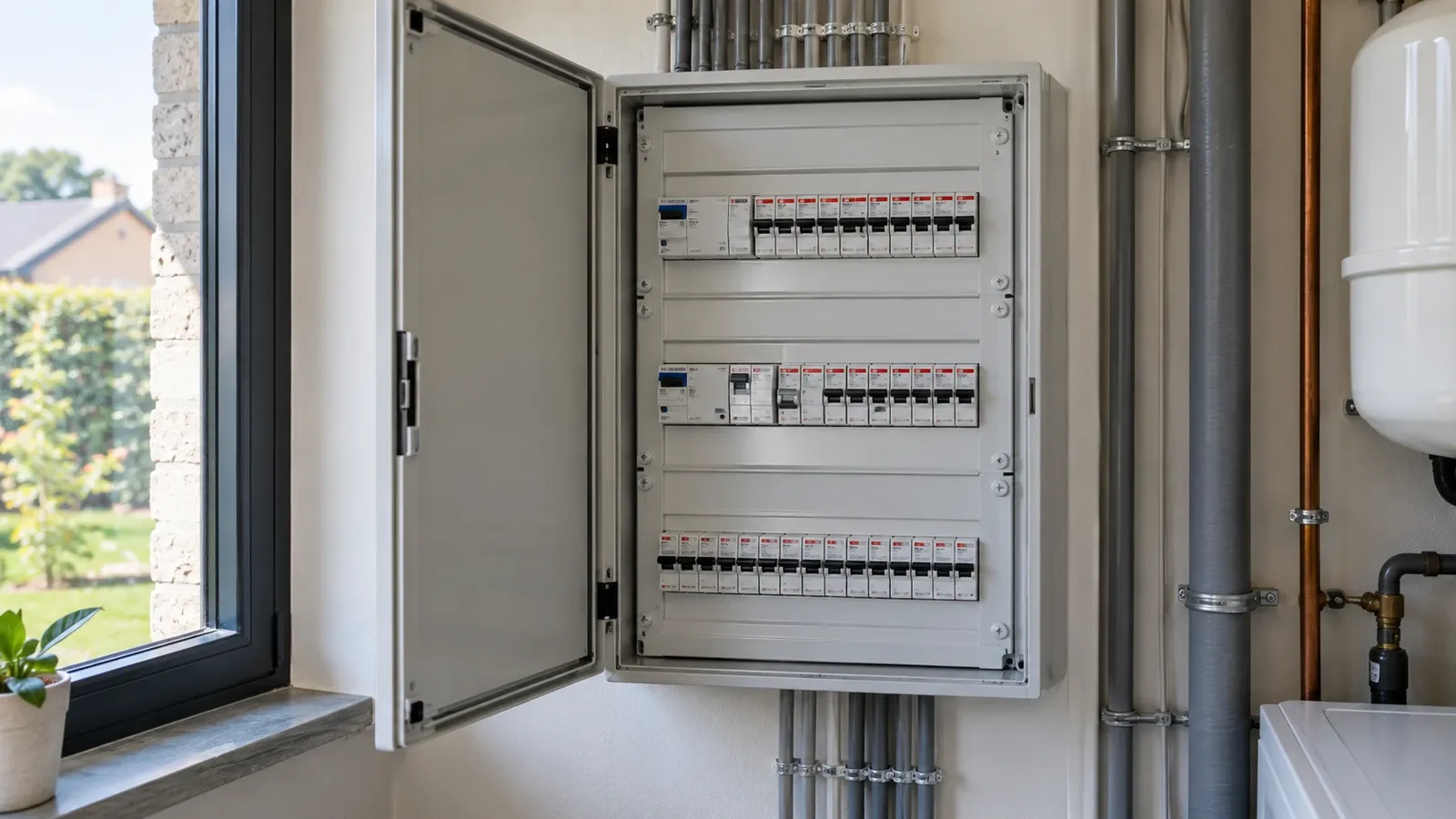
Many Brussels houses and flats are connected in 3x230 V, without a neutral, while newer buildings are often on 3N400 V. Not every charger works on a 3x230 V supply, or only at reduced power. Before recommending a model, we look at your connection at the meter.
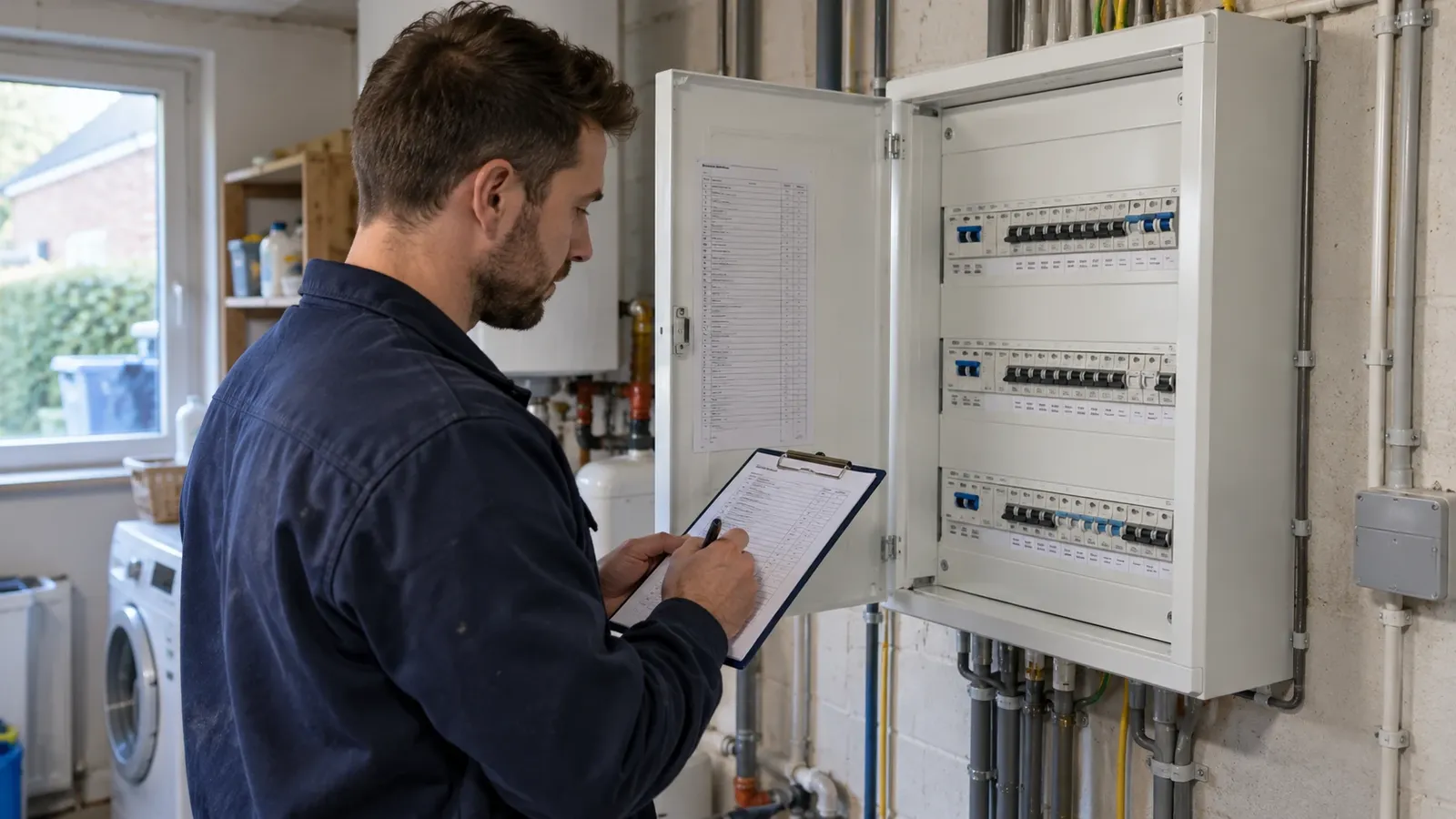
The electrician also checks the power available, the state of the fuse board and the room left for a new circuit. If the connection has to be upgraded, the request goes to Sibelga, the network operator; we help you prepare it.
Send us a photo of your meter and fuse board and tell us which car you drive. Not every car charges at the same speed on three phases, and that changes which charger is worth buying.
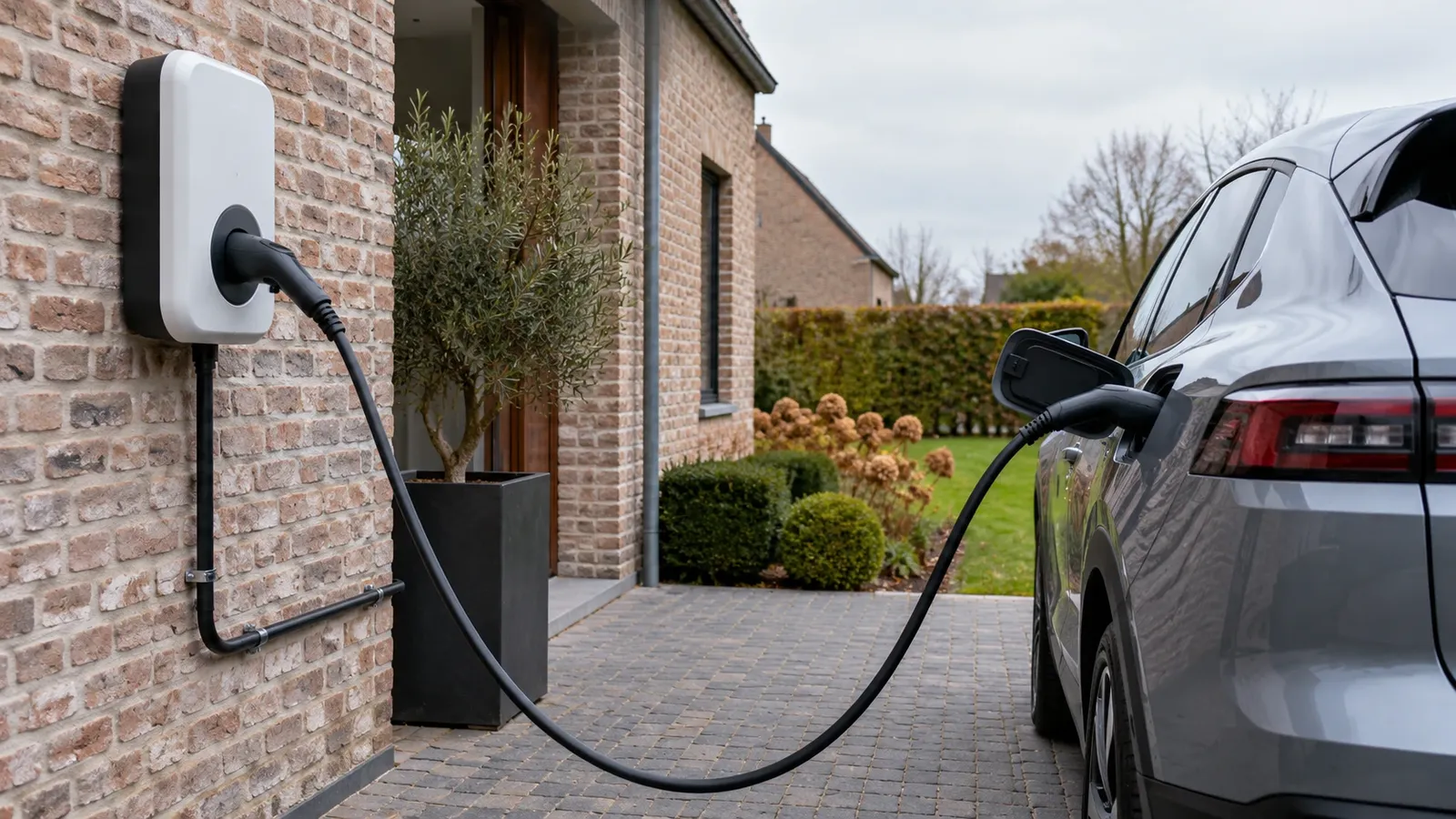
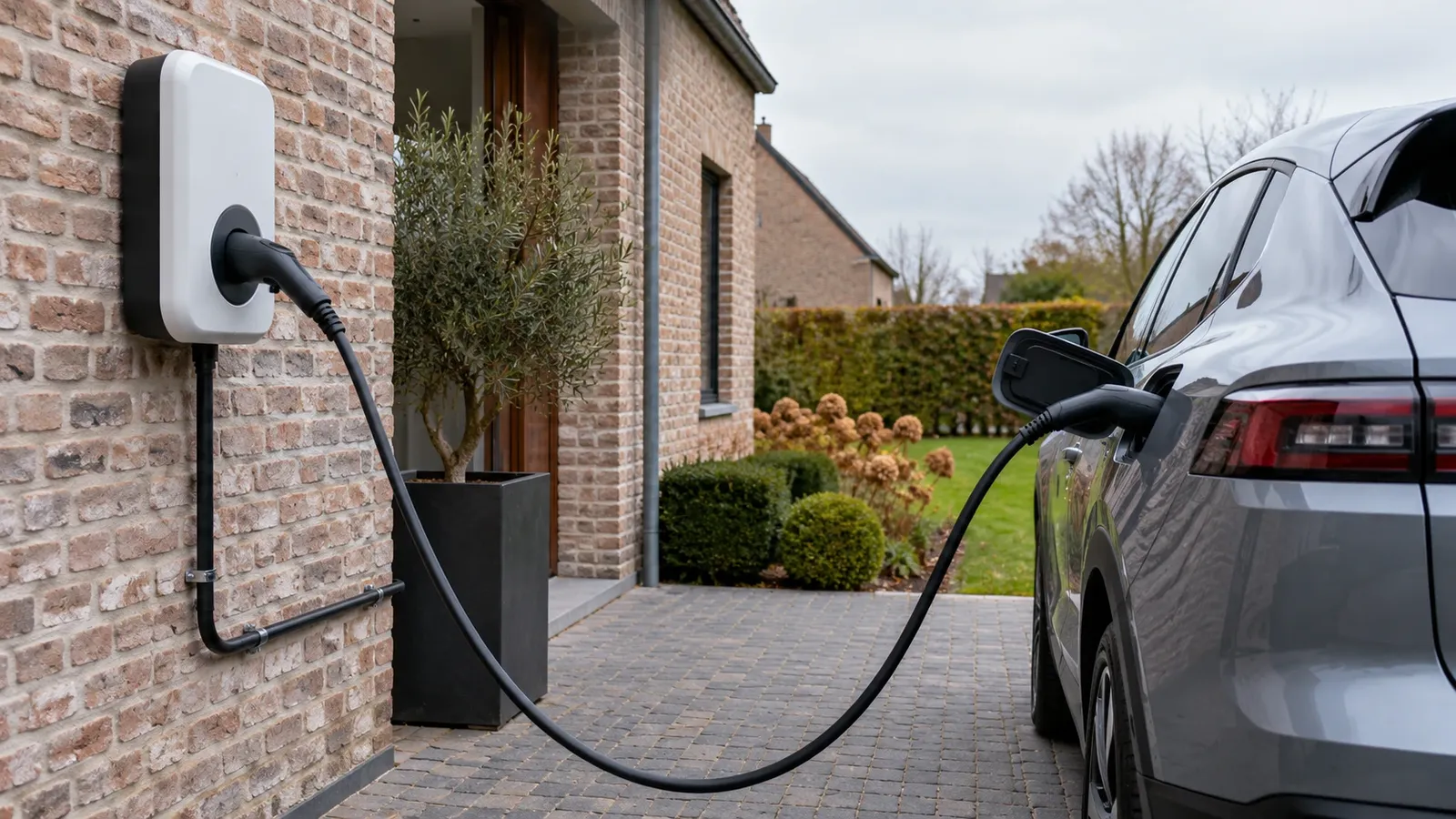
The charger is fed by its own circuit, protected by a breaker and a residual current device suited to vehicle charging, which allows for the direct current a car can send back. It is fixed to the garage wall or on a post in the drive.
In a townhouse in Ixelles or Schaerbeek, often connected with modest power, evening charging can trip the main switch. The answer is dynamic load balancing: the charger measures what the house uses and lowers its power while you cook. The car charges a little slower, through the night, without cuts.
Before it is used, the new installation is inspected by an inspection body, as the electrical regulations require. Insurers ask for that report too. We prepare the visit; the report itself always comes from the inspection body, never from us.
In Uccle, Woluwe or Etterbeek, many flat owners want to charge in the underground car park. That needs the agreement of the co-owners and a metering solution: a charger wired to your own meter, or a shared system that bills each user separately.
We write a clear technical description for the syndic and the general meeting: cable route, protection, power and impact on the common installation. We can also plan the wiring so that more chargers can be added later without starting again.
The work in the common parts is done neatly, with cable trays fixed and labelled, and we agree the timing with the building manager so that residents can still use the car park.
A connected charger lets you schedule charging at night or at the hours when electricity costs you least under your contract. You follow what the car has used from an app on your phone.
With solar panels on the roof, the charger can favour the surplus: the car charges when the roof produces more than the house uses. A small meter in the fuse board gives that information in real time.
We set these options when the charger is switched on and show you how to change them yourself, so the settings keep up with your habits and your energy contract.
The type of connection comes first: 3x230 V or 3N400 V, single or three phase. It decides which chargers are possible and at what power.
Then the power left over: what the kitchen, the water heater or a heat pump already draw, and what remains for the car. The fuse board follows, with room for a new circuit and the condition of the existing protection.
Finally the cable route to the garage or parking space: distance, walls to pass through and mechanical protection of the cable. With those four points, the quote holds no surprises.
The electrician tests the charger with you, explains the lights on the unit and leaves the documents you need: the wiring diagram of the new circuit and the inspection report once it is issued.
A charger needs very little care. Keep the cable off the ground when you can and look at the plug from time to time. If the charger stops, check its breaker first, then send us a photo of the lights.
If you later add solar panels, a heat pump or a second car, we adjust the settings and the load balancing so that everything keeps running without tripping the main switch.
Modest power, load balancing.
Wall-mounted charger.
Agreement of the co-owners.
Charging on the surplus.
Type of connection.
Room and protection.
Make and model.
Distance from the board.
Address, appliance, what is wrong: the office writes it down and books a time.
You know the call-out cost before anyone leaves; a replacement or a new installation gets a written quote.
Diagnosis and explanation first, then your agreement, then the work. The documents come from Service Technic Belgium.
Trustindex vérifie que la source originale de l'avis est Google. Super quick intervention on a late Tuesday evening!Publié surTrustindex vérifie que la source originale de l'avis est Google. Top service. Very professional. Clear communication and no sneaky sales pitches. Problem identified, problem solved. Correct!Publié surTrustindex vérifie que la source originale de l'avis est Google. Très content du service : communication via emails, entretien de la chaudière avec photos avant/après. Je recommande !Publié surTrustindex vérifie que la source originale de l'avis est Google. Very professional and fast service!! TopPublié surTrustindex vérifie que la source originale de l'avis est Google. Very nice of plumbing thanks a lot!
We fit chargers in houses, garages and building car parks in all 19 municipalities of Brussels and in the towns around the city.
No. On a 3x230 V connection without a neutral, some chargers do not work or only at reduced power. We check your connection before recommending a model.
Not always. A charger with dynamic load balancing often adapts to the existing power. If more is needed, the request goes to Sibelga.
Yes. Before it is used, the new installation is inspected by an inspection body. We prepare that inspection; we do not issue the report ourselves.
Yes, with the agreement of the co-owners. We write a technical description for the syndic and propose a metering solution.
It depends on your connection, your car and your journeys. For most households, charging overnight is more than enough.
For a house with the fuse board close to the garage, usually one day. For a car park it depends on the cable route.
Call 0477 03 88 98, send us a WhatsApp message or book online with the « Book an appointment » button. Tell us the municipality and, in a few words, what is going on.
Ask for the free visit, book online or call 0477 03 88 98 to talk it through.