No service
Soot and deposits: efficiency drops.

Home › Heating › Boiler using too much gas
In short: A dirty or badly set boiler, outdated controls or radiators full of sludge: the heating engineer measures where the energy goes and tells you the cost before doing anything. Call 0477 03 88 98.
Your gas or heating oil bill keeps climbing although you are not heating more than last year? Often the weather is not to blame, the installation is. Our heating engineers measure the efficiency, adjust what needs adjusting and tell you honestly whether servicing is enough or replacement makes sense.
★★★★★5,0on Google· 22 years of experience
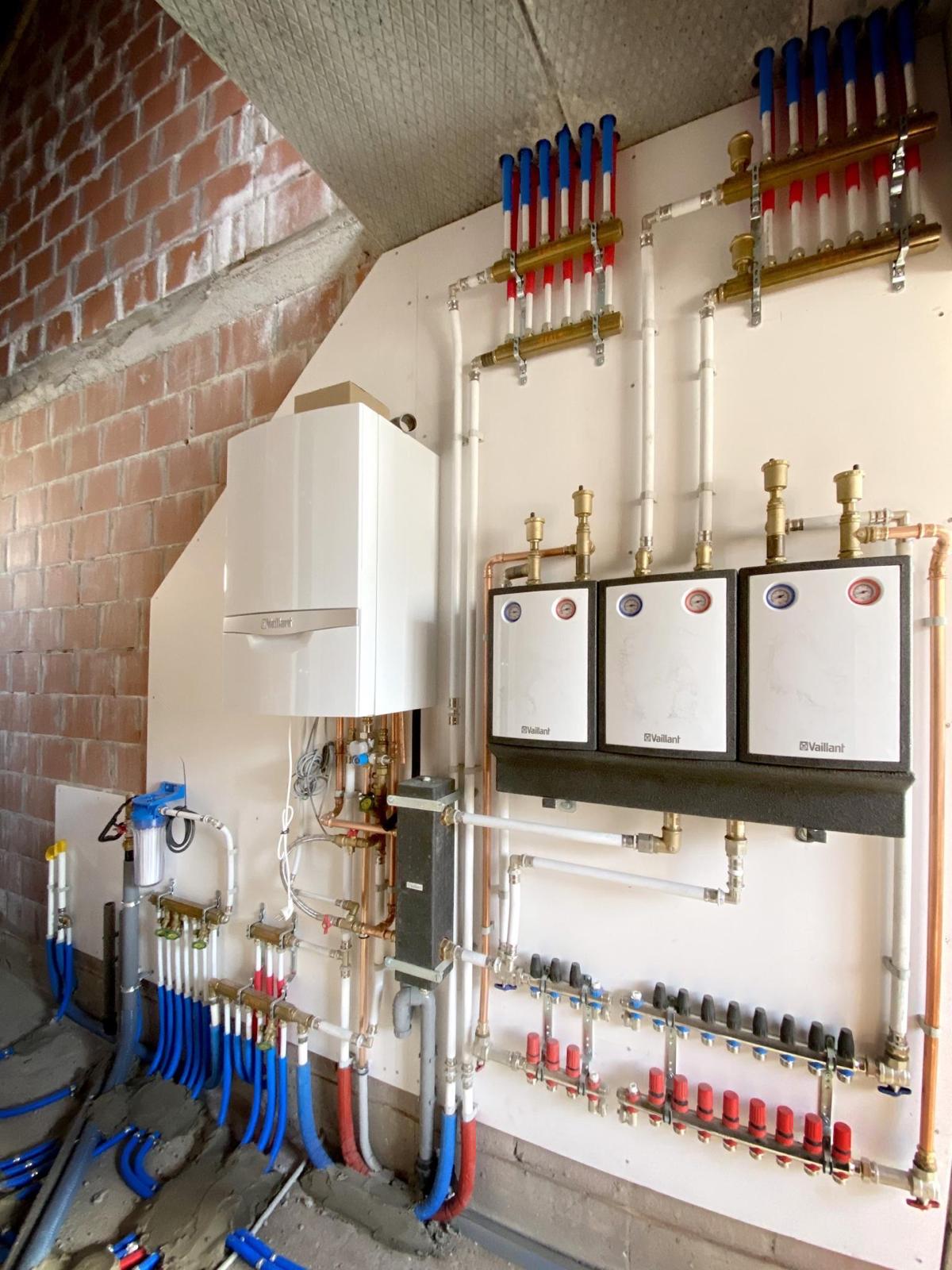
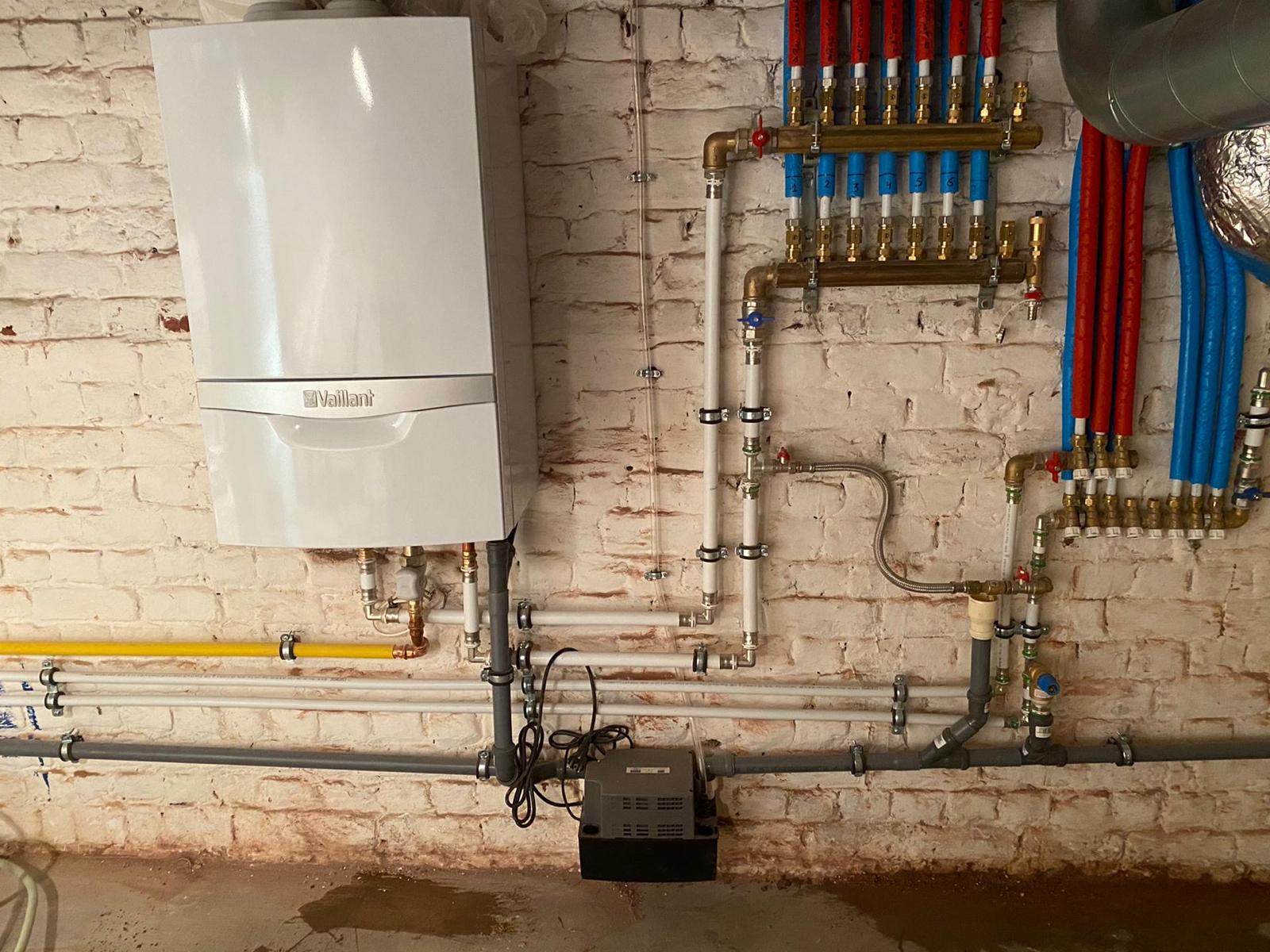
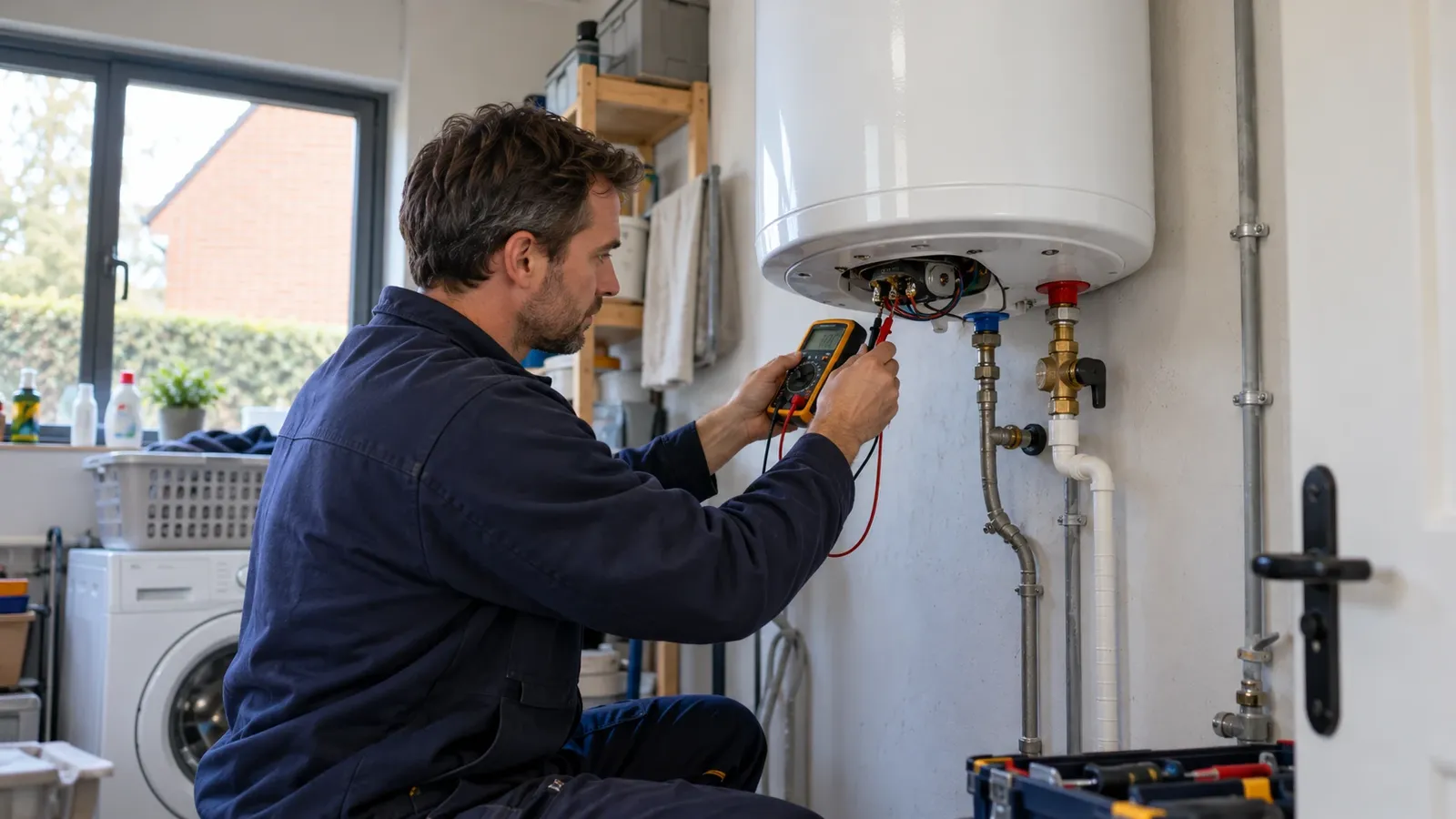
Everything starts with a measurement. With a flue gas analyser the engineer reads the flue temperature and the oxygen or CO2 level, then works out the efficiency. Flue gases that are far too hot mean the heat is going up the chimney instead of into your radiators.
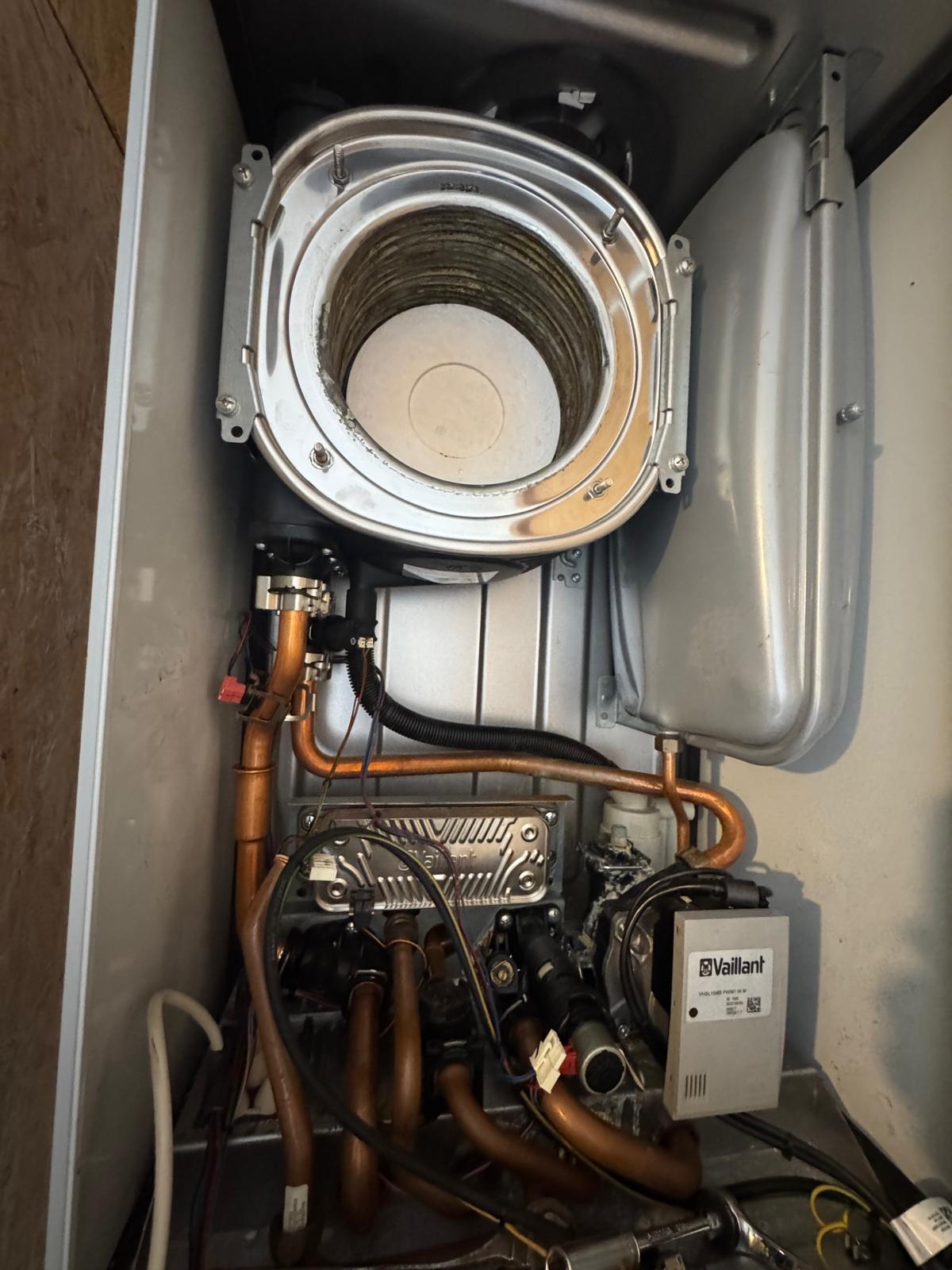
Soot or deposits on the heat exchanger, a burner out of adjustment, too much air or a boiler that keeps switching on and off all pull the efficiency down. On an oil boiler a few millimetres of soot are enough to push consumption up noticeably.
The engineer cleans the exchanger and the burner, sets the combustion and measures again. The difference is written on the job sheet, figures included. In many homes it is the simplest first step towards a lower bill.
A boiler can be perfectly tuned and still burn too much if the heat is badly distributed. Radiators full of sludge give off less heat: you turn the thermostat up, the boiler runs longer and the bill follows.
Thermostatic radiator valves are the second lever. They close the radiator of a room that is warm enough. With old manual valves, or valves that have seized, the whole house is heated to the same level, bedrooms included.
The heating engineer flushes the circuit when needed, replaces old valves with thermostatic ones and balances the radiators. He also lowers the flow temperature where possible: cooler water, well spread, lets a condensing boiler actually condense.
An old on-off thermostat in a cold hallway, or right next to a heat source, controls the boiler badly. The result is rooms that overheat and a boiler that runs more than it should.
A programmable or smart thermostat lowers the temperature at night and while you are out, without you having to think about it. An outdoor sensor lets the boiler adapt the water temperature to the weather: milder in autumn, hotter in a hard frost.
The engineer chooses controls that work with your boiler, fits them in the right place and sets the heating curve with you. He shows you how to programme your hours, so that the savings last once he has gone.
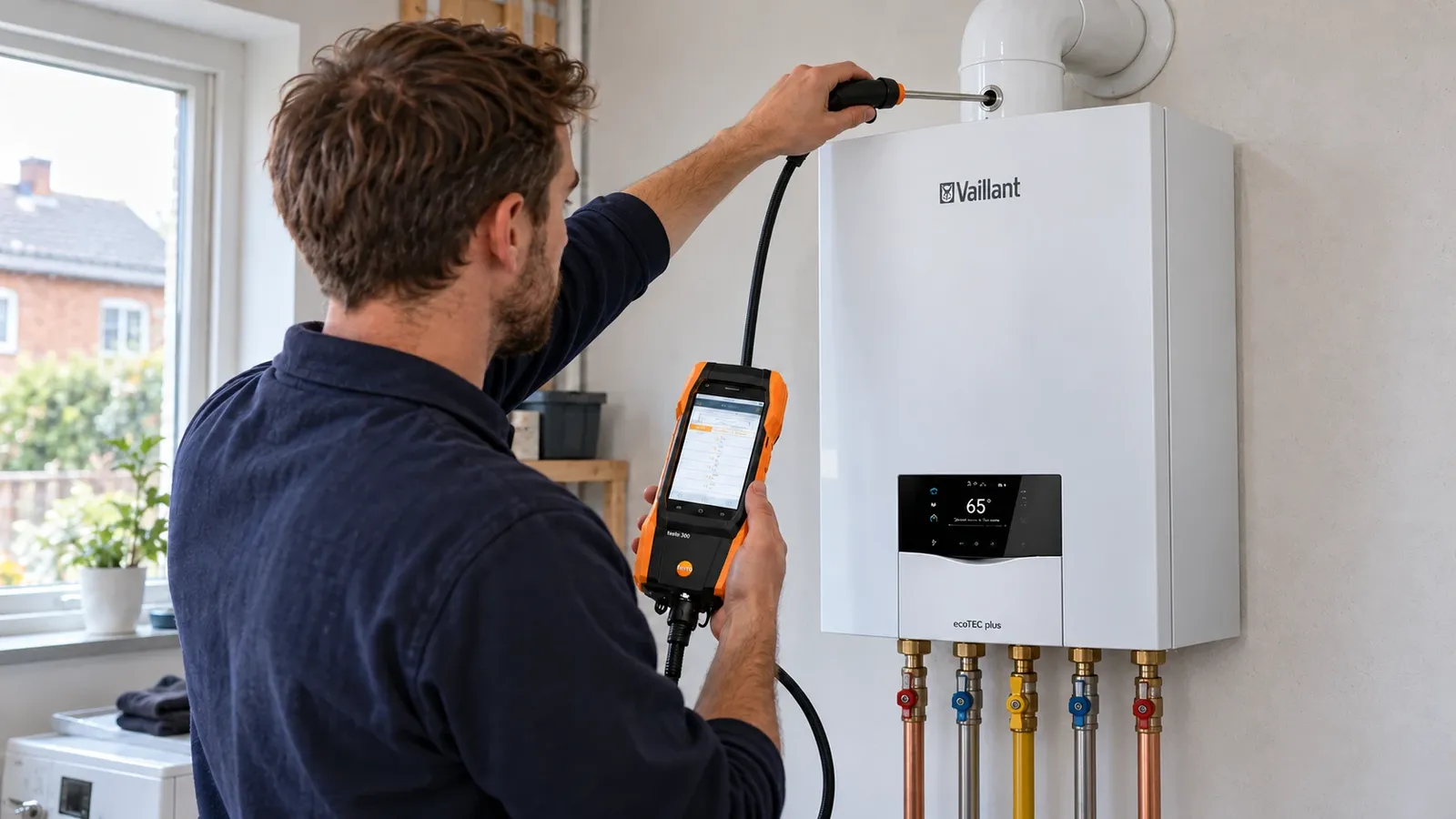
A conventional boiler of twenty or thirty years, even well serviced, will never reach the efficiency of a condensing boiler, which recovers the heat contained in the water vapour of the flue gases. In many homes the change shows clearly on the bill.
Depending on your insulation and radiators, an air-to-water heat pump or a hybrid system may suit too. The engineer looks at your current consumption, the size of the house and the state of the installation before giving advice.
You receive a detailed quote and information on the regional grants that may apply. That way you compare with the facts in hand: adjustment and servicing on one side, replacement on the other.
No service for a long time: soot and deposits on the exchanger, a burner that has drifted. Efficiency drops year after year without you noticing, until the bill shows it.
An oversized boiler: too powerful for the house, it keeps cycling on and off and wastes energy. Water that is too hot: a high flow temperature stops a condensing boiler from condensing.
Bare pipes: uninsulated heating pipes in a cold cellar heat the cellar rather than your living space. A few metres of pipe lagging is often the easiest job of all.
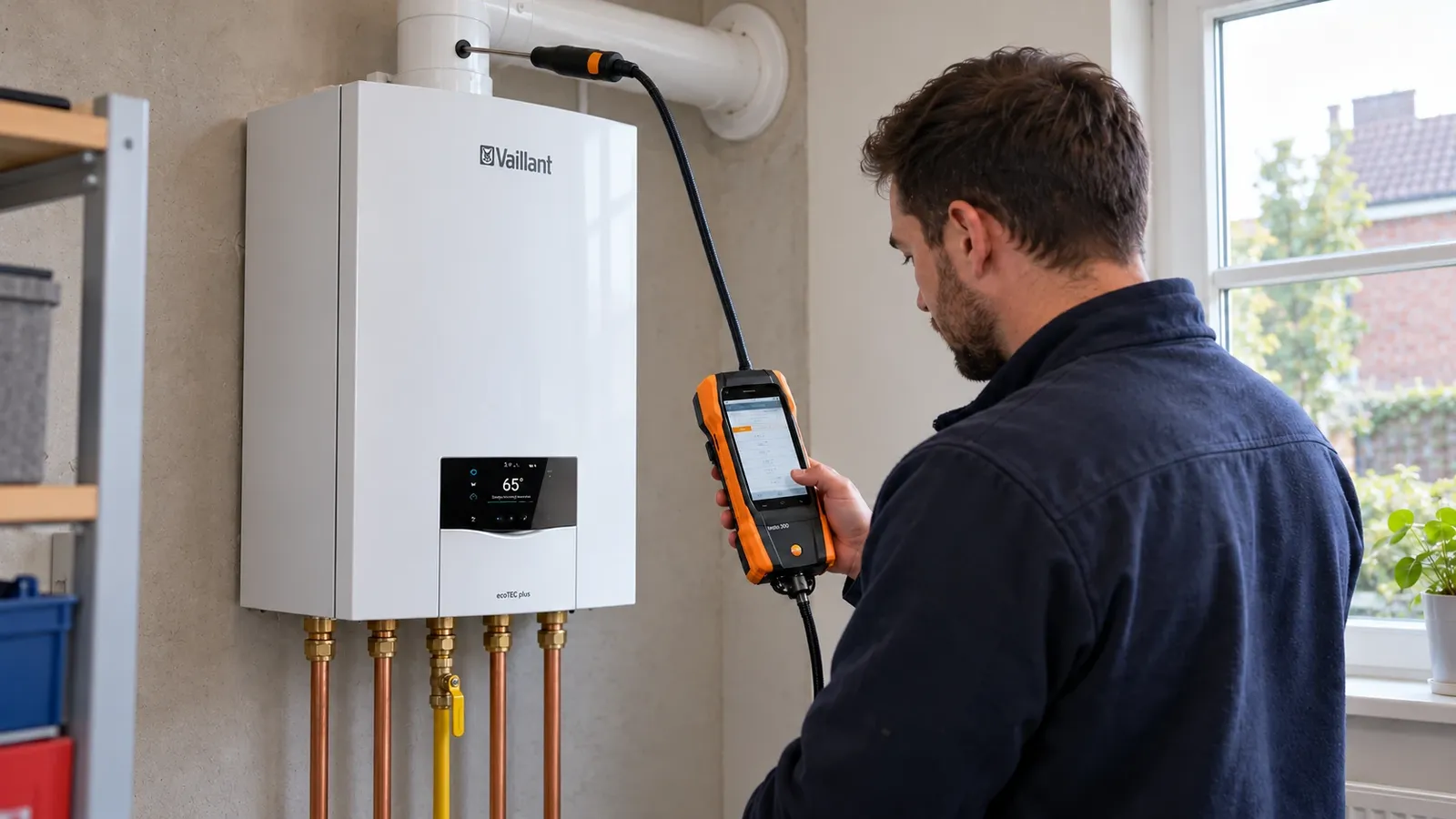
Compare your consumption from one year to the next, for a similar winter. A clear rise without any change in habits is a warning sign. Look at the date of the last service too: if it was a long time ago, you know where to start.
Check whether every radiator is warm at the top and the bottom, whether the thermostat hangs in a sensible room and whether the boiler fires up many times in a row. Each of these already tells the engineer something.
Around twenty degrees in living rooms and a little less in bedrooms is a good starting point. Every degree less counts on the bill, without any real loss of comfort.
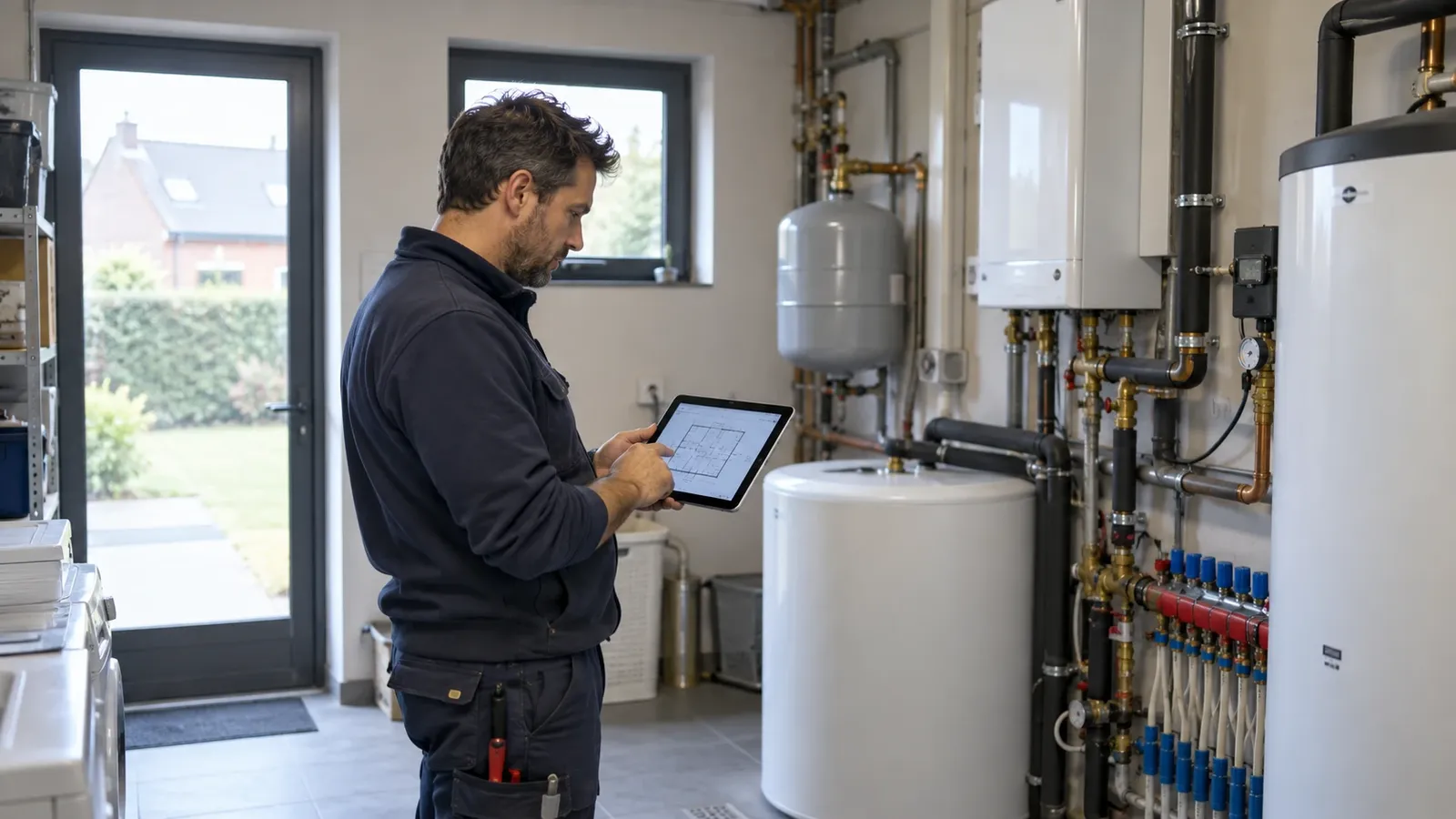
A condensing boiler only condenses when the water coming back from the radiators is cool enough, roughly below 55 degrees. Many boilers in Belgium still run at 70 or 80 degrees all winter, the way they were set on the day they were fitted. The house is warm, but the boiler never reaches the efficiency it was bought for.
During a visit we lower the flow temperature step by step and check that every room still warms up. With a weather sensor outside, the boiler adapts the temperature to the weather by itself: warm water when it freezes, much cooler water in spring and autumn. In most homes this alone makes a visible difference on the gas meter.
Some radiators may then be a little small for the coldest days. We point them out room by room, so you know which ones to change one day. For the yearly check of the burner itself, see boiler service in Brussels.
A boiler that switches on and off every few minutes uses more gas than one that runs calmly. This short cycling often comes from a boiler that is too powerful for the house, a pump set too high or a room thermostat placed next to a radiator. Each start burns a little extra gas and wears the boiler faster.
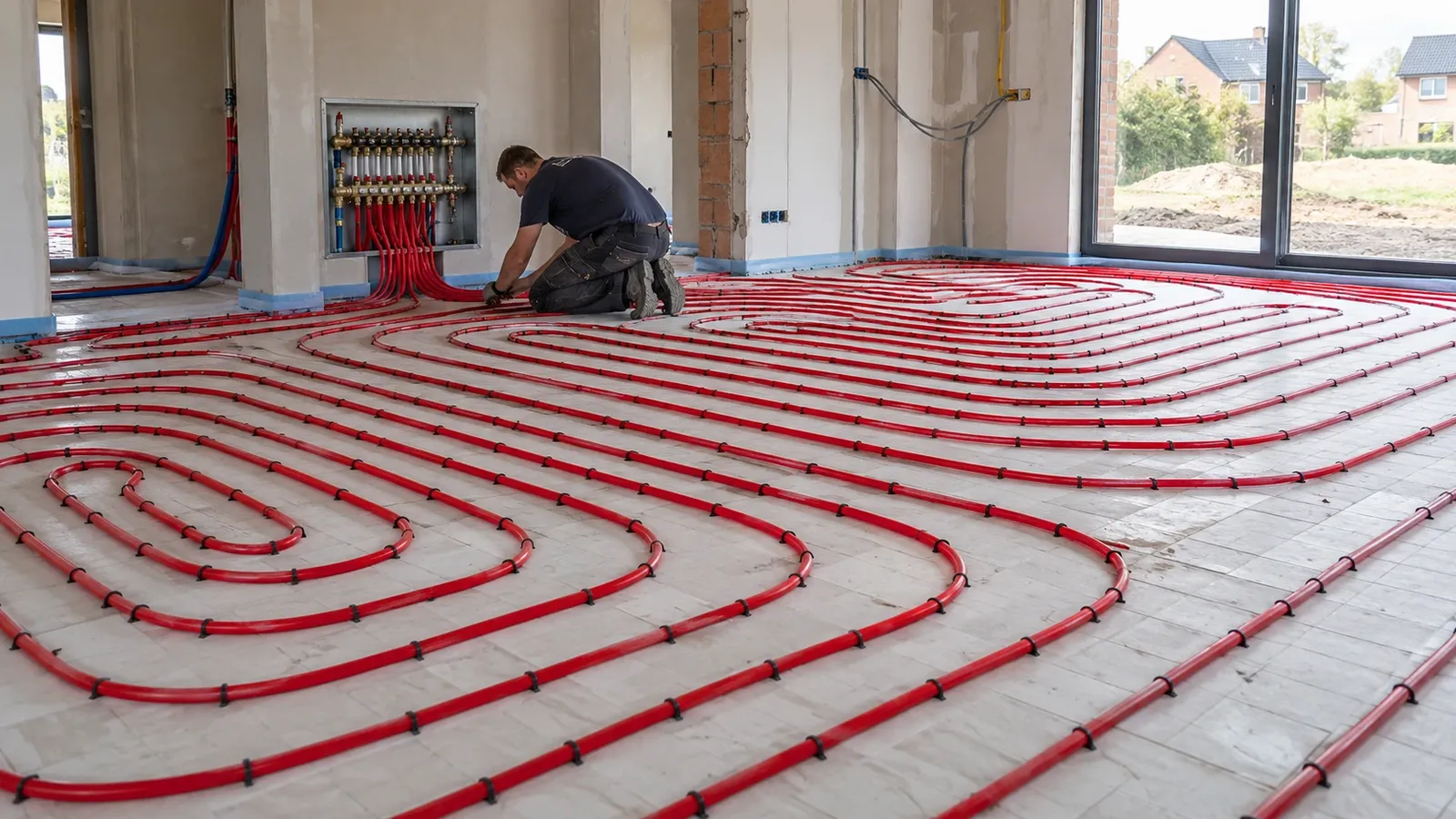
Underfloor heating asks for low water temperatures, and a mixing valve that works properly. When the floor and the radiators share one boiler, a badly set mixing circuit can push the whole system to run hot. We check the mixing valve, the pump and the settings of each circuit, and adjust them to the way you live.
If the boiler is old and these settings do not help, a replacement or a heat pump may be the better choice: read heat pump in Brussels. If the boiler is also noisy, see boiler making noise. To book a check, call 0477 03 88 98.
Soot and deposits: efficiency drops.
Keeps cycling on and off.
The boiler no longer condenses.
Badly placed thermostat, no timer.
Yearly gas or oil use.
Make, model and age.
Date on the attestation.
Type and where it is.
Describe the problem; a photo of the unit or of the code on the display, sent on WhatsApp, helps the technician prepare.
The office tells you what the visit costs and when the technician will come, before anyone sets off.
On site, the technician explains what he found and what the repair costs, then waits for your yes. Job sheet and invoice at the end.
Trustindex vérifie que la source originale de l'avis est Google. Super quick intervention on a late Tuesday evening!Publié surTrustindex vérifie que la source originale de l'avis est Google. Top service. Very professional. Clear communication and no sneaky sales pitches. Problem identified, problem solved. Correct!Publié surTrustindex vérifie que la source originale de l'avis est Google. Très content du service : communication via emails, entretien de la chaudière avec photos avant/après. Je recommande !Publié surTrustindex vérifie que la source originale de l'avis est Google. Very professional and fast service!! TopPublié surTrustindex vérifie que la source originale de l'avis est Google. Very nice of plumbing thanks a lot!
Our heating engineers work across Belgium, in Brussels, Wallonia and Flanders, for houses, flats and small businesses.
Compare your consumption year on year for a similar winter. A clear rise with unchanged habits is a sign; a combustion analysis gives the answer on site.
Yes, especially if the boiler has not been serviced for a long time. Cleaning and adjusting the burner improve its efficiency.
Around twenty degrees in living rooms, less in bedrooms. Every degree lower reduces consumption.
In winter, use the away or frost protection mode rather than switching off completely, so the pipes do not freeze.
Yes, provided it is well set up and the radiator water is not too hot. That is what the engineer checks.
The Regions offer grants for some appliances and works, with conditions that change regularly. We tell you what may apply when we quote.
As low as the house allows while every room stays warm. With a weather sensor the boiler sets it itself. A return temperature below about 55 degrees lets the boiler condense and use less gas.
This is called short cycling. It often comes from a boiler too powerful for the house, a pump set too high or a thermostat in the wrong place. We check the settings and correct them.
Call 0477 03 88 98, send us a WhatsApp message or book online with the « Book an appointment » button. Tell us the municipality and, in a few words, what is going on.
Call 0477 03 88 98 or book a boiler check online. For a replacement, ask for a free quote.