Snake
Localised blockage, small diameter, tight bends.

Home › Drain unblocking › Brussels › Blocked drain
In short: When several fittings drain badly at the same time, it is a pipe that is blocked, not just a trap. In Brussels, Service Technic Belgium clears it with a mechanical drain snake or with high-pressure water, depending on the diameter and what is causing the blockage. Call 0477 03 88 98.
A cast-iron stack in a stairwell, a clay collector under the basement floor, a PVC pipe in a recent extension: each pipe needs its own tool. The technician first looks for where he can get in.
★★★★★5,0on Google· 22 years of experience
One fitting draining badly means its trap or its small waste pipe. Several fittings affected means the pipe that receives them all: the shower gurgles when the sink empties, the downstairs toilet rises when the upstairs one is flushed.
The floor where the trouble starts tells you where the blockage is. If only the ground floor is affected, it is under the basement or between the house and the street.
If several flats notice it at the same time, it is the shared stack: the managing agent needs to know.
A power snake spins a steel cable inside the pipe. Depending on the head, it bores through the blockage, scrapes it or tears it out. It is precise and gets round the tight bends of old houses.
It is the right method for a localised plug: wipes, hair, a dropped object, a fine root. It works from an access cap, a removed trap or an inspection chamber.
In an old clay pipe the technician uses a head that does not knock the joints, so as not to widen a crack.
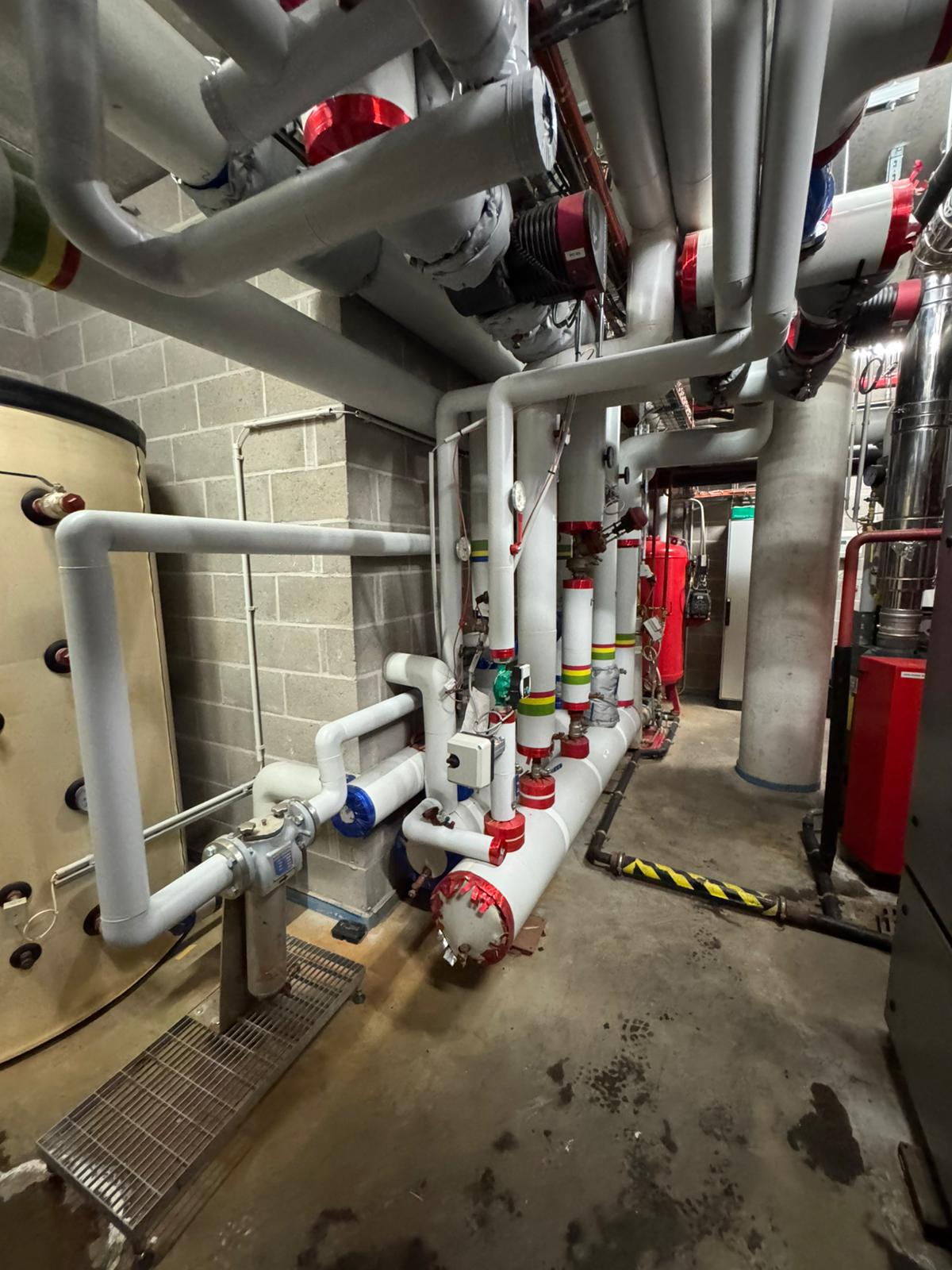
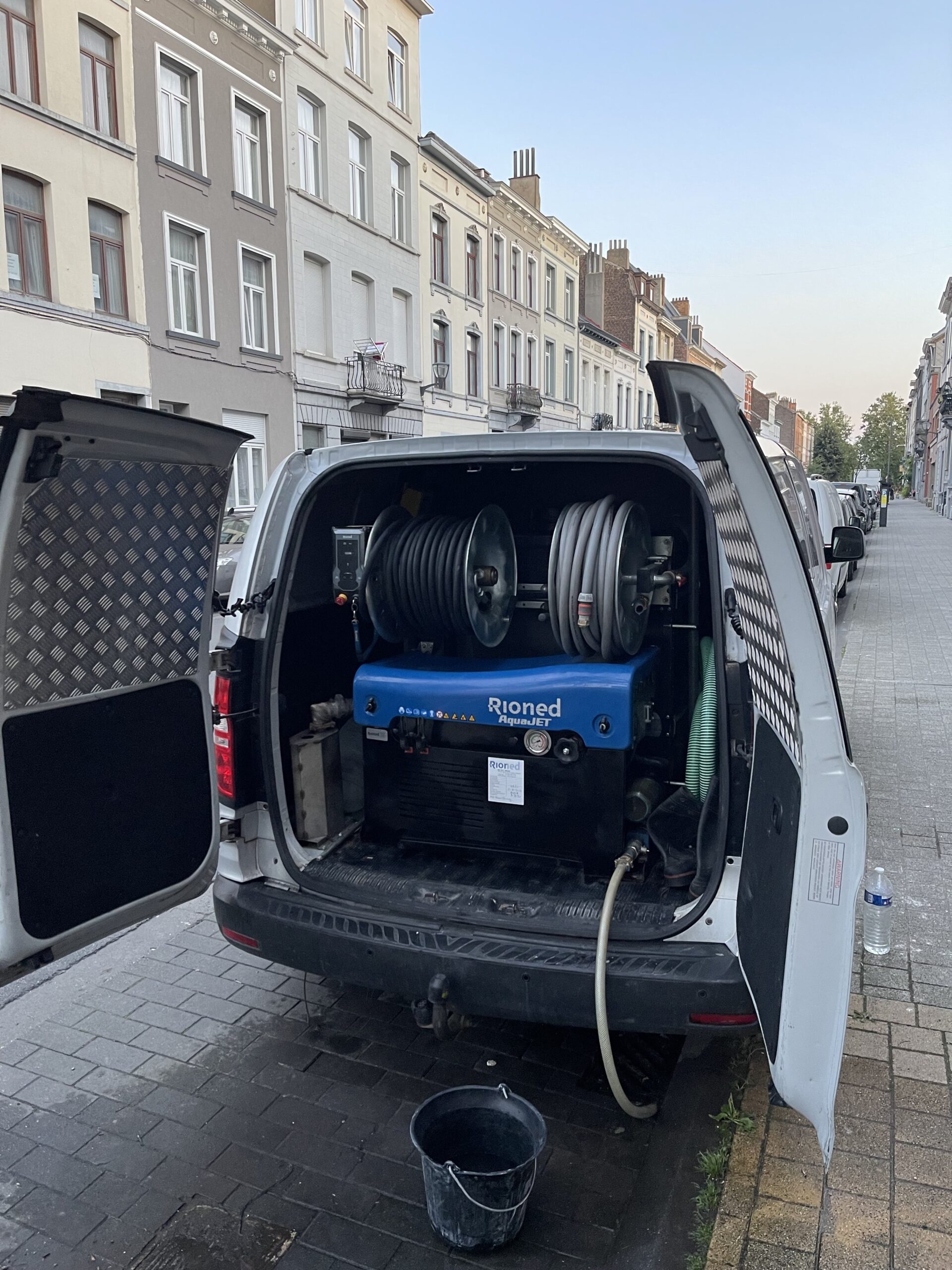
The jetting unit sends water through a nozzle with jets pointing backwards. The nozzle pulls itself along the pipe and cleans the walls along their whole length.
It is the right method when grease, silt or scale have narrowed the passage from end to end, as in restaurant kitchens and old collectors.
The technician sets the pressure for the state of the pipe: strong for concrete or thick PVC, gentler for rusty cast iron.
Many houses from the nineteenth and early twentieth centuries have a clay collector running under the basement to the street, with an interceptor trap just inside the front wall. That trap holds back part of the waste and blocks more often than the rest.
Rainwater downpipes are sometimes connected to the same collector as the waste water: every shower of rain adds sand and leaves.
Successive renovations added PVC pipes to the old network, sometimes with too little fall. The camera shows these joints.
A blockage that returns every few months to the same spot is no coincidence. Roots through a joint, a sagging pipe, a back-fall or a broken section: the camera films the inside and shows the defect.
The technician shows you the footage on site and tells you how deep and where it is, so nobody digs in the wrong place.
Sometimes regular jetting is enough; sometimes a repair is needed: replacing a section, or fitting a liner inside the pipe without breaking everything open.
The technician starts by listening: which fittings drain slowly, since when, on which floor. He runs water in several places to see where it stops. Then he looks for the access point closest to the blockage on the house side: a rodding eye on the stack, the basement chamber, the interceptor trap by the front wall.
Mechanical clearing comes first in most cases. The electric snake goes in through that access, first with a head that punches through, then with a wider head that scrapes the walls. The technician feels through the cable when he hits the blockage and when he is through it.
If the pipe is still slow after the snake, it is dirty along its whole length and high-pressure jetting takes over. At the end he runs plenty of water on every floor and checks the chamber. He explains what was blocking it and, if needed, brings out the camera.
The glazed stoneware of old collectors, under the basements of Schaerbeek, Saint-Josse or Koekelberg, is strong but its joints age. Roots and sand get in there. We clear it with a soft head on the snake or with moderate pressure.
Cast-iron stacks rust from the inside; the rust forms flakes that hold on to grease. On badly corroded cast iron the technician keeps the pressure as low as possible and tells you if a replacement should be planned.
PVC in renovations and newer houses is smooth and copes well with jetting. Its weak points are badly glued joints and too little fall. Lead, still found in some old houses, deforms easily: snake only, at low speed.
Localised blockage, small diameter, tight bends.
Grease or silt along the whole length, large diameter.
The snake opens a passage, the jetting then cleans.
To understand a blockage that keeps returning.
In the basement, a cast-iron cover or an access cap on the collector is the easiest way in.
Which drain badly and which still work: that locates the blockage.
They do not clear a whole pipe and make the work dangerous.
A cluttered basement in front of the access point costs time, and therefore money.
The office takes your address, which drain is affected, and books a time.
You know the call-out cost before anyone sets off; larger jobs get a written quote.
Find and explain first, then your agreement, then the work. Job sheet and invoice from Service Technic Belgium.
Trustindex vérifie que la source originale de l'avis est Google. Super quick intervention on a late Tuesday evening!Publié surTrustindex vérifie que la source originale de l'avis est Google. Top service. Very professional. Clear communication and no sneaky sales pitches. Problem identified, problem solved. Correct!Publié surTrustindex vérifie que la source originale de l'avis est Google. Très content du service : communication via emails, entretien de la chaudière avec photos avant/après. Je recommande !Publié surTrustindex vérifie que la source originale de l'avis est Google. Very professional and fast service!! TopPublié surTrustindex vérifie que la source originale de l'avis est Google. Very nice of plumbing thanks a lot!
From Laeken to Uccle, from Molenbeek to Woluwe, we work in all 19 Brussels municipalities, in houses, buildings and shops.
Mechanical clearing uses a spinning cable that goes through the blockage; jetting washes the whole pipe with pressurised water. The technician chooses according to diameter and cause, and sometimes uses both.
Badly set pressure can widen a crack. That is why the technician matches pressure and nozzle to the material and uses the camera when in doubt.
Very often at the interceptor trap, in the basement by the front wall, or in the clay collector under the basement.
Not to clear the drain. We only open up to repair a broken pipe, and the camera shows exactly where.
Yes, on shared stacks and collectors, at the request of the managing agent or of an owner who informs them.
Often one to two hours. A heavily fouled or hard-to-reach pipe can take longer; the technician tells you when he arrives.
Often, yes, for a local blockage. If the collector is clogged along its whole length with grease or sand, the technician finishes with high-pressure jetting.
Very likely the terrace gully or the pipe linking it to the collector. We empty the gully, clean its trap and clear the pipe.
Call 0477 03 88 98, send us a WhatsApp message or book online with the « Book an appointment » button. Tell us the municipality and what is blocked.
Call 0477 03 88 98: snake or jetting, the technician chooses the right method with you.