Only your house
The neighbours drain normally: the blockage is in your connection.

Home › Drain unblocking › Brussels › Blocked sewer
In short: When the basement drain overflows and every toilet in the house drains slowly, the private sewer connection between your home and the street is blocked. In Brussels, Service Technic Belgium clears it by high-pressure jetting, cuts roots, films the pipe and repairs it when it is broken. Call 0477 03 88 98.
The private connection is the owner's responsibility, from the house to the point where it joins the public sewer run by Vivaqua. That is the section we work on, usually from the basement.
★★★★★5,0on Google· 22 years of experience
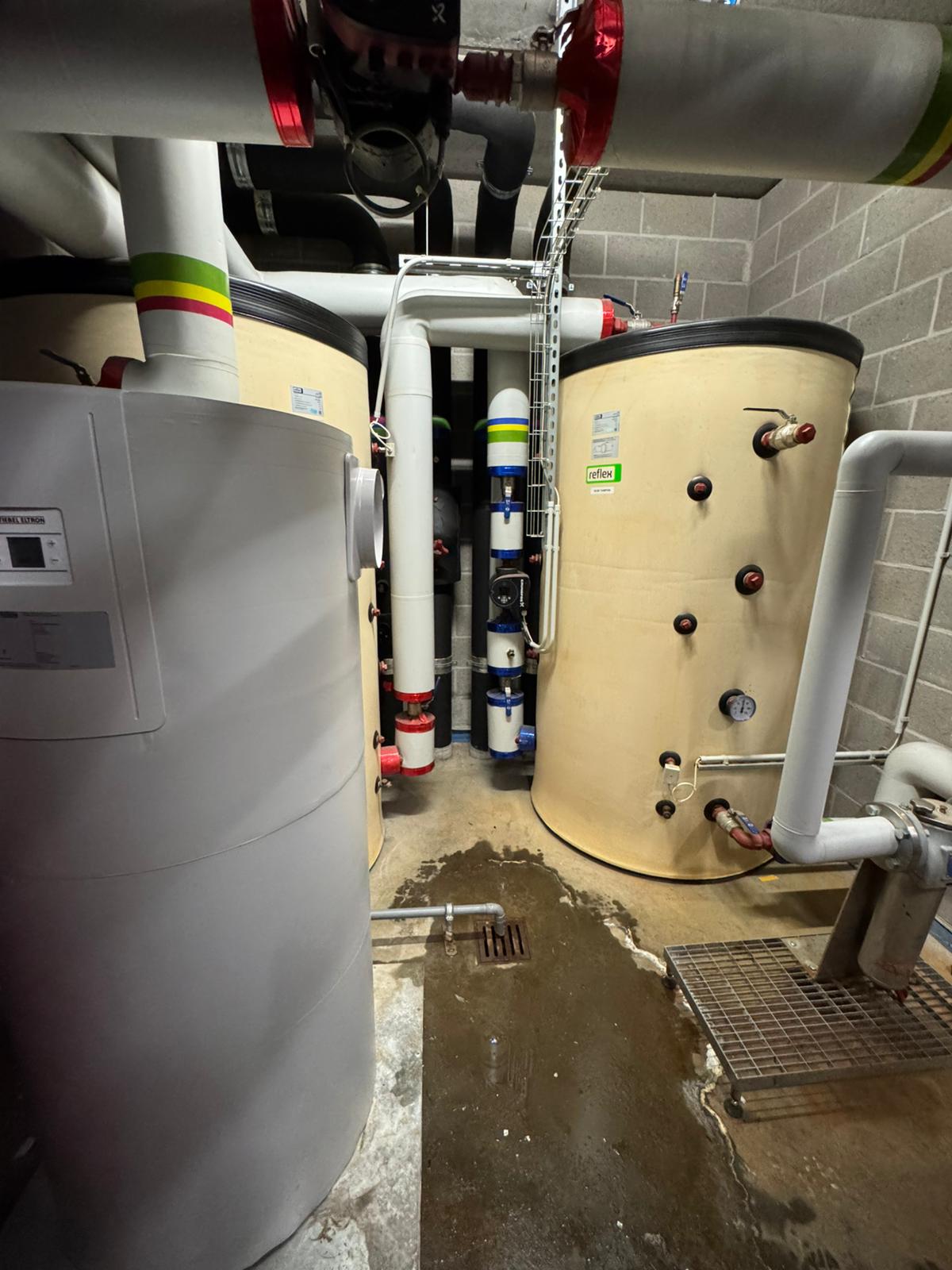
Water rising through the basement floor drain, the downstairs toilet filling when someone showers upstairs, a strong smell in the cellar: everything in the house drains towards the same pipe, and that pipe no longer flows.
When it rains, the problem often gets worse in houses where the gutters are connected to the same collector.
If your neighbours have the same trouble at the same time, the public sewer may be at fault: Vivaqua must then be called. We can check your side first to be sure.
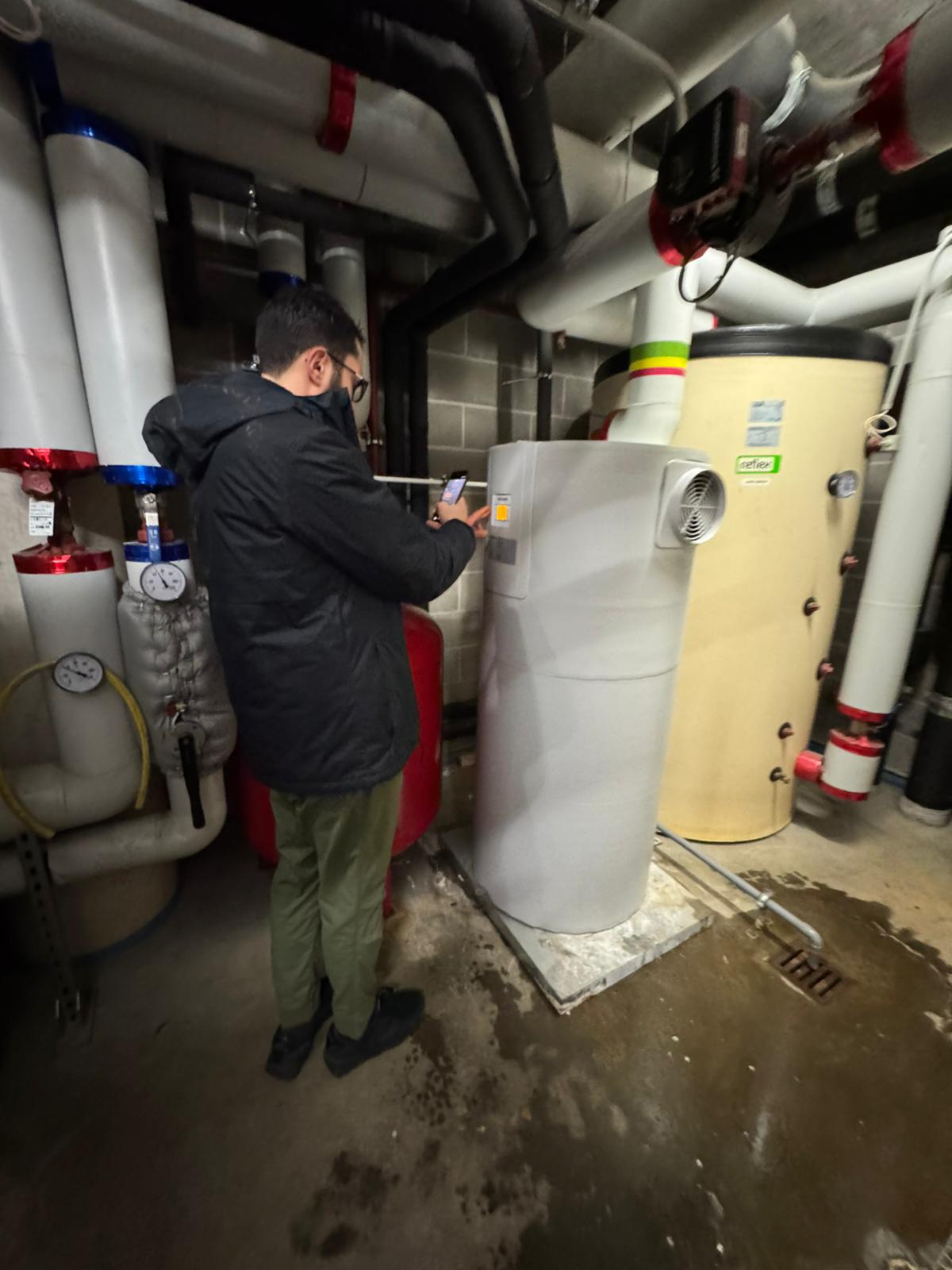
The technician opens the interceptor trap or inspection chamber near the front wall. If water stands in it, the blockage is downstream, towards the street; if it is dry, it is upstream, in the house.
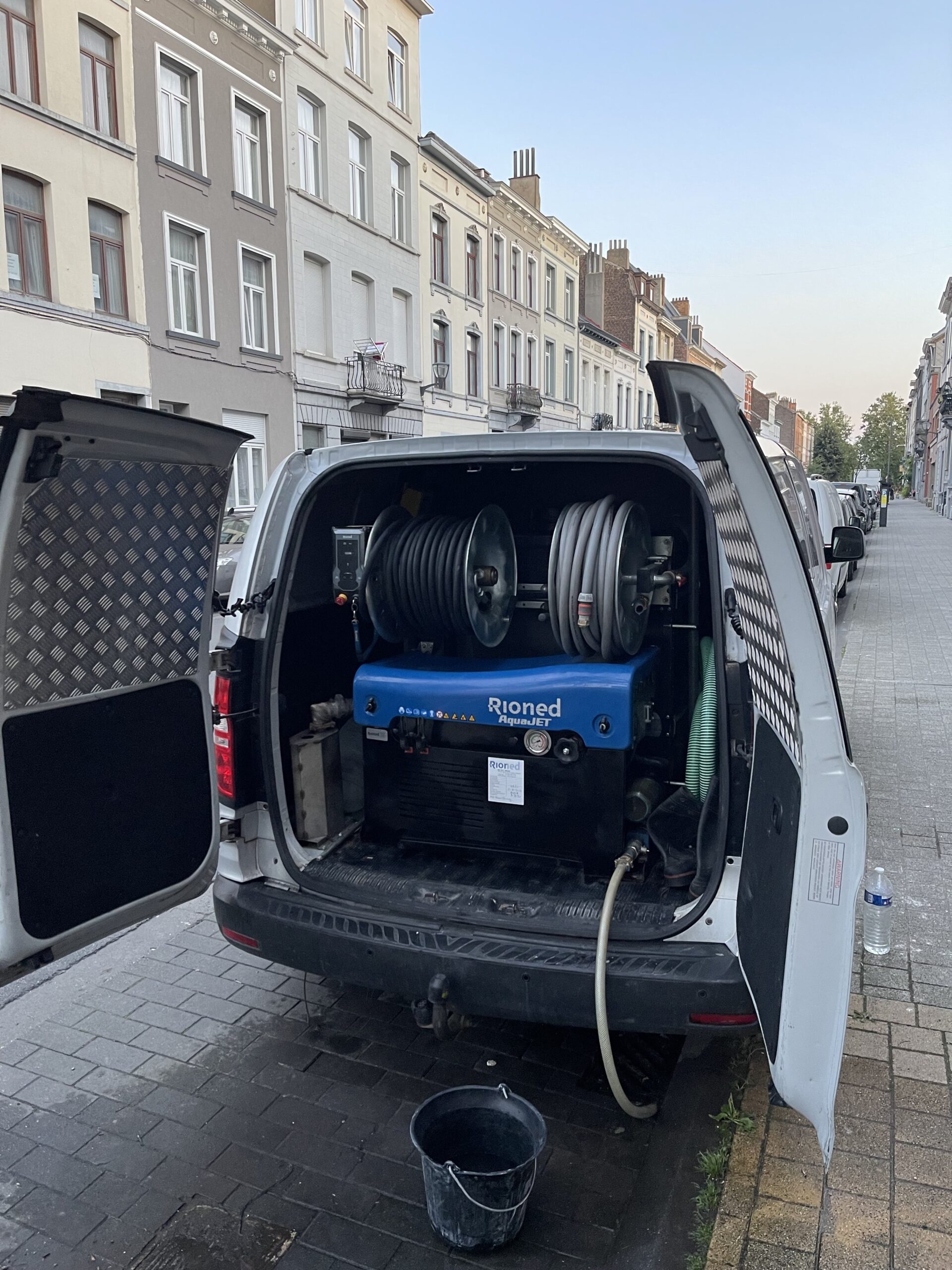
He sends the jetting nozzle along the pipe. For compacted silt and grease it clears the full bore; for roots, a cutting head goes in afterwards.
He finishes by running water from the top of the house and checking that it flows freely to the street.
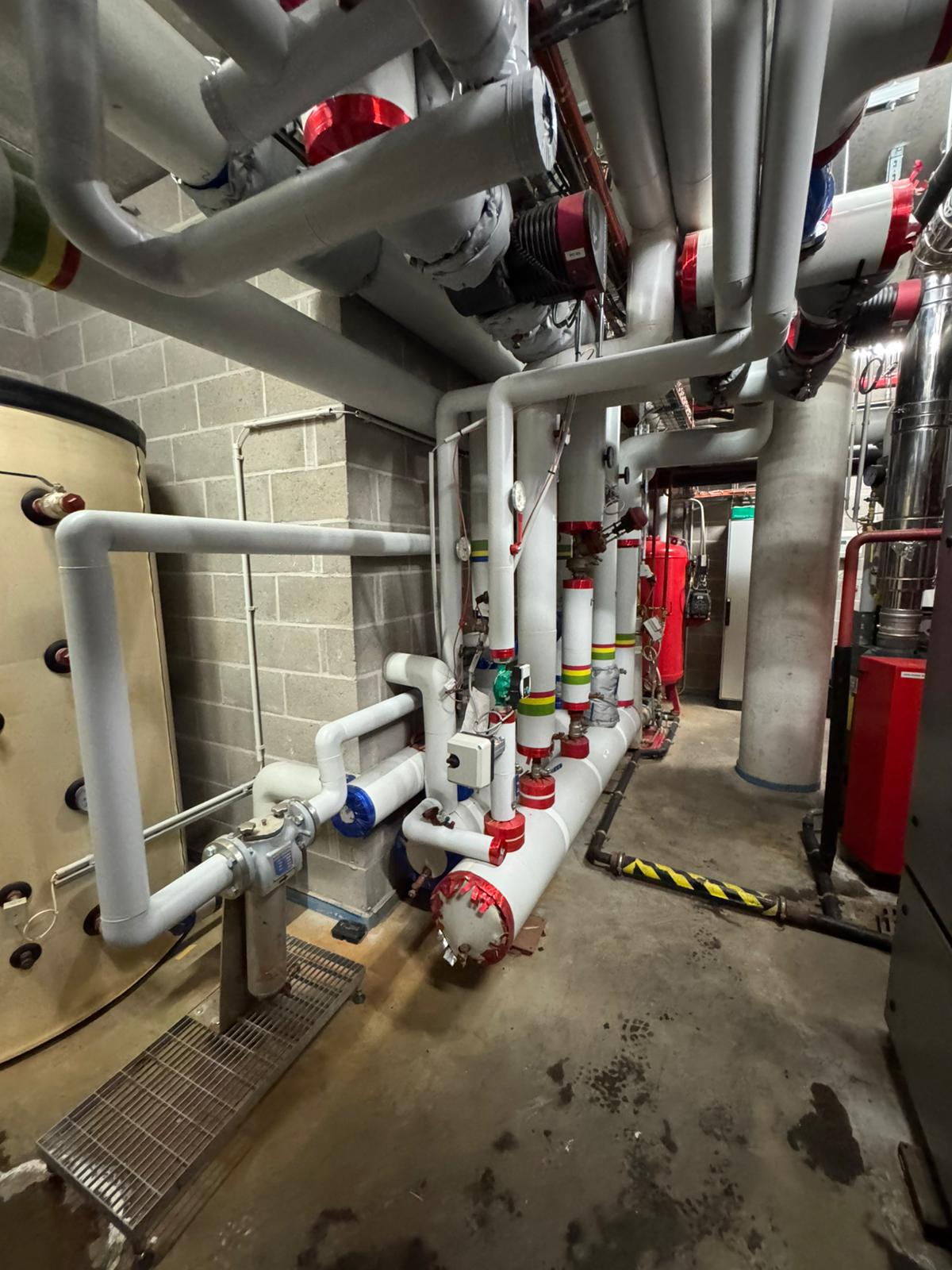
Most older Brussels houses have an interceptor trap in the basement, just before the pipe leaves for the street. Its cleaning plug sometimes falls into the trap and blocks it, or the trap fills with silt.
We clean it, replace the missing plug and check the seal, so that sewer smells and rats stay out.
In some houses the trap was removed during renovation; the technician tells you whether it is worth putting one back.
Old clay connections have joints every metre or so. Tree roots find their way in, and a slight subsidence under the pavement is enough to create a step where everything catches.
The camera shows the defect and its distance from the house. For a single break, we dig a small trench at the right spot; for a long section with several defects, a liner can be fitted from the inside.
Work under the pavement needs the municipality's permission; the quote says so, and nothing starts before you have agreed to it.
Jetting every one or two years is enough for most houses with trees nearby or an old clay connection.
Do not pour fat or cement residue down the drain, and keep wipes out of the toilet: they end up in the connection.
A non-return valve, fitted on the right pipe, protects a basement in streets where the public sewer overflows during storms.
The neighbours drain normally: the blockage is in your connection.
Several houses affected at once: call Vivaqua.
Rainwater and waste water share the collector.
Interceptor trap empty, plug missing or cracked pipe.
Everything you drain comes up in the basement.
It is usually under a cover near the front wall in the basement.
Lift what is on the basement floor near the drain.
Switch off circuits in the basement if water is near sockets.
Use whichever suits you and tell us your municipality.
You know the visit time and the call-out cost in advance.
Work starts once you agree. Keep the job sheet and the invoice for your records.
Trustindex vérifie que la source originale de l'avis est Google. Super quick intervention on a late Tuesday evening!Publié surTrustindex vérifie que la source originale de l'avis est Google. Top service. Very professional. Clear communication and no sneaky sales pitches. Problem identified, problem solved. Correct!Publié surTrustindex vérifie que la source originale de l'avis est Google. Très content du service : communication via emails, entretien de la chaudière avec photos avant/après. Je recommande !Publié surTrustindex vérifie que la source originale de l'avis est Google. Very professional and fast service!! TopPublié surTrustindex vérifie que la source originale de l'avis est Google. Very nice of plumbing thanks a lot!
We work across the Brussels Region, especially in the older districts where clay connections and interceptor traps are still the norm.
The owner is responsible for the private connection up to the public sewer. The public sewer itself is managed by Vivaqua.
Yes, almost always: jetting and root cutting are done from the basement or an inspection chamber. Digging is only for a broken pipe.
A camera inspection shows it. Signs include blockages that keep coming back, soil in the water, or a sinking pavement above the pipe.
Yes, the municipality must agree to any digging in the public pavement. The quote tells you what is needed before any work is planned.
Yes, a sewer backing up into a basement is treated as urgent, including in the evening and at weekends.
Yes, on the right pipe and in an accessible place, so that it can be cleaned.
Call 0477 03 88 98, send us a WhatsApp message or book online with the « Book an appointment » button. Tell us the municipality and what is blocked.
Call 0477 03 88 98: we clear the connection, film it and tell you what it needs.